Zero-finding Nadcap accreditation for AddQual

In a significant milestone for UK-based metrology specialist AddQual, the Derby-based firm has successfully completed its most recent Nadcap audit for 3D Structured Light (3DSL) measurement with zero major and zero minor findings. This rare accomplishment positions AddQual among an elite group of organisations globally that operate at the highest levels of compliance, precision and technical control in the field of advanced metrology.

The Nadcap audit, administered by the Performance Review Institute, is considered the gold standard for process control and quality assurance across aerospace, defence and high-specification engineering. It is designed to evaluate whether technical processes – such as AddQual’s 3DSL inspection capabilities -meet the highest levels of repeatability, traceability and measurement integrity.

“Achieving a zero-finding audit in such a specialist area is rare,” says managing director Ben Anderson. “ We know we’re one of  two UK Nadcap 3DSL-accredited businesses. We also know there are 17 worldwide in total. Passing with no findings is a strong endorsement, not only of our internal systems, but also of the trust we offer our customers in highly demanding industries.”

For AddQual, the achievement is more than a quality badge – it underpins the company’s mission to redefine how manufacturers approach inspection, qualification and problem-solving in high-precision environments. The firm has become known for helping customers make fast, confident decisions under pressure, whether it is qualifying a flight-critical aerospace part, diagnosing a production issue or tracing a dimensional fault to its root cause.

The combination of speed, accuracy and clarity is what differentiates AddQual. Deploying a digital-first model creates a comprehensive, auditable record that simplifies decision-making and reduces ambiguity across engineering, quality and production teams.

More information www.addqual.com

KS Composites on fast track with hyperMILL

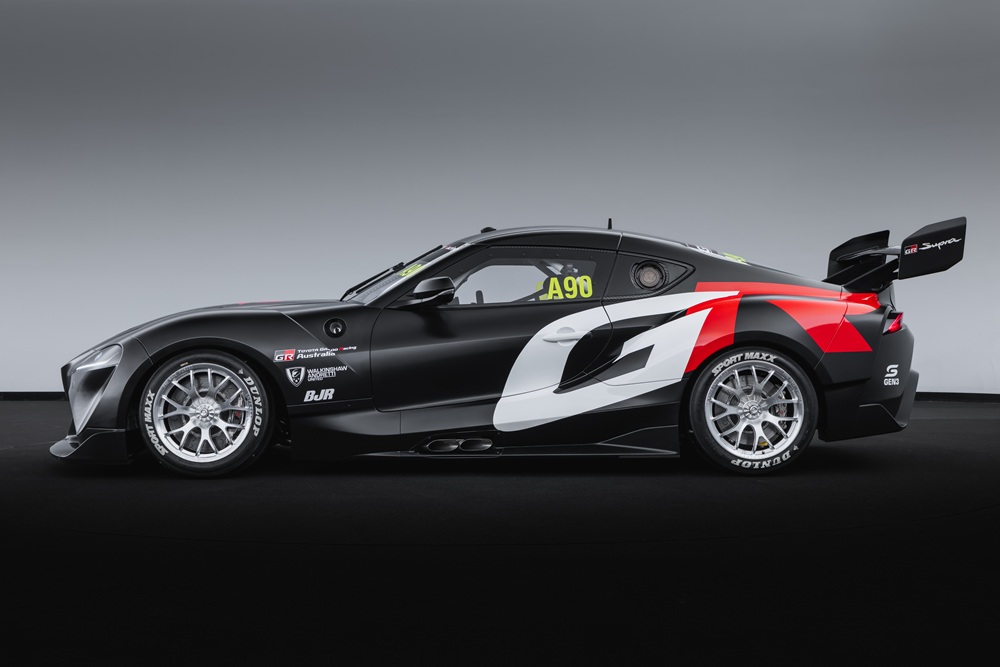
Imbued in the motorsport industry since Kelvin Smith opened the doors for business in 1985, KS Composites is a manufacturer with a pedigree of working with numerous Formula 1, GT, Le Mans and BTCC teams. Throughout its history, the Melton Mowbray-based company has worked at the very pinnacle of motorsport – and that is why KS Composites has invested in CADCAM software from Open Mind Technologies.

Having formed many close relationships with some of the leading lights in design and consultancy through prototype and development projects, KS Composites offers design services, FEA and CFD. This is complemented by a 48,000 sq ft manufacturing site that supports the design and consultancy services with everything from kit cutting, fitting and assembly to wet lay composites, autoclaves and ovens, a composite shop, machine shop and much more.

Looking at a replica race car the company has manufactured, business development manager Dan Johnston says: “On the vehicle itself we have carbon composite body panels and machined GRP and 3D printed elements. We’re hitting on all our core services with this vehicle. One of the first things to come into our new building was CNC machines. At that point, we identified that we needed a CAM package that could get the most out of our machines. We went to the market and evaluated the options, and it was clear from the offset that hyperMILL was the obvious choice.”

He adds: “hyperMILL is making our life so much easier, especially when making things like a show vehicle. We’re representing motorsport’s pinnacle in terms of performance and precision. So, when making the patterns, they had to be of the same quality – that’s what we have achieved with hyperMILL.” 

More information www.openmind-tech.com

Pre-Apprenticeship Scheme Reaches Milestone

Multi-disciplinary firm adi Group is celebrating the beginning of another year of its pre-apprenticeship scheme, which has successfully helped a number of young people embark on a rewarding engineering career. Founder Alan Lusty launched the scheme in 2016 with the ambition to transform the future of engineering and help resolve issues around youth skills development in the STEM sector. Amid a concerning lack of vocational opportunities for young people to develop an interest in and a knowledge of engineering, adi Group today offers a highly effective path into the industry for students as young as 14.

More information www.adiltd.co.uk

30-taper machine makes parts from tough materials

Leeds-based subcontract machining firm Kirkstall Precision has enhanced its capability to serve the demanding medical sector with the installation of a Brother Speedio M200Xd1-5AX, a Japanese-built five-axis CNC machining centre supplied by sole UK and Ireland sales and service agent Whitehouse Machine Tools.

For the past seven years, the company has focused almost exclusively on producing components for the medical industry, while also manufacturing surgical instruments and implants for the veterinarian sector. The company is seeing a 15-20% year-on-year growth rate due to high demand.

The Brother was chosen for its accuracy, repeatability, versatility and compact footprint. Kirkstall’s managing director Adam Thornton says: “Accuracy in the medical sector is a given. Everything has to be completely correct, so we inspect and report all dimensional tolerances. Opting for a top quality machine tool like the Brother was a fairly obvious decision.” 

Approved to ISO 13485, a globally recognised quality management system standard for medical devices, Kirkstall produces mainly low-volume orthopaedic components from challenging materials, including stainless steel, hardened stainless, titanium and other tough alloys. Brother says the 30-taper Speedio is suitable for machining these materials continually. In addition, it is able to combine on a single platform five-axis prismatic machining using the 16,000 rpm spindle and turning with the rotary torque table, which was a further key attraction. 

“We’ve used 40-taper five-axis technology for some time, but the Brother is faster and takes up less space,” reports Thornton. “It’s ideal for the smaller, high-accuracy parts we produce and has typically delivered a 20% cycle time reduction compared with our larger production centres.”

More information www.wmtcnc.com

Autonomous five-axis machining around the clock

Since 1983, Peter Josef Klein Feinmechanik GmbH (PJK) – a 50-employee subcontractor based in Sankt Augustin near Bonn, Germany – has been producing precision components and assemblies from aluminium, titanium, stainless steel and high-performance plastics for customers principally in the medical, food and aerospace industries. For metal cutting, the company mainly uses machine tools from DMG Mori, including seven DMU 60 eVo machining centres, all of which feature automation.

Two of the machines are connected via a pallet handling system, which has 40 locations and can accommodate 300 fixtures that are exchangeable between pallets. An Erowa MTS zero-point clamping system serves as the basis for the flexible, automated cell.

Second-generation Peter Klein, who runs the company with his brother Julian, says: “Our main challenges are the extreme quality customers require and the high degree of competitive pressure. Our components are accurate to within microns, while at the same time we also have to continuously check and optimise our processes.”

One way of meeting these challenges is autonomous manufacturing, with PJK using automated cells to maximise machine utilisation since 2011. It means an employee can operate several machines during day shifts, while the company gains extra production output during unmanned running overnight and at the weekend.

To ensure precise and dynamic machining, the majority of DMG Mori machining centres on site at PJK are fitted with linear drives.

Says Julian Klein: “The machines produce our range of components efficiently by five-axis machining and meet our tight tolerance requirements. Customers stipulate accuracies down to single-figure microns, which we have to hold consistently. Five-axis machining contributes to our ability to control this level of quality, as the number of manual re-clamping operations is reduced or even eliminated.”

More information www.dmgmori.com