
MCC achieves rapid machining with Esprit

In choosing Esprit to write programs for its CNC wire EDM machines and grinders, Dallas-based MCC Tooling found a CAM system so user friendly that the owner’s young grandchildren sometimes use it. More importantly, Esprit’s programming is saving MCC Tooling time and money.

MCC Tooling makes and re-sharpens custom cutting tools, step drills, form tools and dovetail cutters, in quantities ranging from one-off to as many as 100 pieces, for customers in the oil, aerospace and medical industries. The 10-employee business today has a number of machine tools that include a Mitsubishi MV1200-R wire
EDM with B axis.
MCC Tooling began using Esprit in 1999, when it purchased its first wire EDM machine, a Mitsubishi FX 10.
“After hours of extensive research and vetting different programs and software, we felt Esprit would fit our needs and price range perfectly,” says the company’s founder Marcus Alexander. “Esprit is user-friendly, works seamlessly with our machines, and integrates well with SolidWorks. It’s so easy that my grandchildren have come here and programmed their own things for us to cut out for them.”
The software also allowed the company to get up to speed with the Mitsubishi MV1200-R, which was installed in 2013 to hold closer tolerances.
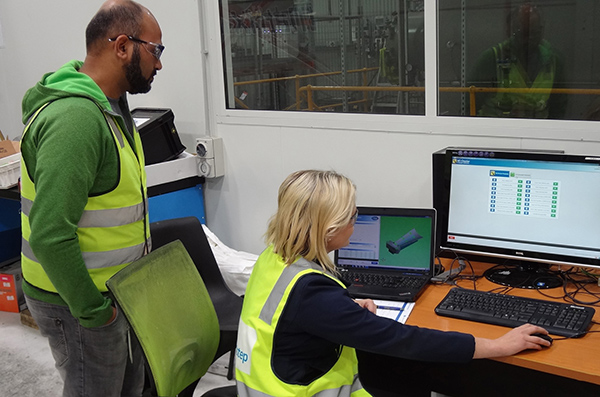
“One thing that helped us was being able to see the heads moving on the simulation in Esprit before running it on the EDM,” says Alexander. “This ensures we don’t waste time running an incorrect part and saves us money by not scrapping components.”
For further information www.espritcam.com

CCM upgrade complete at steel plant

Aarti Steels Ltd and SMS Concast, a company of SMS group, have successfully commissioned the revamped continuous casting machine (CCM) for billets in Cuttack-India.

Siam Yamato Steel Co., Ltd.

With a casting radius of 9 m, the two-strand CCM is rated for a capacity of 200,000 tons per year. Before the modernisation, the CCM cast 125, 160 and 200 mm square section sizes. Together with the revamp of the technological part of the CCM, namely the hydraulic oscillation equipment, the secondary cooling system and the withdrawal and straightening unit, the bloom section sizes 240 x 280 mm and 250 x 320 mm have been introduced.
For further information www.sms-group.com

Tru-Edge increases productivity

CNC machines rely on certain fundamentals to achieve peak performance for maximum productivity. This not only includes the machine but, importantly, the infrastructure of the facility – specifically ancillary services such as power, air and coolant.

Tru-Edge Grinding, a specialist in precision tool manufacture and reconditioning, found out first-hand what could be achieved by setting up a facility to ensure the high performance of its machines, where the company reduced power consumption by 4% while increasing productivity by double digit gains.
David Balster, director of manufacturing at Tru-Edge, which is based in St Henry, Ohio, USA, says: “At Tru-Edge we struggled for years with electrical related problems and the failure of machine electronics. After reviewing the three-phase electrical supply to our 16 Anca machines, we upgraded the power boards and replaced the cables to a higher quality with large gauge wires.”
Director of engineering, Frank Seger adds: “Replacing power boards and rewiring our facility proved to be more than a worthy investment from a view of machine uptime and, importantly, cutting costs.”
The key benefits achieved by changing the power include: greater power efficiencies, with overall power consumption reduced by 4%; increased machine uptime; reduced spare part costs; and less service related costs.
“We no longer turn off the power to the machines at the weekends as this was creating problems when they were powered back up again due to spikes in the supply,” says Balster. “With Anca’s idle shutdown feature, we found that there was no increase in our overall power usage by leaving the machines powered on.”
For further information www.anca.com

Step change for tape finishing

The precision machining of wave-shaped components to reduce roughness and friction, as well as for structuring and increasing the contact area of functional surfaces, can now be carried out even more efficiently: Thielenhaus Superfinish has released a new self-loading tape-finishing machine for machining shafts, bearing and sealing seats. The Cube Evo is available as a freely programmable unit and is designed to meet future Industry 4.0 standards.

A program with all the parameters required for the machining process, such as workpiece speed, machining time, oscillation, grinding pressure and tape speed can be stored and loaded for every workpiece that needs to be produced. This functionality makes it possible to index precisely to all tape finisher positions via the controller, or manually using the positioning system. Furthermore, the self-explanatory user operation surface with its pull-down menus allows all settings to be carried out quickly and easily by the operator without special training, says Thielenhaus.
Automatic loading technology reduces the machine’s non-productive time and loading processes to an absolute minimum. With its quickly adjustable tape-finish units, the modular construction provides flexible, cost-neutral configuration. In the standard working area, workpieces can have dimensions of up to 200 mm diameter and 800 mm length.
As an option, the new finishing machines can be equipped with an integrated three-axis handling system, programmable via the Siemens central control system. The grippers, tailor-made for the workpiece, have been designed as double loading to achieve short changeover times and can be quickly exchanged to adapt to the respective type of component.
For further information www.thielenhaus.com

Tool grinding software upgrade

NUM has unveiled a major upgrade to its Numroto tool grinding software. Offering numerous additional features and enhancements, Version 4.0 is designed to increase the productivity of tool and cutter grinders without the need for additional hardware.

A notable enhancement sees ball-nose and corner radius tools in Numroto allow the programming of a helix step on end mills. For the first time, it is possible to program different helix angles for the end of the radius and beginning of the cylindrical section.
A further upgrade concerns Numroto Draw, which automatically processes the geometry data used for grinding a tool to generate a basic drawing. Many Numroto users choose to provide this drawing together with the finished ground tool to their customers – to show standards compliance. The latest software release extends this capability by automatically displaying the geometry of the grinding wheels and grinding wheel packages needed to make the tool in the drawing. Furthermore, all the important dimensions are added automatically to the grinding wheels. The time-saving benefits of this approach are said to be considerable: a grinding wheel assembly drawing can be printed out for the machine operator to help speed set up without having to involve the design department, which is especially advantageous for companies handling numerous small production runs.
The 3D simulation facilities of Numroto 4.0 have also been enhanced. For instance, coolant holes in the 3D blank are displayed automatically, and users can now add DXF comparison profiles. What’s more, there is a new measurement mode which provides comparator functionality, while the programmed feed rate can now be displayed during 3D simulations.
For further information www.num.com