

Schuler buys Farina Presse

Schuler has acquired Farina Presse, the Italian manufacturer of presses and forging lines.

With its acquisition of the engineering specialist based in Suello, northern Italy, the Schuler Group has rounded out its own product portfolio in the field of forging and single-stroke presses. Farina Presse will gain access to Schuler’s global distribution network for its products, and continue to operate under its own brand name. In 2017, Farina Presse generated sales of around €21m with just over 40 employees. The company is particularly successful in the automotive industry.
For further information www.schulergroup.com

Tool of the year competition

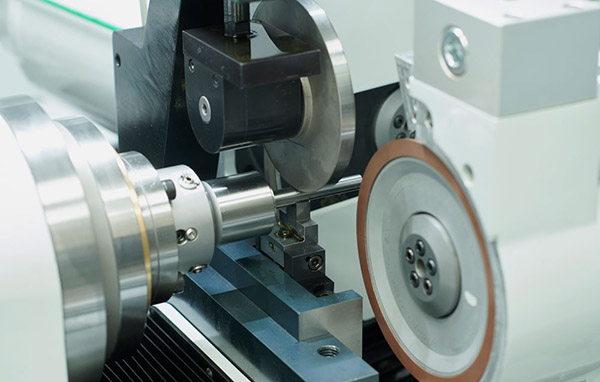
Tool and cutter grinder specialist Anca is launching a competition to find the ‘Tool of the Year’, with the winners being judged and announced live at Chicago’s IMTS exhibition in September.

The prize is a trip for two to Anca’s headquarters in Melbourne, Australia to see first-hand how the technology is created. To enter, share a photo or video of the tool being ground on an Anca machine on LinkedIn, Instagram or Facebook using #ANCATooloftheyear18 before 20 August. Then visit the web address below to complete an entry form.
For further information www.anca.com/Tool-Of-The-Year-2018

Walter installs assembly flow line

A new assembly line with streamlined work flows that result in shorter machine build times – and therefore reduced delivery times – has been created by Walter at its Kuřim site in the Czech Republic.

Walter Helitronic Power and Helitronic Mini Power tool grinders are currently being produced on the line, and it is planned that the Helitronic Vision 400L will be added later this year. Construction of the multi-million euro project took just 14 weeks, involving the installation of a 90 m long continuously moving conveyor belt that spans the complete assembly facility and travels directly into the shipping department.
For further information www.walter-machines.com

Online ordering system launched

Roemheld’s modular systems for facilitating the repositioning or exchange of a die in a power press using mechanically or hydraulically actuated roller or ball bars may now be ordered more quickly and efficiently.

A new online configurator on the company’s website simplifies the process and ensures short delivery times. The configurator is optimised for use on smartphones and tablets, and an app is being developed for Android and Apple devices.
Maximum carrying capacity is 160 kN per metre for the hydraulically-lifted roller bar range, which allows linear movement only. Pistons fitted to the underside raise individual rollers or the entire element by 2 mm, depending on the model, and lower it after successful die positioning. Especially high carrying capacities are provided when the entire bar is lifted.
If a lighter load is being moved, mechanical bars featuring spring preload are available with the rollers or balls slightly protruding. They are pressed into the bars to be flush with the bed when the die is clamped. Ball elements enable the displacement of loads in any direction. Maximum capacity is 66 kN per metre for roller-type bars.
Standard bars are suitable for installation in T-shaped and rectangular slots in the bed, and are available in a variety of lengths, widths, slot depths and centre distances between the rollers or balls. The casing is made of either aluminium or steel; the maximum operating temperature being 250°C.
If there are no slots in a press bed, spring-loaded roller or ball inserts may be used. The inserts are individually placed into drilled holes and provide carrying capacities of up to 2.4 kN per module, with a stroke of up to 3 mm.
For further information www.roemheld-gruppe.de/productconfigurator

Hydraulic press is fast and energy efficient

With the introduction of its latest servo-hydraulic press, AP&T says it is offering short cycle times, high precision, low energy consumption and minimal need for maintenance in comparison with conventional hydraulic presses and many servo-mechanical presses.

Several technical solutions have helped AP&T’s designers combine high performance with low operating costs. First and foremost, the hydraulic system’s control valves have been replaced by servo motors, which means that speed, position and press force are entirely controlled electrically.
“The design has made it possible to limit the number of moving parts, cut down on oil volume, reduce pressure in the hydraulic system to a maximum of 250 bar and eliminate the effects of any variations in oil temperature,” says AP&T’s product manager for presses Patrik Haglund. “This lays the foundation for a very robust process with a high degree of availability and repeat accuracy, at the same time that the need for maintenance is substantially reduced.”
Energy consumption has also been streamlined by 40-70%, depending on the application. Here, the heat loss generated by pressure valves can be avoided, and some servo motors are used as generators at retardation. The cushion cylinder of the press is also operated by servo motors, which work as generators. Braking energy is distributed to the motors used for acceleration and forming through a kinetic storage system and a central direct current converter. Since the energy is stored internally in the press, it is not necessary to use electricity from the grid during peak loads, which results in a lower connection fee. Stored energy surpluses can also be restored to the grid.
For further information www.aptgroup.com