Tungaloy continues its ‘Think Green’ sustainability journey

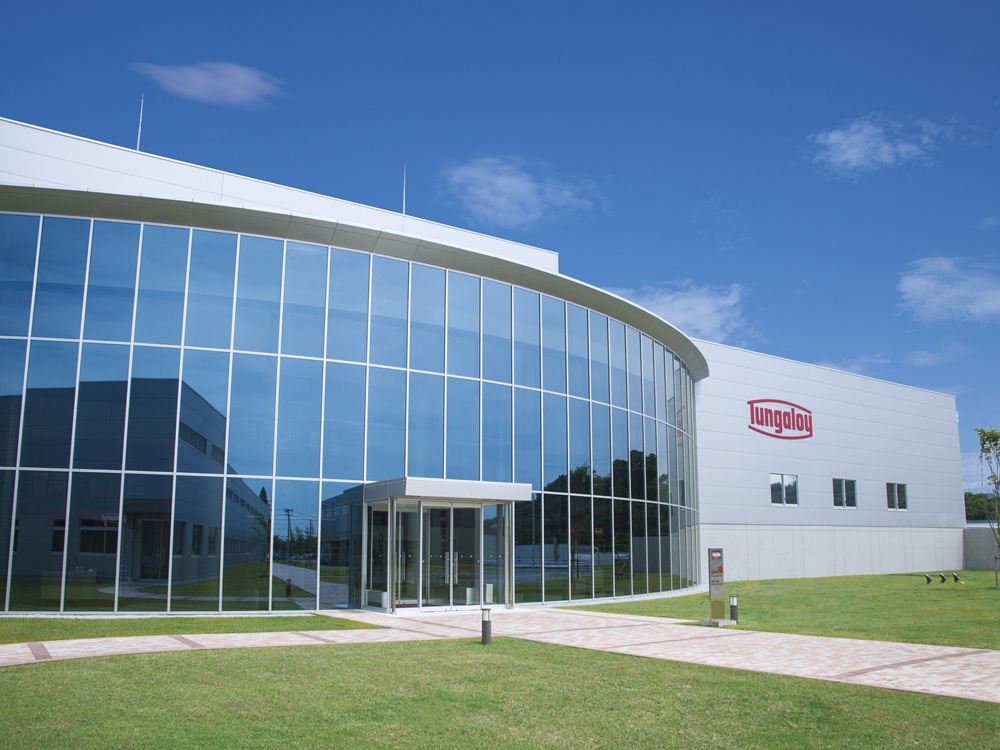
Around the world, manufacturers are rethinking how industry can grow while protecting the environment for future generations. For Tungaloy Corporation, this balance between innovation and responsibility has guided its Think Green initiative, a programme focused on real, measurable actions to reduce environmental impact and contribute to a more sustainable society.

In 2025, Tungaloy continued to move forward with this commitment, expanding renewable-energy use, introducing green hydrogen in manufacturing and strengthening product design through environmental certification standards. These efforts reflect the company’s belief that lasting progress comes from genuine collective responsibility, not simply from meeting compliance requirements.

Tungaloy obtained ISO 14001 (for environmental management) in 1997, becoming the first in Japan’s cemented-carbide tool industry to do so. In 2024, the company’s Iwaki headquarters added ISO 50001 (energy management), reinforcing a management approach that combines quality, safety and energy efficiency.

Since 2022, the Nagoya Campus has operated entirely on electricity from renewable sources. At Iwaki, solar panels installed in 2015 generate about 160 MWh annually, reducing the plant’s CO₂ footprint by approximately 75 tons every year.


Within its own operations, Tungaloy has taken additional steps to lower emissions. In 2023, Iwaki switched from kerosene to city gas, cutting emissions by 27% in 2024, while the Nirasaki Campus introduced locally produced green hydrogen, reducing a further 300 tons of CO₂ annually. Together, these measures advance the company toward its goal of a 46% reduction by 2030 (compared with 2013) and carbon neutrality by 2050.

In both 2024 and 2025, Tungaloy received the Environment Grand Prize from the Japan Cutting & Wear-Resistant Tool Association, acknowledging the company’s long-term environmental efforts. Tungaloy sees these awards not as a contest, but as a reminder of the shared responsibility to advance sustainability across the manufacturing sector.

More information www.tungaloy.com

TaeguTec releases next-generation miniature milling cutters

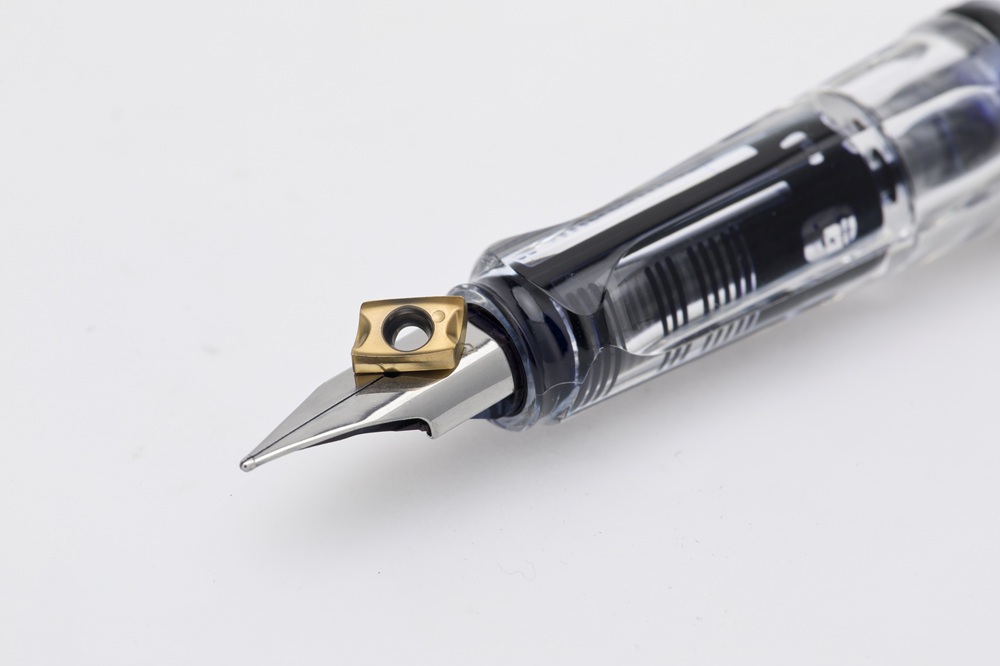
Cutting tool technology specialist TaeguTec has launched its WIN-MILL series, featuring the CVKT line of inserts and cutters for miniature machining applications. This comprehensive solution addresses the increasing demand for high-performance, cost-effective tooling in the precision manufacturing sector, offering diameter ranges from 6 to 20 mm.

TaeguTec says the WIN-MILL series represents a significant advancement in miniature end mill technology, featuring indexable inserts that provide higher performance than traditional carbide end mills. The system’s design incorporates innovative V-shaped, two-corner inserts that enhance stability and precision across various applications, including shouldering, high-feed milling, straight ramping, helical ramping, slotting, profiling and cavity machining.

Central to the WIN-MILL’s performance is its V-bottom contact design, which maximises clamping stability between the insert and cutter pocket. This novel approach ensures machining stability during demanding operations such as ramping and high-feed machining, while maintaining the precision necessary for miniature applications. The improved contact geometry offers enhanced rigidity compared with conventional designs, enabling more aggressive machining parameters and longer tool life.

The series offers productivity improvements through its optimised tooth configuration. Unlike traditional designs that typically accommodate only one or two inserts per tool, the WIN-MILL series maximises the number of available cutting edges. For instance, a 10 mm diameter cutter features three insert pockets compared with the industry standard of two, increasing productivity by up to 50% in certain applications. This increased tooth count provides four, five and seven insert positions on cutters ranging from 12 to 20 mm in diameter. When combined with a larger core diameter of the tool, end users experience improved rigidity and stability during machining operations.

More information www.taegutec.com

Horn introduces latest indexable-insert mills

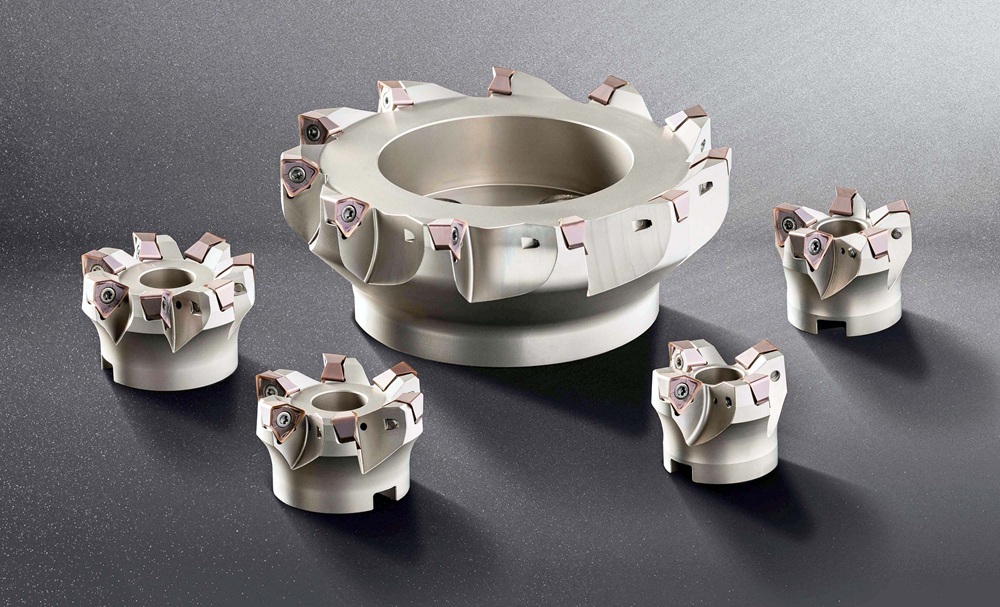
Tooling manufacturer Horn has expanded its DA milling programme for corner, face and plunge milling. Suitable for roughing or finishing, the new DA65 system uses a larger insert than the existing DA62, enabling greater axial depths of cut. The patented, six-edged, indexable insert can be used on both sides and has three axial and three radial cutting edges per side, leading to an economical cost-per-edge ratio.

The sintered, trigonal insert has a thick cross-section and, despite the negative lead angle, exhibits a positive cutting geometry, ensuring soft machining characteristics and reduced cutting forces. The selected axial and radial rake angles result in low torsional moment and less transverse load on the spindle, allowing system deployment on older and less powerful machines. A further advantage of the chosen axial rake angle is efficient chip evacuation, especially during helical plunging.

The cutting edge profile generates a precise 90° corner angle, the maximum cutting depth being 7 mm. As a point of note, the inserts are available with corner radii of 0.8 or 1.2 mm. The proven SA4B carbide substrate is an all-rounder for milling steel, stainless steel, cast iron and aluminium workpiece materials. Inserts are also available in grades SC6A or IG6B for machining other material groups.

The tools come as end mills in diameters of 32 and 40 mm featuring two or three inserts, and as shell milling cutters with a diameter of 50, 63, 80 or 100 mm. Depending on the size, there are four, five, seven, nine or 11 inserts. All tools have provision for internal coolant supply to the cutting zone.

More information www.horn-group.com

MAXIMUM CLEANLINESS: FAR MORE THAN A PARTS WASHING PROCESS

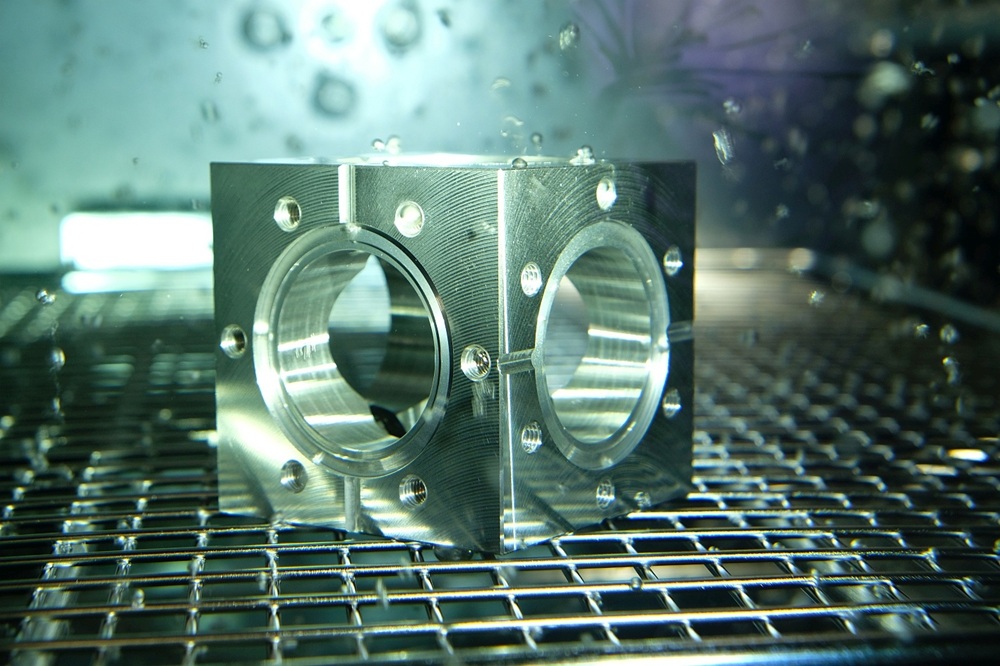
To secure a future-proof and competitive position in the market, numerous companies are restructuring their product ranges. The trend is towards sophisticated solutions for high-tech industries. This not only means higher demands on the precision of components, but also extremely strict specifications regarding particulate and film cleanliness, which must be achieved in a process-reliable, economical and sustainable manner. The trend demands a different approach to cleaning: a critical look at the entire production chain and manufacturing environment, and an experienced partner.

In the course of industrial transformation, more companies are focusing on the manufacture of high-quality products and components with good margins. The focus is on high-tech industries that promise stable demand through growth in the future. The extremely high demands on manufacturing precision in these sectors – such as e-mobility, optical, sensor technology, photonics, thin-film technology, vacuum, laser and aerospace – include the cleanliness of components. This factor applies regardless of whether the components are millimetre-small connecting elements, precision optics or metre-sized structural components, and regardless of the materials from which they are manufactured.

The trend poses challenging tasks for parts cleaning. Unlike conventional component cleaning, which usually involves removing large quantities of manufacturing residues such as chips and processing media, ultra-fine and high-purity cleaning is all about removing minimal residual contamination. The specifications for particulate cleanliness extend into the sub-micrometre range.

Depending on the industry, component and its application, film-like residual contamination, such as organic and inorganic residues, ionic residues and microorganism residues, must be removed in a process-reliable and reproducible manner down to nanometre levels. In high-purity applications, such as the manufacture of components for EUV lithography, so-called hydrogen-induced outgassing (HIO) substances must also be considered.

The requirements for particulate cleanliness to be met during cleaning are specified by the corresponding surface cleanliness class (ORK) according to EN ISO 14644-9 (SCP – surface cleanliness by particle concentration) or the corresponding VDI guideline 2083, sheet 9.1. Film-chemical, organic and inorganic surface cleanliness is usually defined by individual specifications or factory standards. In addition, outgassing rates may be evaluated using mass spectrometers.

These demanding tasks require a technology partner which not only has comprehensive technological expertise and knowledge of the applications and physical relationships, but also experience in the field of cleaning and appropriate test facilities for cleaning trials under production-related conditions. As an experienced full-service provider of future-oriented and globally available solutions for ultra-fine and high-purity cleaning, Ecoclean says it meets these requirements.

To meet these very strict cleanliness specifications in a process-reliable, reproducible and sustainable manner, several cleaning steps are usually required along the manufacturing chain. The following questions play a role in selecting the optimal solution for the respective cleaning process: What is the workpiece material? What are the geometry, dimensions and weight of the component? What contaminants require removal? What cleanliness requirements must be met? Which cleaning process and chemicals are suitable for the task?

On this basis, it becomes possible to determine which and how many cleaning steps are necessary, using which medium and which process technologies. Other aspects that need consideration include the required quality of the rinsing medium and the appropriate drying technology, as well as clean part handling and the operating conditions (such as a cleanroom).

The basis for ultra-fine or high-purity cleaning is “oil- and grease-free” parts. To achieve and maintain this level of cleanliness, a cleaning process is carried out after the various processing steps, such as machining, forming, grinding or polishing. The effect of the cleaning medium deployed is enhanced by various process technologies that can be combined in almost any combination, such as steam degreasing, spray, high-pressure, immersion, ultrasonic and megasonic cleaning, as well as plasma cleaning, injection flood washing, pulsed pressure cleaning (PPC) and ultrasonic plus. These process options ensure that the required cleanliness is consistently achievable, even for geometrically complex workpieces.

For intermediate cleaning processes or parts with less stringent cleanliness specifications, modular single- or multi-chamber systems operating under full vacuum, such as EcoCstretch or EcoCvela, are typically used. Depending on the processing medium, these systems can be operated with an environmentally friendly solvent, such as hydrocarbons or modified alcohol, or a specially selected water-based cleaner. The design, system engineering, media flow and treatment of the systems are specially tailored to ultra-fine cleaning and high-purity applications. Thanks to the process mechanics concentrated in the working chamber – like injection flood washing, ultrasound and PPC – this type of system also offers advantages when cleaning large and complex workpieces.

Ultrasonic multi-bath immersion systems are the optimal solution for parts with a wide variety of materials, high throughput requirements and/or strict cleanliness specifications. In addition to individually designed cleaning systems for high-end applications, Ecoclean offers an efficient solution with its UCMSmartLine and UCMPerformanceLine series of systems consisting of standardised modules. The electrical and control technology is integrated into the respective modules for the process steps of cleaning, rinsing, drying, loading and unloading, as well as for the transport system. This, together with the provision of process mechanics tailored to requirements, such as PPC, allows the systems to be optimally adapted to the respective task. The option of upgrading the cleaning system at a later date ensures future-proofing in the event of increased requirements.

Ecoclean determines the right system concept for the application and the optimal cleaning process in its own High Purity Test Centre. It has a Class 7 clean room with Class 6 zones and various measurement and analysis methods (microscopy, residual gas analysis, UV light and fluorescence measurement). In addition to the product-specific development of cleaning processes and parameters, Ecoclean also uses its test centre to carry out contract cleaning orders. A packaging station for cleaned parts ensures that the high level of cleanliness achieved is also delivered to the customer.

More information www.ecoclean-group.net

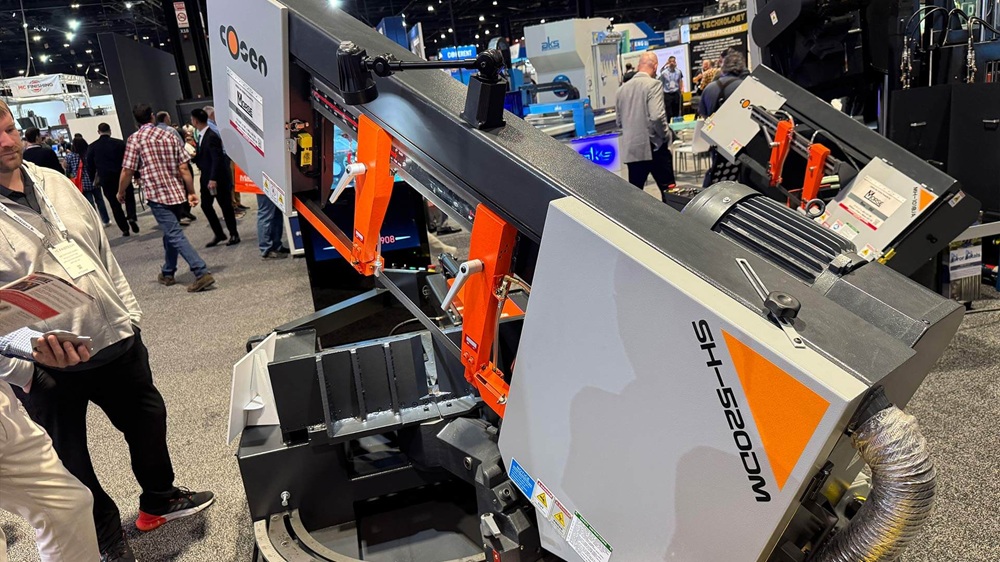
Cosen fills the gap with new SH-520DM bandsaw

Any new fabrication equipment worth mentioning is often the result of a company listening to the needs of its customer. As just one example, fabricators working in structural steel, heavy manufacturing and job shop environments sometimes find themselves forced to compromise by investing in a small saw that cannot keep pace with production needs because the large-format saw would be overkill in more ways than one. The engineers at Cosen Saws, however, listened to customers and developed a solution with a product that it says “fills the gap” – the SH-520DM bandsaw.

Peng Huang, president of Cosen Saws North America, says at the heart of the SH-520DM double-mitre bandsaw is its ability to make a mitre cut up to 60° in either direction. For a variety of shops, that range is critical as it allows aggressive angles and precise cuts on I-beam, channel, tubing and other structural material without the need for multiple set ups or added equipment.

Huang says manufacturers in the utility and fabrication space need a saw that can handle straight cuts and severe angles, and the SH-520DM gives them that flexibility while keeping the material flow straightforward and well-supported.

“There was a need for the shops that started out with a smaller machine and wanted to grow their production into the next machine, but the next machine was too big to fit their floor space,” he explains. “The introduction of this model not only saved them on floor space, it also produces at the capacity that they can comfortably grow into.”

Cosen made a deliberate decision to go semi-automatic with the SH-520DM. Huang notes that not everyone needs a fully computerised machine. There is a strong market for saws that are intuitive, practical and versatile without heavy programming. The SH-520DM is designed to meet that need.

More information www.cosensaws.com