
Zebra makes investment in Apera AI

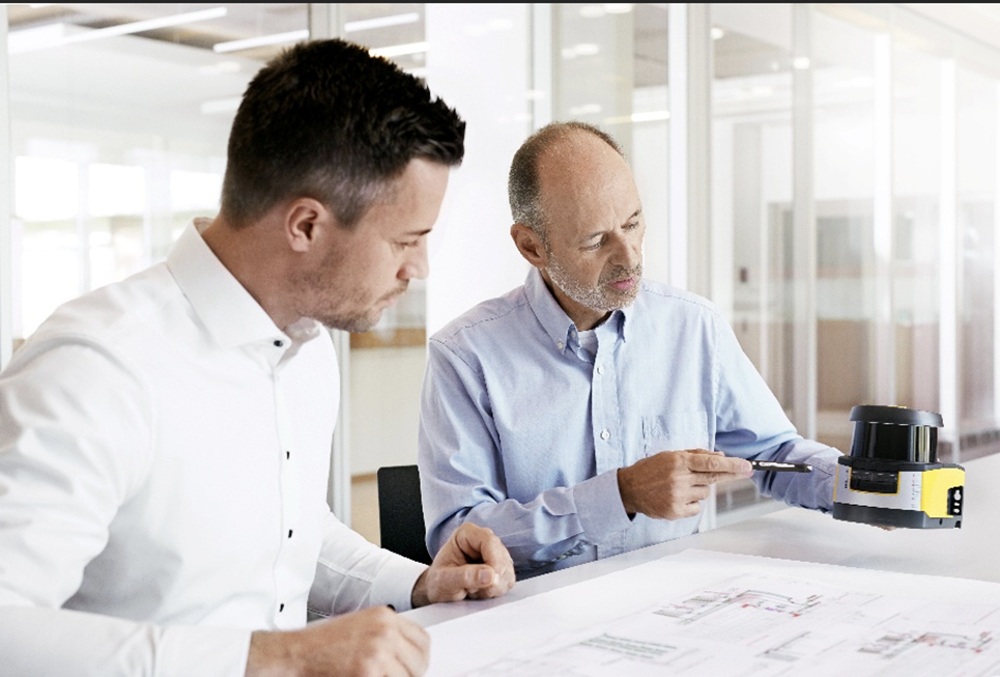
Zebra Ventures, the corporate venture capital arm of Zebra Technologies Corp, has made a strategic investment in Apera AI, a provider of 4D Vision for industrial robots. This venture investment reinforces Zebra’s focus on digitising and automating workflows to accelerate frontline operations for organisations in the manufacturing and logistics industries and beyond.

Apera AI’s 4D Vision system equips robots with real-time visual intelligence, enabling them to locate, identify and manipulate complex parts with speed, precision and reliability. Apera AI uses light-resilient stereo vision and AI models to function reliably in dynamic, real-world factory conditions, adapting to shifting bins, changing lighting conditions, worn grippers and complex part geometry.

More information www.zebra.com

Boosting efficiency with automated robot welding system

Panasonic Factory Solutions has implemented its TAWERS G4 Welding Robot System for Stadler Anlagenbau, helping to automate manual welding processes, significantly reduce cycle times, and increase production efficiency and scalability.

Stadler manufactures specialist systems for turnkey recycling and waste sorting plants, with all systems and components produced in-house. The company already uses Panasonic G3 systems to manage welding across conveyor belt frame systems, pre-assembly and final assembly operations.

The new TAWERS G4 Welding Robot System further improves welding process management by combining control functions into a single system for high-quality arc welding. It features greater controller processing power, faster axis speeds and optimised controller-to-robot communication. In addition, the system includes a high-resolution touchscreen for simplified programming, while enhanced contact tips improve welding quality and reliability.

Before installation, Stadler carried out extensive simulations and test welds at Panasonic’s Robot & Welding Test Centre in Neuss, with employees receiving specialist training to maximise the system’s capabilities.

Bruno Stützle, head of production at Stadler, says: “Panasonic’s robot welding systems are easy to operate and maintain. As a result, the cycle and throughput time for some products, including all preparation, has been reduced to one-third of the original time. Apart from scheduled maintenance cycles, the G4 has exhibited faultless reliability since installation.”

Stadler also uses Panasonic’s Desktop Programming & Simulation (DTPS) software across its production line, providing remote digital access to real-time production and operating data. The system allows simultaneous planning and simulation of manufacturing processes, improving flexibility while saving time and resources.

The addition of a third TAWERS Welding Robot System has significantly increased Stadler’s production efficiency, giving the company greater scalability as it expands internationally and explores new opportunities.

More information www.bit.ly/4tHK6fy

Flexxbotics updates FANUC industrial robot connector driver

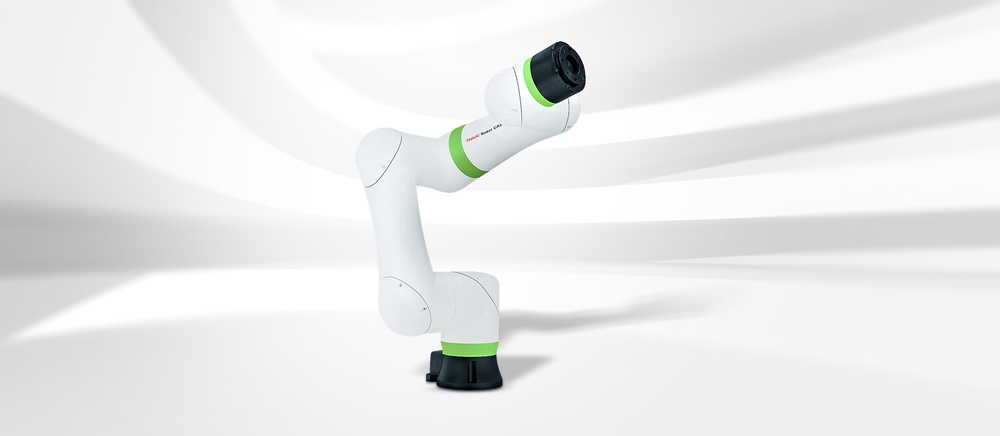
Flexxbotics has updated the FANUC industrial robot connector driver within its ‘Transformers’ open-source project on GitHub, expanding robot-to-machine interoperability, real-time robot awareness and secure bi-directional control across automated production environments.

The enhanced FANUC connector driver is designed to simplify one of manufacturing’s long-standing challenges: enabling industrial robots to communicate effectively with the wide range of machines, safety systems, inspection equipment and plant assets used across modern factories.

Available now under the permissive Apache 2.0 licence, the updated connector allows FANUC robots and cobots to communicate in a standardised way with more than 1000 makes and models of factory equipment through Flexxbotics’ software-defined automation runtime.

The updated driver delivers standardised interoperability across both open industrial protocols and proprietary vendor interfaces, secure read/write execution for closed-loop robotic cell automation, and improved real-time visibility of machine states and process variables. It also supports high-frequency, parallelised data pipelines, capturing more operational data including robot speed, force, torque, cycle performance and other telemetry to support advanced orchestration, granular data collection and physical AI training.

“Robotic automation has historically required custom point-to-point integration in every workcell and process,” says Tyler Modelski, CTO and co-founder of Flexxbotics. “By further extending our FANUC industrial robot transformer, we’re making connectivity with plant machines and equipment standardised and many-to-many, which enables robotics to scale securely across factories.”

The updated transformer also supports applications that include robotic machine tending, automated job changeovers, cluster orchestration, closed-loop autonomous process control and digital thread traceability for regulatory compliance.

Tyler Bouchard, CEO and co-founder of Flexxbotics, adds: “Open interoperability is essential for scaling robotics beyond isolated work cells. By providing our FANUC connector driver as open source, we’re giving manufacturers a production-ready foundation for building truly autonomous robotic factories.”

More information www.flexxbotics.com

Smart FMS from SW combines trio of core technologies

Machine tool manufacturer Schwäbische Werkzeugmaschinen (SW) has opened a new chapter in automation systems with the launch of its Smart FMS (flexible manufacturing system), designed to enable flexible, resource-saving and sustainable workpiece processing regardless of batch size.

Presented for the first time at the Automatica and EMO exhibitions last year, the Smart FMS concept combines three core technologies: the Sfix automated clamping system, the S-cell mobile robot cell, and a pallet-changing system.

Unlike traditional production lines built around fixed processes, Smart FMS enables the flexible machining of different workpiece types and batch sizes without lengthy changeovers. This capability helps manufacturers improve machine utilisation, reduce set-up times and lower material and energy consumption.

The Sfix system simplifies workpiece clamping by replacing individual fixtures with a modular set up built from standardised components. In the Sfix-cell, a robot automatically assembles the required clamping device in just a few minutes using CAD data and SW’s patented Sfix plate.

Michael Kreuzberger, product manager at SW, says: “Sfix makes the clamping process plannable and reproducible. This significantly reduces set up and storage costs and increases process reliability, especially with frequently changing components.”

The S-cell system adds mobile automation to the process. A mobile platform carrying an industrial robot moves autonomously around the production facility, loading and unloading workpieces between machining, cleaning and assembly stations without rigid interlinking.

Combined with SW’s SmartFlow orchestration software, the system uses AI-supported planning to adapt dynamically to changing production requirements without manual intervention.

Kreuzberger adds: “Companies are looking for solutions that are flexibly scalable and do not require long changeover times. The Smart FMS provides exactly this foundation, regardless of industry, batch size or workpiece variant.”

More information www.sw-machines.com

GrindingHub 2026 isfully booked 

Rising energy and material costs, volatile markets, geopolitical uncertainties, and ongoing pressure to innovate and improve efficiency are currently shaping the operating environment for grinding technology. This makes GrindingHub in Stuttgart this week all the more noteworthy: on 5-8 May, some 460 exhibitors from 28 countries will showcase their latest advances.

The trade show has established itself as a key platform for professional exchange and the presentation of practical solutions related to the grinding process. With three fully booked halls, the number of exhibitors has reached a level comparable to that of 2024, sending a clear signal in an economically challenging environment.

More information www.grindinghub.de/en