

The Hainbuch approach to zero-defect manufacturing

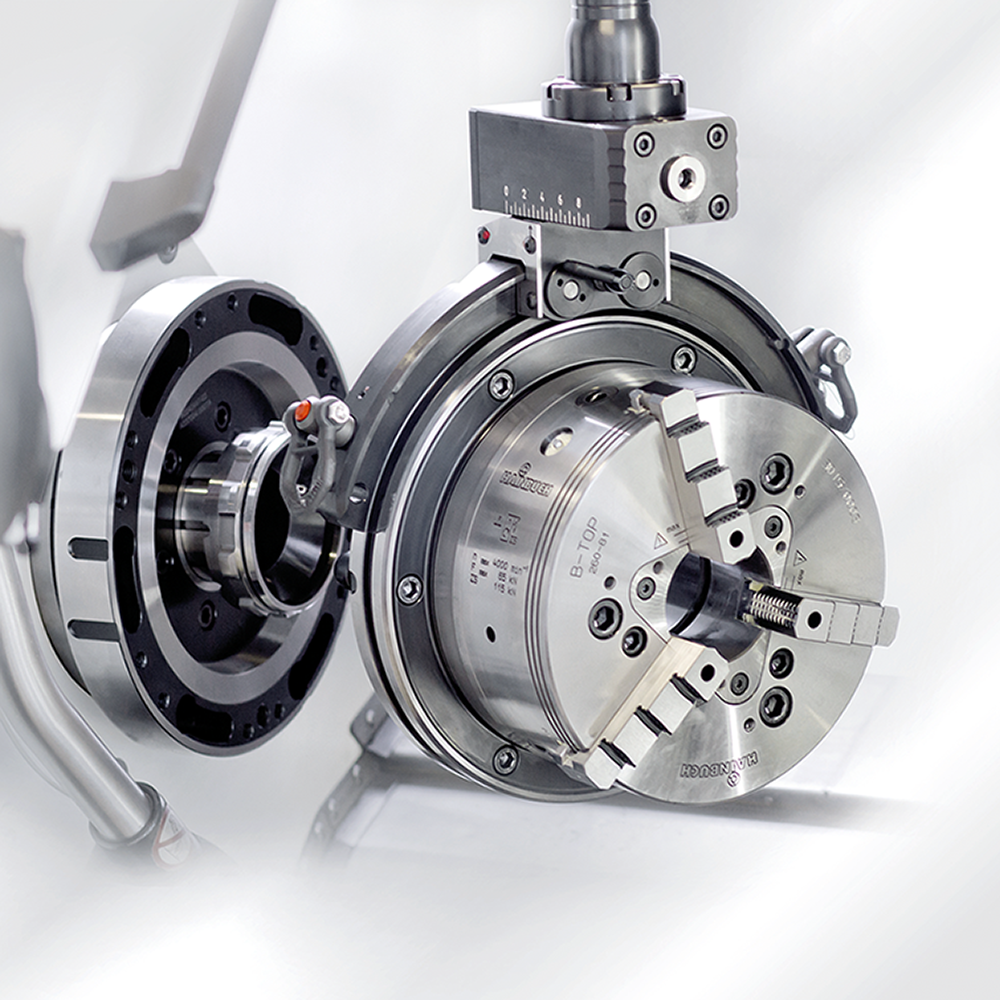
Work-holding specialist Hainbuch takes a comprehensive approach to zero-defect manufacturing. Stefan Nitsche, director main products, describes the basic requirements for clamping devices: they must be impervious to dirt and require almost no maintenance. Furthermore, they must offer very high rigidity and holding forces, with high concentricity accuracy offering deviations of no more than 5 µm, and minimal centrifugal losses.

Nitsche also recommends that users always use the right clamping device for the workpiece, even if this increases the set-up effort. For example, ID clamping is the best solution for five-sided machining. However, if the workpiece does not have the necessary clamping bore for this strategy, Nitsche believes that OD clamping with chucks is the ideal solution.

Says Nitsche: “We make use of our Centrotex quick change-over interface and Docklock zero-point clamping system to keep manual set-up times to a minimum – under one minute with our system instead of 30 minutes or so using conventional means – and change-over accuracy down to no more than 3 µm.”

Hainbuch’s measuring intelligence, which enables in-line process control, has been in successful use for over 15 years now; the company describes it as its third ‘zero-defect’ component. It checks the pre-machining clamping diameter down to the nearest micron, and detects the workpiece system.

“In addition, the actual clamping force on the workpiece is measured continuously,” says Nitsche.“As components gain in complexity, this represents a crucial process stability factor. We’ll be showcasing all three technologies and products live at the EMO 2023 exhibition in Hanover in September. Using Centrotex or Docklock, it’s child’s play to change over our clamping devices in seconds with microscopic precision, or use our IQ clamping devices for high-precision clamping while simultaneously performing various measuring operations.”
For further information www.hainbuch.com
Gripper technology supports cobot applications

The adoption of collaborative robots across multiple sectors continues apace as increasing numbers of manufacturers realise the potential these robots offer to provide a cost effective and productive solution. Just as these robots have evolved in recent years to provide greater reach and payload capabilities, so too have the gripper technologies they use. Why? Well, not only to cater for a wider range of applications, but also to ensure that the gripper design and functionality complies with ISO TS 15066, which provides guidance for cobot use.

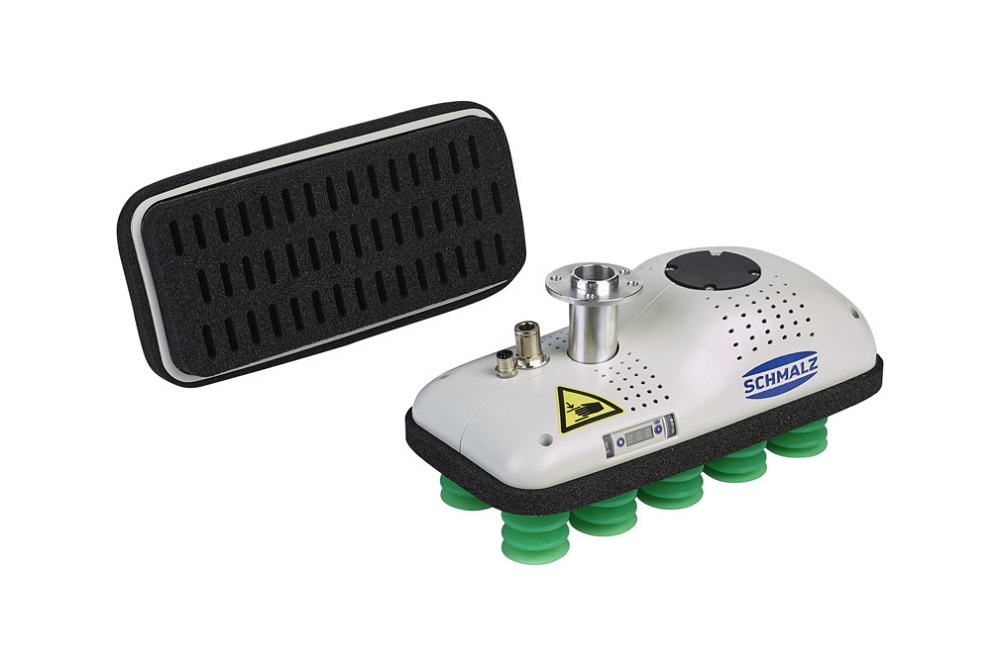
New additions to the Schmalzrange include the FXCB/FMCB area grippers, which support handling with cobots. Applications include end-of-line packaging, and pick-and-place tasks. The design of these gripper systems, which uses 3D printing as part of the manufacturing process, complies with ISO TS 15066, while the FXCB variant also includes integrated vacuum generation. Additional features of the range encompass communication technology via IO-Link, and an integrated NFC (near field communications) chip.

The Schmalz FQE series offers flexible handling of workpieces, regardless of size and geometry from different pick-up positions. Also designed for use with cobots, these gripper systems provide solutions to handling applications across multiple sectors that include the automotive, glass and electronics industry, in addition to end of line packaging and intralogistics tasks.

The ‘X’ variant of this area gripping system comes compete with an energy-efficient, fully integrated pneumatic vacuum generation system, while the alternative ‘M’ variant is for operation with an external vacuum generator. With their low weight and low noise levels, together with their smooth rounded design, the grippers are also suitable for human–robot–collaboration applications, meeting the ISO TS 15066 standard.
For further information www.schmalz.com

New round magnetic chuck for five-axis machining

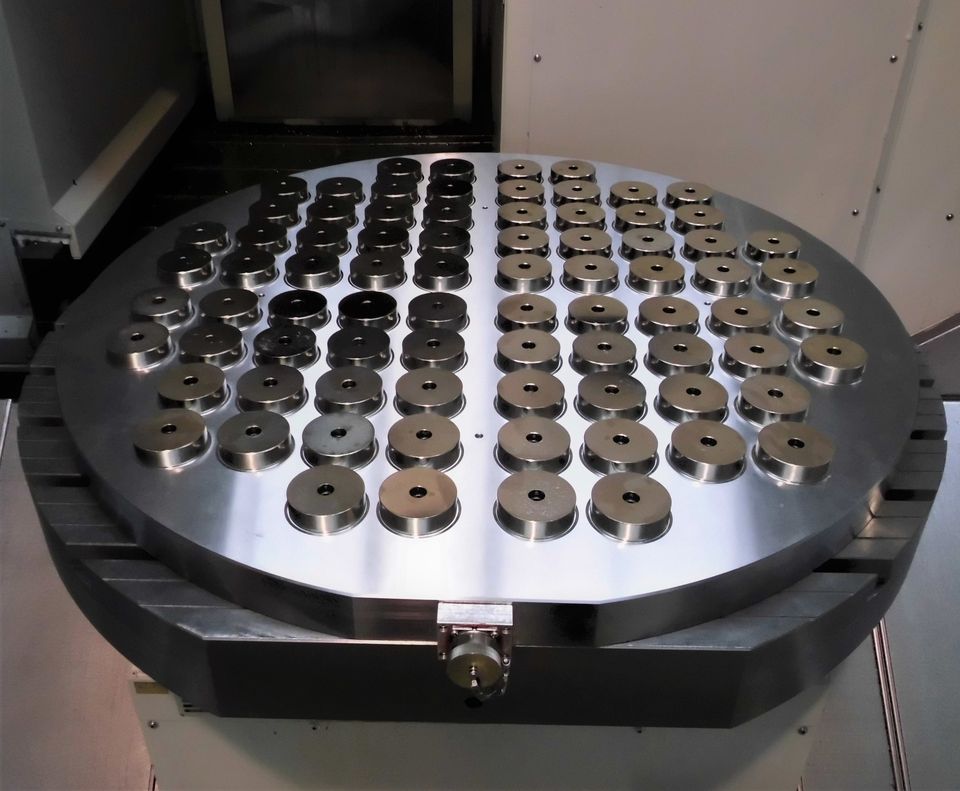
SMW Autoblok Group is introducing the MillTec circular magnetic chuck for precision five-axis machining. Working in five axes allows for the use of shorter tools to increase cutting feeds and speeds. A machine equipped with this technology makes it easier to perform complex operations thanks tofive-sided access to the part, including complete profiling, undercuts, through holes and pockets.

According to SMW Autoblok, shops can achieve optimal machining performance when all five faces of the workpiece are accessible. In contrast, when deploying traditional clamping systems, machine shops often encounter limits within the processing area due to the presence of features such as brackets. As a result, many types of components end up requiring multiple set-ups, adding time and cost to the machining process. With MillTec, users clamp the workpiece from the base, without any obstacle to the tool, reducing set-ups and optimising cost efficiencies to ensure a price-competitive component that maintains profitability.

The reduced thickness (MTG: 42mm – MTB: 51mm) and lightweight of the magnetic chuck, further assist the machine’s performance, enhancingits useful range. Users will find that the MillTec circular magnetic chuck presents a steel frame that it is possible to machine to create references, holes or alignment keys.

SMW Autoblok’s Mag Autoblok division includes a full line of permanent electromagnetic chucking systems for quick and flexible workholding on horizontal and vertical milling machines, vertical turning centres, FMS systems, grinding machines, EDM machines and more. A full line of magnetic lifters for loading and unloading workpieces on is also available.
For further information www.mag-tecnomagnete.com/en

Staubli Fluid Connectors Powers end-of-arm tools

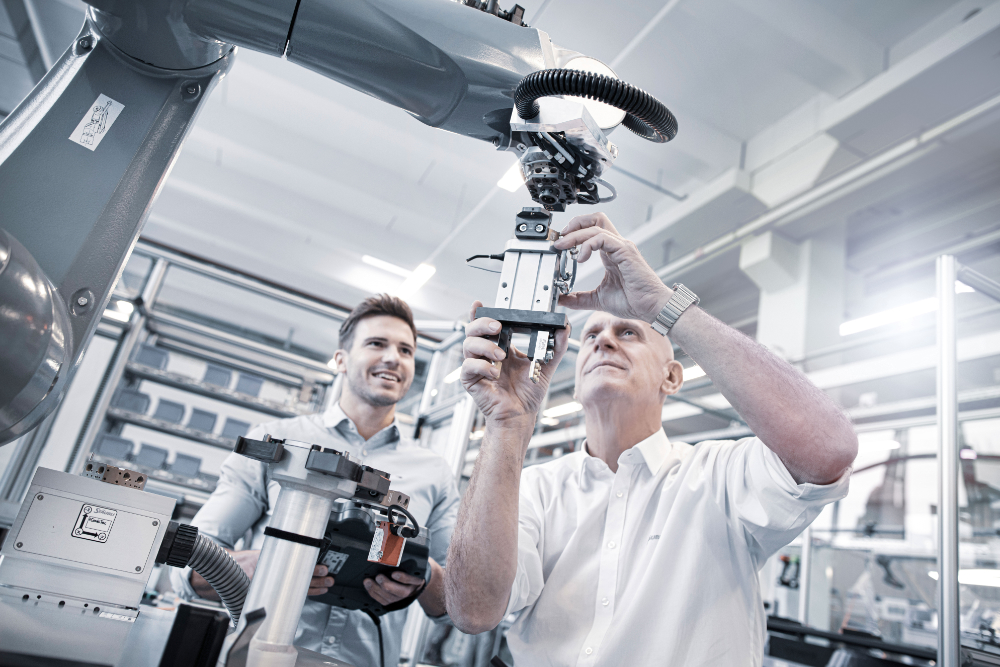
Driven by the potential for data networking of future-oriented manufacturing concepts under the heading of Industry 4.0, Stäubli Fluid Connectors is introducing a new end-of-arm tooling range in partnership with FIPA GmbH.

Both system developers and system operators will benefit from this partnership. From Stäubli’s perspective, the new arrangement not only reduces interface problems, but eliminates time-consuming co-ordination with various points of contact.

In short, the automation of material handling processes requires expertise and precise planning. Stäubli Fluid Connectors relies on many years of experience in the development of individual solutions and offers comprehensive support. From the analysis of framework conditions and application requirements, through the concept and CAD planning of the system, to the delivery of all components, Stäubli Fluid Connectors offers a complete service package.

The more durable an end-of-arm tooling solution is, the longer it can remain productive and generate revenue. In today’s environment a general scarcity of resources heightens this effect, therefore extended periods of use and operation are desirable from both an ecological and an economic point of view.

With the uncertainty of which robot applications will be required in the future, Stäubli Fluid Connectors offers a high level of flexibility inherent in its solutions. The systems should be adaptable to meet new requirements at any time, within the scope of a re-tooling or retrofit project, for example. In this way, durable products achieve long life.

Stäubli Fluid Connectors is represented by subsidiaries around the globe. This local presence is an important factor in ventures such as the new FIPA partnership. Of course, notwithstanding standardisation across borders and continents, it is also necessary to take country-specific directives and standards into account.
For further information www.staubli.com

Board level appointment at clamping specialist

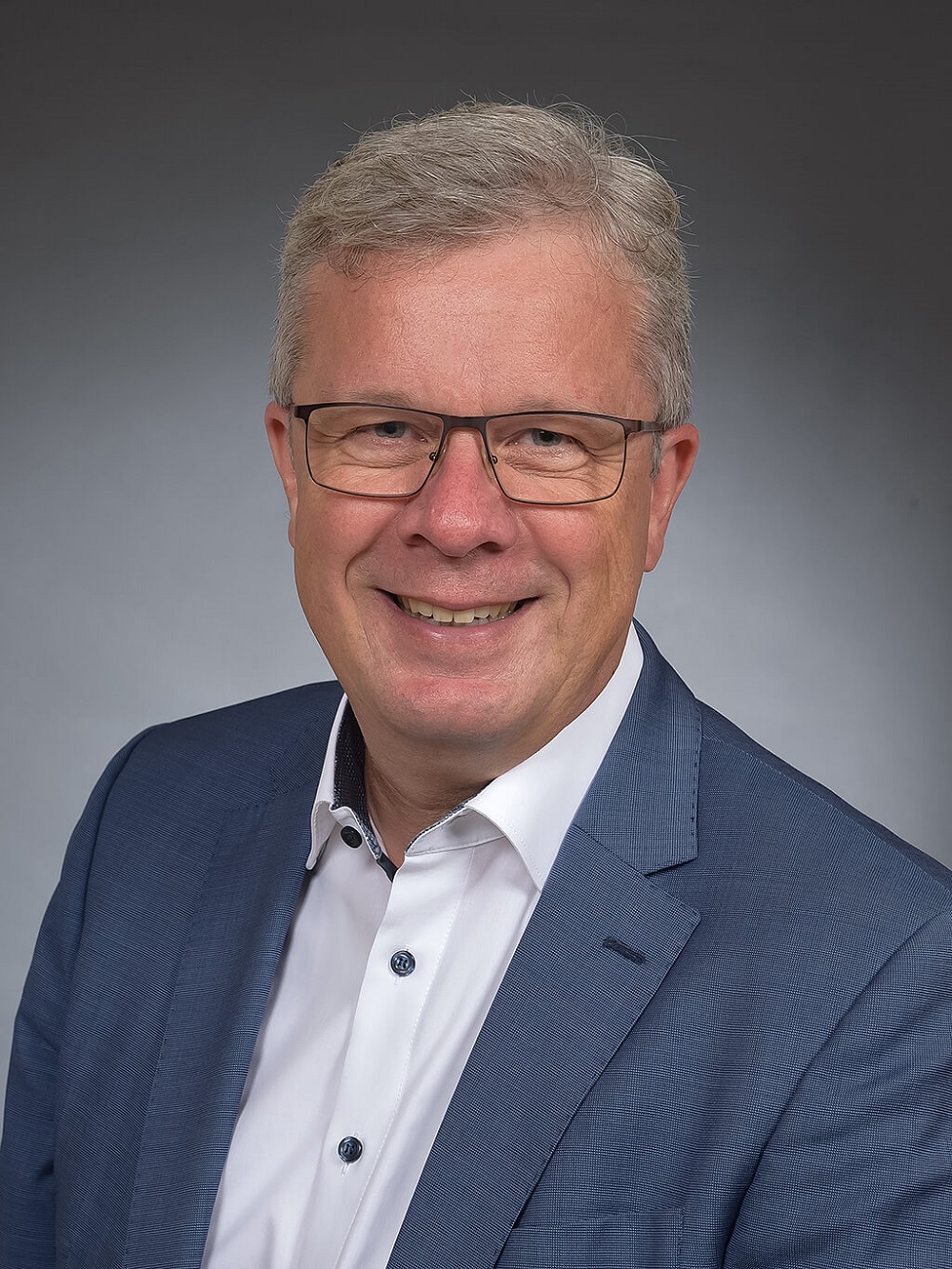
Germany-based clamping and gripping specialistRöhm has appointed Martin Kaufmann, a former top manager from the Voith Group, to the management board as its new chief technical officer (CTO) and chief operating officer (COO). He replaces Dr Till Scharf, who has left the company. With Gerhard Glanz as managing director, Kaufmann now forms a dual leadership business model at Röhm GmbH.

“I’m very pleased that with Martin we’ve been able to gain an experienced expert for the further development of our company,” says Glanz.“We have a lot of potential that needs leveraging, which is where we can make excellent use of Martin’s know-how.

Kaufmann comes to Röhm with more than 15 years of management experience, which he gained at the Voith Group. Most recently, he was executive vice president and CEO of the Voith Turbo Industry Division with headquarters in Crailsheim. At Röhm, Kaufmann will primarily be responsible for the areas of production and technology, as well as the supply chain.

“I’m very much looking forward to the new task and will do everything in my power to ensure that Röhm can further expand its leading role as an innovative supplier of clamping and gripping devices,” says Kaufmann.“As the new products and solutions presented in recent months show, we not only have enormous innovation potential, but also the right spirit.”
For further information www.roehm.biz/en