

Software modernises surface damage assessment

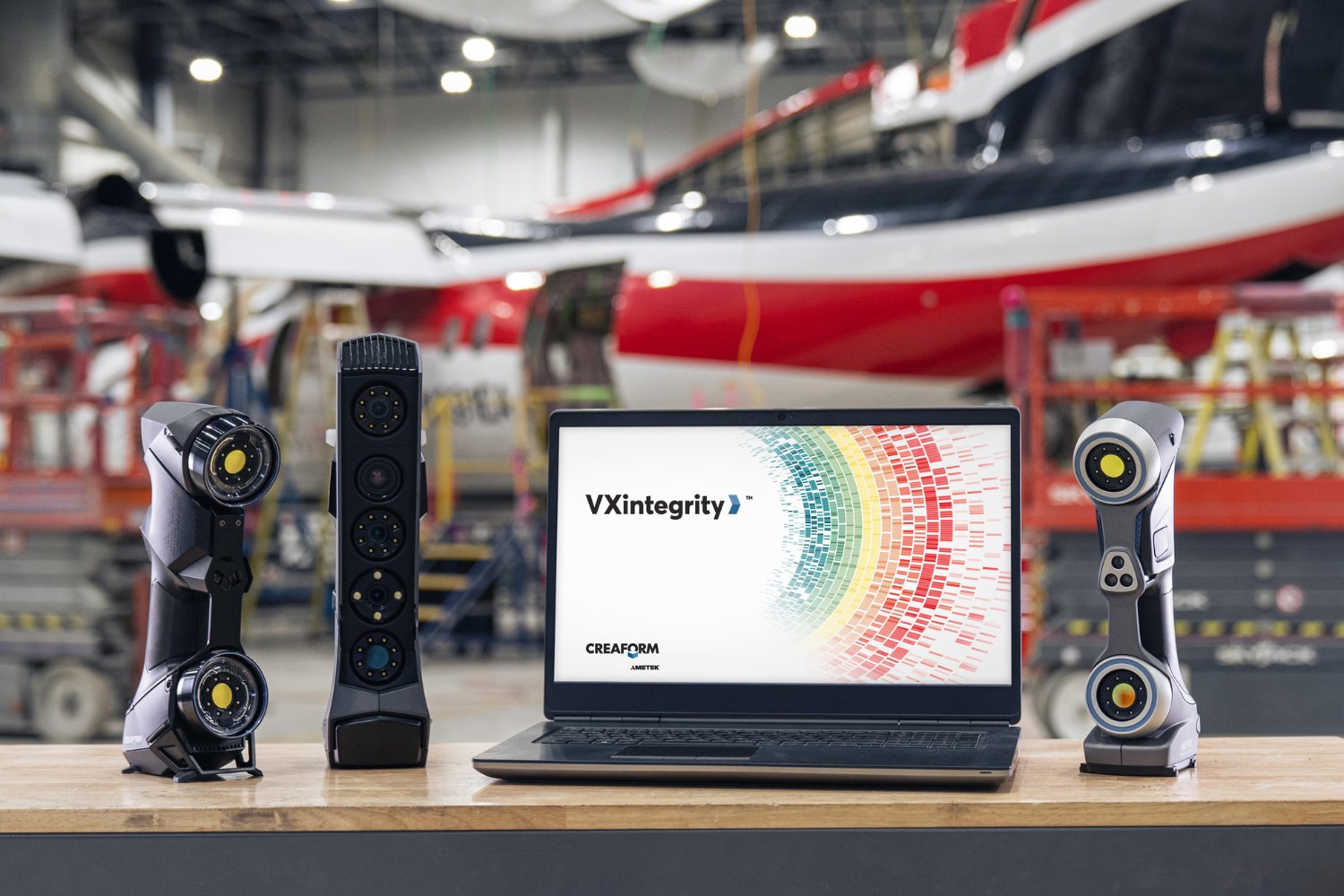
Empowering NDT service companies to provide high-value services and industrial assets owners to make optimal maintenance decisions, Creaform is launching a complete NDT software platform that removes interpretation from the equation. The company describes
VXintegrity as the ultimate 3D scanning solution for surface damage assessment. It contains four different modules, intended to tackle any surface analyses, as well as simple metrology applications.

Making it possible to measure up to 80 times faster than manual measuring tools, the new VXintegrity software platform, combined with Creaform’s 3D scanners, represents a good solution to the current shortage of experienced technicians and ageing and/or damaged infrastructures. Moreover, this user-independent technology requires little training and few certifications, which means that technicians can be up and running faster than with other techniques.

This complete NDT solution also enables industrial asset owners to have full confidence in evaluation results and make the best maintenance decisions with the best available data, as it can accurately measure thickness loss on corroded, industrial, complex geometry such as elbows, nozzles, pressure vessel heads, tank floors and valves. With this software platform, a complete analysis of all types of surfaces is now possible.

“The metrology-grade 3D data generated through this software platform can precisely identify small thickness variation between inspections to compare damage progression through time, making it the best, and only, technique sensitive enough to do so on the market,” insists François Lachance, product manager at Creaform. “In addition, the four industry-optimised modules are sure to open up new business opportunities for NDT service providers.”
For further information www.creaform3d.com

First update to the SI prefixes since 1991

Measurement scientists and government representatives from around the world at the General Conference on Weights and Measures (CGPM) in Versailles, France earlier this month voted to expand the range of prefixes within the International System of Units (SI).

Dr Richard Brown, head of metrology at the National Physical Laboratory (NPL), the UK’s national metrology institute, led the proposal recommending the new names – ronna and quetta – as SI prefixes for 1027 and 1030, respectively. They are joined by their microscopic counterparts, ronto for 10−27 and quecto for 10−30. The proposal was approved by the CGPM and these new prefixes have been incorporated into the SI with immediate effect, becoming the first expansion to the range of SI prefixes since 1991.

The expansion has been driven by the requirements of data science, digital storage and the exponentially growing size of the global datasphere, which is already using prefixes at the top of the existing scale. Additionally, the prefixes for very small numbers are useful for quantum science and particle physics.

“Our system of SI prefixes has expanded over the years in response to advances in science and technology requiring access to an increased range of orders of magnitude relating to measurement,” explains Brown. “This most recent change is essential to meet the requirements of data science and the ever-growing global datasphere – growth that we expect to accelerate with more widespread digitalisation and the advent of new technologies, such as quantum computing. These new SI prefixes will allow clear and unambiguous communication of these measurements for many years to come.”
For further information www.npl.co.uk

Hoytom takes testing to its highest limits

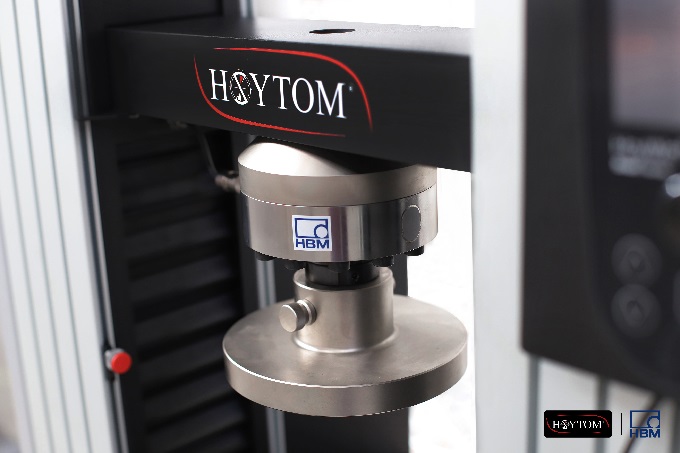
Hoytom, a company that specialises in quality control equipment and electromechanical and electrohydraulic machines for material tests, is using HBK HBM load cells within its machines.

Founded in 1961, Hoytom is a Spanish company located in the Basque town of Leioa, near Bilbao, with a staff comprising experts in the field of static destructive testing, where they stretch or compress devices under test until breakage. Hoytom is a family-owned company going back three generations. Ever since the early days back in the 60s, Hoytom has acknowledged and understood that quality, drive and the best equipment are key factors to being competitive in the complex world of testing at national and international levels.

The testing machines also include hardness testers and pendulums used to determine the hardness and toughness of materials. For its universal and hardness testing machines, which carry out Rockwell and Brinell hardness tests, Hoytom always relies on HBK’s HBM brand products, namely load cells, integrating them in all of its machines. This is mainly due to the accuracy and reliability of HBM U10M force transducer, ensuring the minimum values of linearity deviation, hysteresis and reversibility error, together with a high degree of reproducibility.

Hoytom’s commitment increased in 2015, when the current management team took over. Managers were convinced that, in order to improve the machines, one of the key factors was that the load cell and HBM had to be first choice. Their previous experience backed up this decision, since HBM had a long history of supplying the company with calibration standards and calibration measurement equipment.
For further information www.hbm.com

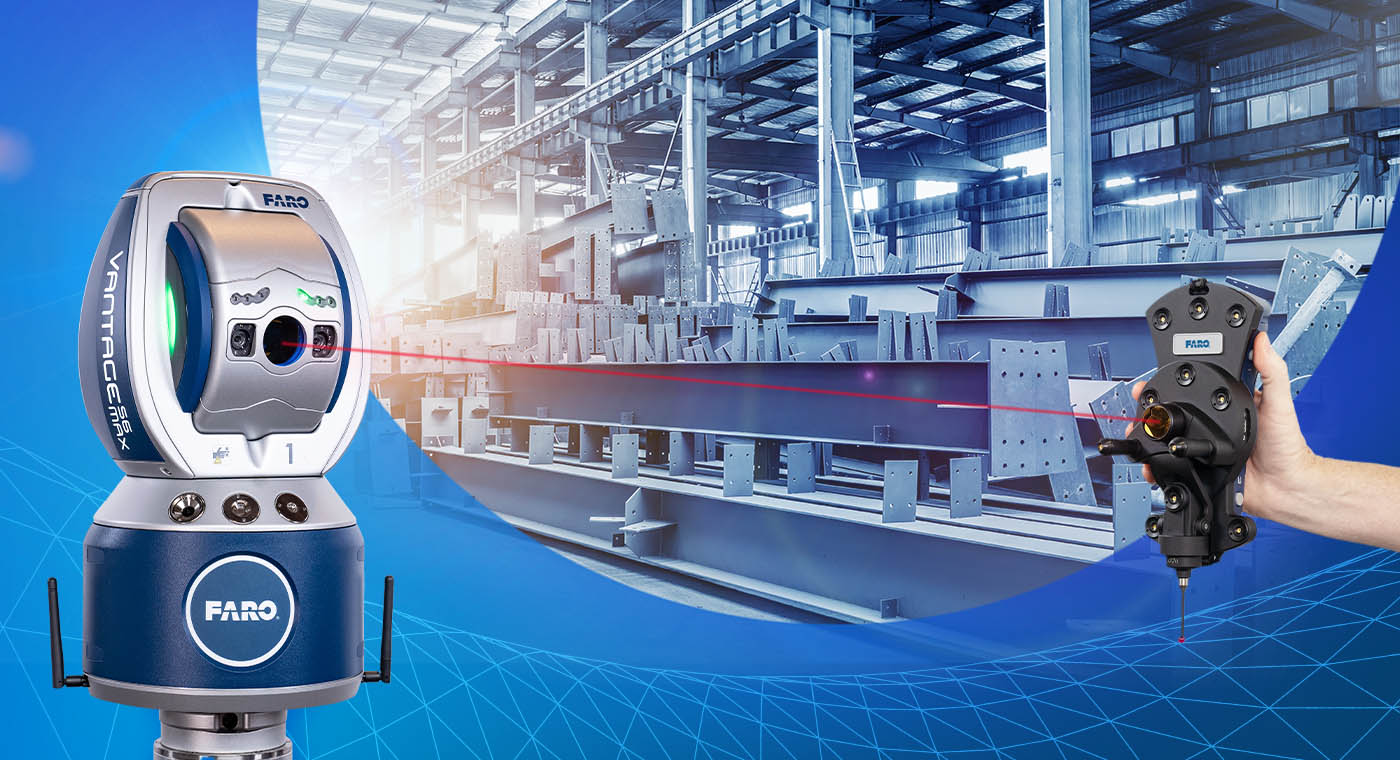
Faro releases all-new Vantage Max laser tracker

Faro has released its new VantageS6 Max and VantageE6 Max laser tracker series. The new laser trackers offer comprehensive, large-volume 3D measurement up to 80 m, streamlining processes and reducing inspection cycle times while ensuring confidence in the results.

The new Vantage Max enables organisations to increase their throughput while maintaining high inspection accuracy with an attractive 3D metrology option that expands upon the proven track record of the Faro Vantage series. These new trackers maximise 6DoF measurement capabilities via the optional 6Probe, enabling precise measurement of hidden areas and small features.

Faro’s 6Probe meets the dynamic measurement, speed and accuracy requirements of the most challenging industrial applications. With kinematic self-identifying styli, users can change probing tips quickly and measure without any recalibration, and measure hidden areas outside of the tracker’s line of sight with wide acceptance angles.

Moreover, the new Vantage Max provides more accurate 6DoF probing that helps speed up inspections and reduce the number of tooling changes and device moves. Previously, users relied on a spherically mounted retroreflector (SMR) to measure high accuracy points. In order to take these measurements, the user had to select an appropriate target nest and have line of sight. Typical users of the new trackers can now save up to 60 minutes each workday, says Faro.

“With the higher accuracy of the Vantage Max, users can probe more points beyond the line of sight, using an SMR only for alignment points and ultra-precision measurements,” says Leo Martinez, Faro product marketing manager. “This results in a significant productivity improvement of 20% compared to lower accuracy probes.”
For further information www.faro.com

How to benefit from subcontract measurement

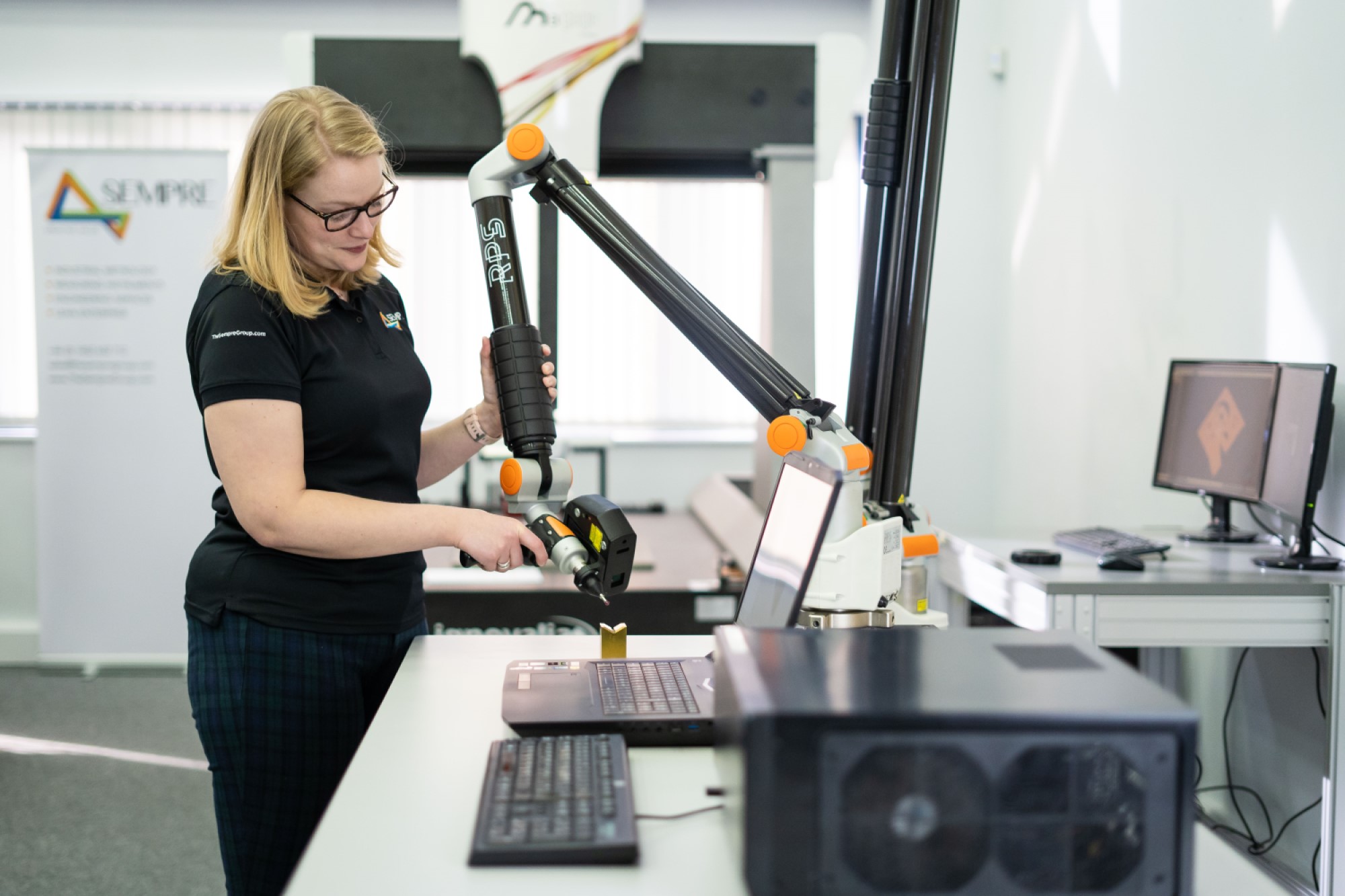
Following assembly, manufacturers must measure parts to ensure they meet specification. However, if they only have one CMM, or they measure parts by hand using micrometers, manufacturers will do so at a much slower rate, significantly delaying time-to-market. Furthermore, measuring any component manually not only slows down production, it also introduces the risk of human error.

While investing in more measurement equipment could be a simple solution to removing any bottlenecks, it might not be the most practical option. As well as the initial cost of the machine, manufacturers must invest in training to ensure that they can use the equipment correctly. Smaller manufacturers may not be able to buy equipment outright, so instead they can look to subcontract measurement services.

By working with a metrology specialist such as The Sempre Group, manufacturers can have peace of mind that someone else is measuring their parts accurately. Metrology engineers can take information from drawings and CAD files to determine the method of measurements and which machines to use. To measure complex parts, subcontract measurement experts can develop bespoke fixtures to hold parts steady. Once the customer agrees to the quote, engineers will measure a small batch of parts, sending reports back to the customer to verify they have met expectations. Following verification, engineers will measure the rest of the components, deliver reports and send the parts back.

Instead of relying on one trained engineer and one in-house CMM, manufacturers can take the pressure off and speed up production by outsourcing measurement to dedicated experts.
For further information www.thesempregroup.com