

New Lynx lathe investment improves turnaround times

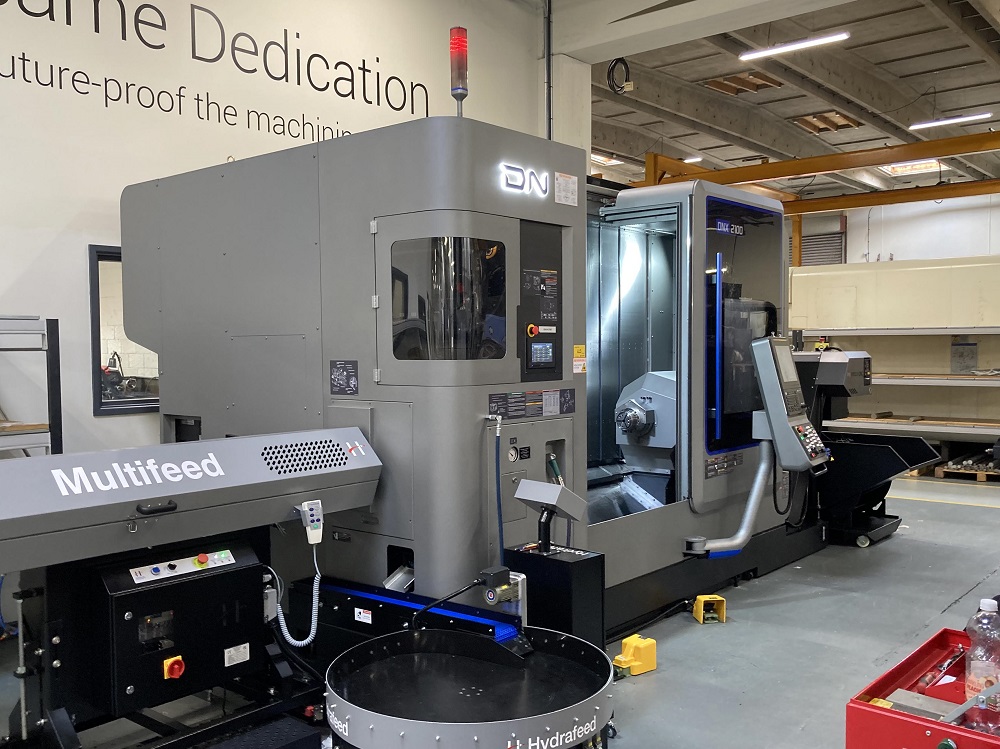
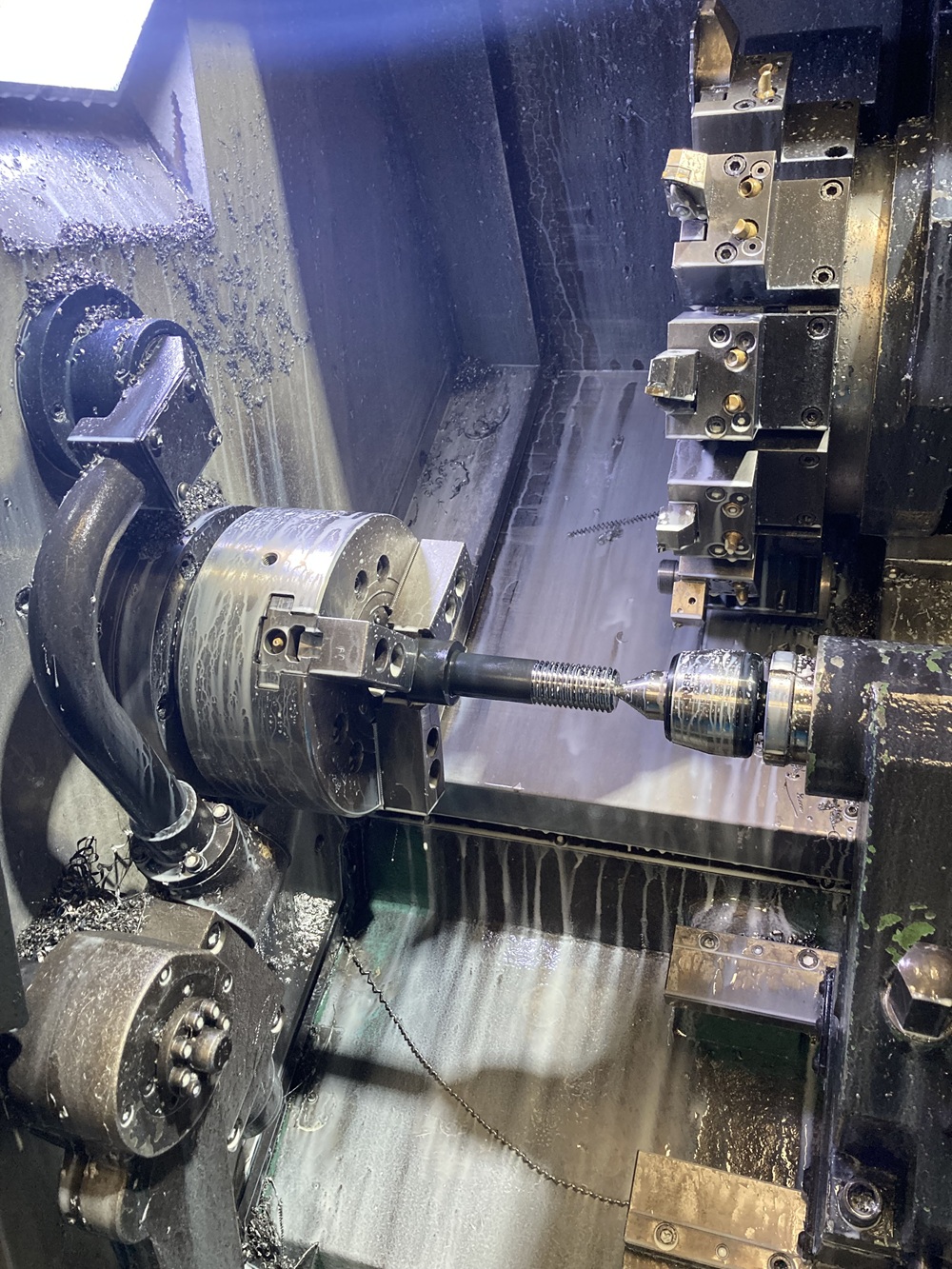
Mills CNC has recently supplied RCF Bolt & Nut, part of the TGM Industrial Group and a manufacturer of industrial fasteners, with a new compact, high-precision CNC lathe. The machine, a FANUC-controlled 8” chuck Lynx 2100LB manufactured by DN Solutions, is now operational at the company’s 40,000 ft² production and machine shop facility in Wednesbury, West Midlands. The machine is already proving pivotal in helping improve productivity and process efficiencies by reducing production bottlenecks and, as a result, improving turnaround times.

Says managing director Adrian Garrett: “We’re on a strong growth trajectory and demand for our standard and bespoke solutions has been growing exponentially over the past few years. While this is good news, it was putting pressure on our in-house machining resources. We needed additional capacity, and we needed it fast.”

RCF Bolt & Nut’s positive experience with a previous Lynx 220LM lathe led the company to contact Mills CNC in the summer of 2025 to discuss its immediate machining requirements.

“We were introduced to the Lynx 2100LB and could see that its technical capacity and capabilities fitted the bill perfectly,” says Garrett.

Since installation, the Lynx 2100LB has been put through its paces machining ‘near net shape’ forged bolt and nut blanks made from a range of different materials. Machining operations include internal and external single-point threading, boring, reaming, rigid tapping, chamfering and parting off.

Concludes Garrett: “The new Lynx 2100LB is a fast, accurate and flexible machine. Its acquisition is evidence of our continuous improvement programme in action, and we’re aiming to continue upgrading our machine shop in the months to come.”

More information www.millscnc.co.uk
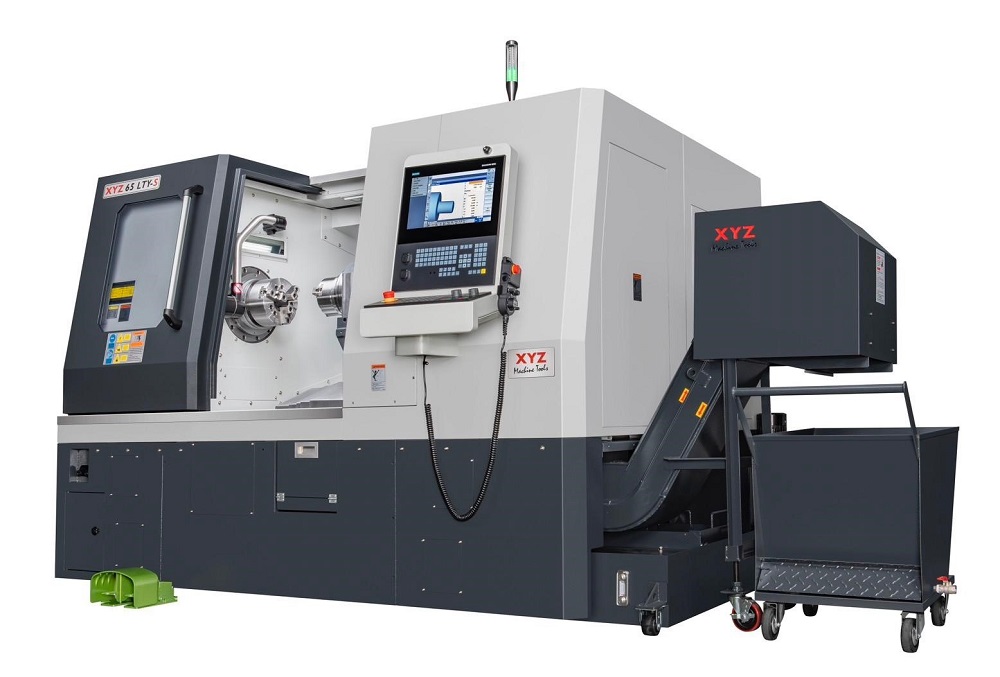
James Aiken boosts machining with Colchester Tornado

James Aiken, a precision engineering company based in Aberdeen, has strengthened its machining capabilities with the addition of a Colchester Tornado SL35L.

Specialising in onshore and offshore energy, power generation, food processing and commercial utilities, the company provides high-precision machined components for critical applications. To maintain its reputation for quality, reliability and efficiency, James Aiken needed a turning centre that could meet the high demands of these industries while ensuring long-term performance.

The company duly invested in a Colchester Tornado SL35L two-axis, long bed-turning centre. This particular model was selected to increase production capacity, optimise workflow, and ensure consistent precision for machining complex components used in energy infrastructure and industrial systems.

The Tornado SL35L is a versatile and robust CNC lathe, engineered to meet the rigorous standards of industries where reliability, accuracy and efficiency are essential. The long-bed capability accommodates larger components required in offshore and power generation applications, while its potential for high-precision machining ensures repeatable accuracy for mission-critical components.

Having used Colchester Tornado machines since 2006, James Aiken has continuously relied on the precision, durability and performance that these lathes provide. Its decision to purchase the SL35L was based on this proven track record of reliability, ensuring the production line remains efficient and capable of delivering high-quality components to customers.

Beyond the quality of Colchester machines, James Aiken values the customer support and aftercare provided by Colchester Machine Tool Solutions. Access to expert technical assistance, maintenance and spare parts ensures machining operations remain at peak performance, minimising downtime and maximising productivity.

More information www.colchester.co.uk

PTG Precision automates production with Dugard SMEC

PTG Precision Engineers – an engineering specialist with over 40 years of experience serving the nuclear, aerospace and energy sectors – has taken a significant step towards production automation with the installation of a SMEC NS2000 bar-fed turning centre supplied by Dugard. The investment represents the company’s first foray into automated machining and comes in response to a growing order book and persistent challenges in recruiting skilled machinists.

Over the past 12 months, PTG had experienced a significant upturn in demand, creating operational pressures that existing production capacity struggled to accommodate. When PTG mentioned its interest in a bar-fed lathe to Dugard, the trusted machine tool supplier put together a comprehensive package.

PTG selected the SMEC NS2000A, a bar-fed turning centre that combines accessibility with precision. The NS2000A is equipped with a 6-inch chuck and offers a maximum turning diameter of 310 mm, with a swing over bed of 565 mm.

PTG’s new SMEC NS2000 has been integrated with an LNS bar feeder. The transformation in production has been dramatic. Previously, PTG was processing batches of 25 expanding mandrills at a time on conventional equipment. With the SMEC NS2000 and LNS bar feeder combination, the company now runs batches of 350 off – a 14-fold increase in batch size that has fundamentally changed stock availability and production scheduling.

“The machine requires very little set up,” notes production manager Jim Adkins. “In the morning, we may spend an hour setting the bar feeder, loading it up with bars, putting the programs through again. Then the guys go back and run our other machines. They only return to remove parts from the catcher every half an hour.”

More information www.dugard.com

Bumotec 1000/Cneo: Produce more with less energy

The new Bumotec 1000/Cneo horizontal transfer centre was developed based on industry feedback to optimise every step of the machining process. With shorter cycle times, lower energy consumption and easier handling, the machine has 32 motor spindles running at 25,000 rpm and a new touchscreen interface.

“The aim for our new HMI was to make it easier to train new operators on a complex machine with 32 spindles and nine machining stations,” says Cédric Berger, head of the Software Department. “In view of the shortage of skilled labour, companies often employ people who are not trained as precision engineers in machining technology and who previously worked in other professions. For this reason, it’s important for the HMI to be extremely user friendly.”

Up to 40% shorter cycle times are possible, with Bumotec replacing its 8000 rpm motor spindles with 25,000 rpm models. Further supporting short cycle times, a pick-up arm is now in place featuring vices with a shorter stroke. The time for a parting-off sequence is now 7 seconds, a reduction of 30%, while machining time is now 10 seconds – 51% less than the Bumotec s1000/C model.

Another highlight of the Bumotec 1000/Cneo is the monitoring of energy consumption. Thanks to integrated sensors, the Bumotec 1000/Cneo can display relevant values for compressed air and power consumption on its 24-inch screen. And temperature conditions, too.

The new Bumotec 1000/Cneo has been in operation for several months at a company that manufactures watchstrap parts. According to feedback, the increase in productivity is between 40 and 50% compared with the same workpiece machined on the Bumotec s1000/C.

More information www.starrag.com

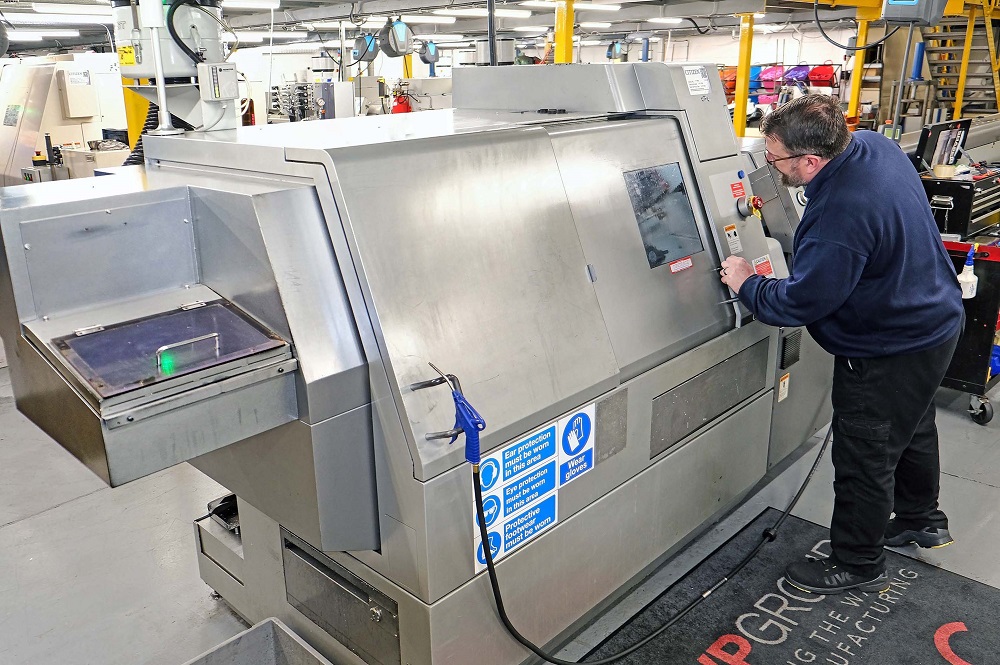
Two further Citizen CNC lathes bring total to 21

The decision to set up a turned parts subcontracting business at the start of the worst economic crisis in living memory has paid dividends for Yian Stavrou and George Dingley, joint owners of Luton-based Sub-CNC Precision. Supporting their successful evolution from earning a few thousand pounds a month in 2008 to turning over a predicted £3m in the company’s current financial year has been, from the very beginning, continued investment in twin-spindle, multi-axis, bar-fed lathes supplied by Citizen Machinery UK.

Over the years, the ISO 9001-accredited and JOSCAR-registered subcontractor has bought 25 such machines, part exchanging a few to leave 21 on the shop floor as of the end of 2025. Two-thirds are Cincom sliding-head models for producing parts from 0.5 to 38 mm in diameter, while the remainder are Miyano fixed-head turning centres. Many run lights-out from 18:00 to 07:00. 

In 2017, the introduction of Citizen’s proprietary LFV (low-frequency vibration) chip-breaking software in the Cincom control massively assisted unattended machining. The big advantage of the function is that it can be programmed using G codes to switch on and off during a cycle, added to which it also has different modes to adjust the size of the chips. The function is disabled for parts of the cycle where enhanced chip-breaking is not necessary.

As to the fixed-head Miyano lathes, which produce parts from bar ranging from 8 to 65 mm in diameter, or from billet up to 200 mm diameter, they started arriving at the subcontractor’s factory in 2012. The latest to take its place on the shop floor, alongside a new Cincom L20-XLFV, is a Miyano BNE-51MSY.

More information www.citizenmachinery.co.uk