LEARN WHY THE ACCURATE GRIPPING FORCE OF EXPANDING MANDRELS ISIDEAL FOR HIGH-VOLUME MACHINING TO TIGHT TOLERANCES

Workpiece clamping and automation systems specialist 1st Machine Tool Accessories offers
a comprehensive range of high-precision expanding mandrels, both standard and bespoke,
to subcontractors and OEMs in Britain and Ireland. The company is an enthusiastic advocate
of this method of clamping components by their ID (internal diameter) for machining and is
of the opinion that the advantages of expanding mandrels are not harnessed by machinists
nearly as often as they should be. 
The standard, modular range comprises manually, pneumatically or hydraulically actuated
types capable of automatically gripping a range of internal diameters from 12.5 to 178 mm.
Each features a generous expansion to accommodate a range of diameters. It is also
possible to grind the gripping surface to suit non-standard bore sizes. Numerous product
adaptations and full turnkey solutions are available to meet especially complex
requirements.
The expanding mandrel is increasingly recognised as a superior work-holding solution for
high-precision CNC turning, cylindrical OD (outside diameter) grinding, and multi-axis
prismatic milling and drilling. According to 1st Machine Tool Accessories, it offers a level of
stability, repeatability and concentricity that is difficult for traditional three-jaw chucks and
standard collets to match. Users can routinely achieve TIR (total indicated runout) below
0.005 mm, a major advantage for precision machining. It compares favourably with values
for a three-jaw chuck, which range from 0.02 to 0.05 mm, or 0.01 to 0.02 mm for a high-
quality collet.
Holding in the ID leaves the entire OD of the part exposed and accessible to the cutter. It
allows the complete machining (in a single set up) of all external features, including
shoulders and complex profiles, as well as the component face. This is unattainable when
external clamping obstructs the surface. Using a previously-machined bore as the primary
datum for subsequent operations, the mandrel ensures accurate concentricity and
perpendicularity with external features.
Unlike external clamping, which can introduce distortions in thin-walled or delicate parts
due to variations in jaw pressure at discrete points around the circumference, the mandrel
provides uniform pressure all around the surface of a bore. Furthermore, for components
with a ground, polished or finished exterior, internal clamping prevents damage to the OD,

preserving the integrity and quality of the final product by eliminating jaw marks, scuffs and
distortion.
In the sub spindle of a bar-fed, twin-spindle lathe, for example, the work-holding technique
provides inherently better alignment of the workpiece and spindle axis, as it eliminates the
eccentricities and jaw pressure variations associated with chucks and the limited gripping
surface afforded by collets. 
If a lathe is used for chuck rather than bar work and robot or cobot machine tending is in
place, it is possible to machine slight taper on the end of the mandrel sleeve in the sub
spindle to allow for any small inaccuracy in end effector position during automated transfer
from the main spindle. Exceptionally, if turning tube rather than billet, it may be appropriate
to use a mandrel in both work spindles.
For applications demanding the highest rigidity and accuracy, the advanced design of 1st
MTA mandrels incorporates a double-taper, dual-contact system. This configuration ensures
true parallelism between the workpiece bore and the spindle, eliminating deflection and
chatter during cutting. By engaging the component’s bore at two distinct points near the
front and the rear, the system ensures the component is pulled firmly and squarely against a
precision-ground back face in the mandrel body. 
Accurate axial location increases Z-axis repeatability and stability, which is essential for
facing and grooving. The double taper also improves the mandrel’s resistance to torsional
and bending forces generated during machining, allowing higher feed rates and heavier
depths of cut without introducing chatter or runout.
Inherent safety features provide a further advantage. For automated and high-volume
environments, some mandrels are designed to be pre-sprung and only require hydraulic or
pneumatic pressure for release. In these systems, the spring mechanism keeps the mandrel
in its expanded, clamped position by default, preventing accidental loosening in the event of
a power or pressure failure.
For securing particularly long, tubular, thin-walled components up to 1 m in length, or even
more, mandrels can feature multiple sleeve segments, sometimes as many as eight or nine.
The segments distribute the clamping load evenly over a large area, guaranteeing minimal
part distortion while holding components securely to absorb high cutting forces. It is
possible to program the closing sequence of the segments so that they grip sequentially to
ensure positional accuracy.
1st MTA can engineer custom sleeves to hold non-cylindrical features such as splines, gears
or specific internal profiles, extending their applicability beyond simple bores. Whether
turning or grinding, the company says the expanding mandrel delivers not only superior TIR
but also greater grip consistency and longer tool life through reduced vibration, while
lowering set-up time and scrap.

It is less well appreciated that the work-holding solution is suitable for use on machining
centres for securing parts during milling and drilling operations. If a prismatic component
contains a hole, be it circular, square or hexagonal, it is easy to machine that feature first
and then clamp in it using an appropriately shaped mandrel to complete machining of other
features on five sides, again to very precise tolerances.
The high precision and stability offered by expanding mandrels make them essential in
highly regulated and exacting manufacturing sectors where dimensional accuracy and the
integrity of critical components are paramount. The aerospace industry is a prime user,
driven by its stringent quality standards, complex part geometries and reliance on precision.
Expanding mandrels are critical in machining components such as turbine blades, blisks,
aircraft engine parts and structural assemblies, which often feature thin walls, intricate
shapes or require a high-quality surface finish. 
The automotive industry, particularly in the production of high-performance vehicles, is
another key beneficiary. Mandrels see use for machining critical powertrain and
transmission components, including parts like crankshafts, camshafts, transmission gears
and steering components, where dimensional accuracy and surface quality directly impact
vehicle performance, noise, vibration and harshness. As the industry shifts towards electric
vehicles, the adoption of expanding mandrels will only increase to achieve the tight
tolerances and consistency required for new electric powertrains.
Beyond these major sectors, mandrels are widely used for applications like gear cutting,
grinding and inspection, railway component machining, and valve manufacture. The
common theme across all these industries is the need for a work-holding solution that can
consistently achieve the highest levels of accuracy, resist heavy cutting forces without
slippage or chatter, and guarantee that the final machined features are perfectly concentric
and square to a previously established internal datum.
More information www.1mta.com

DMG Mori Sets Open House Date

Expertise in five-axis machining, freely scalable automation and integrated manufacturing processes for high precision and productivity in every manufacturing process will be the themes of DMG Mori’s forthcoming open house in Pfronten, Germany. The event is taking place from 26 to 30 January for the German, Austrian and Swiss markets, and from 2 to 6 February for all international guests. 

DMG Mori will show over 40 machines and more than 20 automation solutions. Several world premieres will provide the focus, including the new CTX 450 4A universal turning centre and theLASERTEC 65 DED Hybridpowder nozzle additive manufacturing machine, which is also capable of machining. Asecond-generation DMU 65 H monoBLOCK five-axis horizontal machining centreis a further highlight.

More information www.dmgmori.com

Hurco Increases Turnover By 5%

Machine tool supplier Hurco Europe, which has its headquarters in High Wycombe, says the company increased turnover by more than 5% over its current financial year compared with the previous 12 months. Total revenue exceeded £25m. Hurcoreports that machine tool sales to subcontractors serving the aerospace, defence and motorsport sectors held up well in 2025 and continue to do so.

More than a third of machining centre and CNC lathe sales were secured from first-time buyers of theHurco brand, rather than existing users. The company says this proportion remains remarkably consistent from year to year, enabling Hurcoto maintain its strong position and increase market share in the UK and Ireland. The business also reports growing demand for refurbished preowned Hurco machines.More information www.hurco.com

GEWEFA’S SUPPLY OF TOOL HOLDERS TO HURCO SURPASSES TWO DECADES

An alliance of more than 20 years has existed between machine tool provider Hurco Europe
and tool-holding equipment supplier Gewefa UK. The company has been a perennial
participant at the annual Hurco open houses held in its High Wycombe showroom and
technical centre, along with about a dozen other supplier firms promoting everything from
cutting tools to metrology, work holding to fire suppression, finance to CADCAM software.
David Waghorn, managing director of Hurco Europe, says: “I regard our association with
Gewefa UK over the years as a partnership rather than a supplier arrangement. About 20%
of the machining centres we supply to customers include back-end tooling packages and
three-quarters of those are sourced from Gewefa UK.”
He goes on to explain that the remainder of the back-ends are mainly Hurco’s own tool
holders, which are suitable for entry-level, lower-spindle-speed applications. For Hurco
machines that offer higher spindle speeds, generally from 12,000 to 18,000 rpm – especially
Hurco five-axis models in the SRT, SW, VC and U series – Gewefa UK is the preferred tool-
holder supplier and a majority of machines are shipped with its products.
“One Hurco machining centre, our three-axis VM10HSi, which is now fitted with an HSK-40
interface rather than the previous BT30, is offered with a 30,000 rpm spindle and it’s
difficult to imagine it being delivered with anything other than holders from Gewefa UK,”
says Waghorn.
The reasons for adhering to this supplier are many. Waghorn asserts that the quality-price
ratio of the tool holders is equivalent to that of the machines Hurco supplies and that the
holders are positioned towards the upper end of the market in terms of their functionality.
Gewefa UK has in its portfolio a vast range of BT and CAT 30, 40 and 50 holder options. Its
HSK and DIN equivalents suit any requirement and the company is willing to tailor its
standard tooling packages to suit end-user needs.
For example, collet holders will frequently be swapped out for other varieties, such as a
side-lock (Weldon) type, or a shrink-fit or hydraulic holder with through-coolant or air
delivery, both of which are designed for high tool grip, vibration damping and repeatable
accuracy. Likewise, special extended holders are often supplied. All tool holders are
dynamically balanced as standard, with those destined for high-speed machining receiving
an additional, higher-grade precision balance.

Once the content of a typically 14- to 24-piece Gewefa tooling package for prismatic
machining has been established, consistent with the type of work generally carried out by
the OEM or subcontractor (from fairly open tolerance up to extremely tight tolerance),
delivery is described by Waghorn as prompt. Perhaps more importantly, the aftersales
service provided by Gewefa UK to Hurco customers to provide any additional tooling is also
timely, as well as comprehensive.
In the case of the fixed-head turn-milling machines that Hurco supplies, the relationship
with Gewefa UK is somewhat different. More than 90% of driven-tool Hurco lathes, whether
they have a VDI or BMT turret, are delivered with a tooling package from EWS Weigele in
Germany, one of six European tooling product manufacturers represented in the UK
exclusively by Gewefa UK under sole agency agreements.
The Gewefa Varia.VX range of tool holders with dual face and taper fit was introduced a few
years ago for the rapid exchange of driven tools in lathes. It has proved popular with users
of Hurco turning machines due to its rigidity, reliability and accuracy, and the good surface
finish achievable on machined components. Recently, for exchanging static turning tools
quickly and easily, the compatible Varia.VXT quick-change system was launched and these
tool holders are also offered by Hurco.
Another new introduction, this time by Gewefa UK itself, is the M96 and M96+ hydraulic
adapter range for live tooling, which converts ER-driven toolholders into inexpensive
hydraulic chucks. The innovation avoids the limited clamping force, runout issues and
lengthy tool change times associated with mechanical ER holders, while also damping
vibration and extending tool life.
The co-operation between Hurco and Gewefa UK goes even deeper. Another of Gewefa
UK’s sole agency sales agreements is with German firm OTT-Jakob Spanntechnik, which
manufactures drawbars used in the construction of Hurco machining centres.
An additional German company that has appointed Gewefa UK to sell its products in the UK
exclusively is Rineck Werkzeugtechnik, whose tool-holder shrink-fit machines are sold by
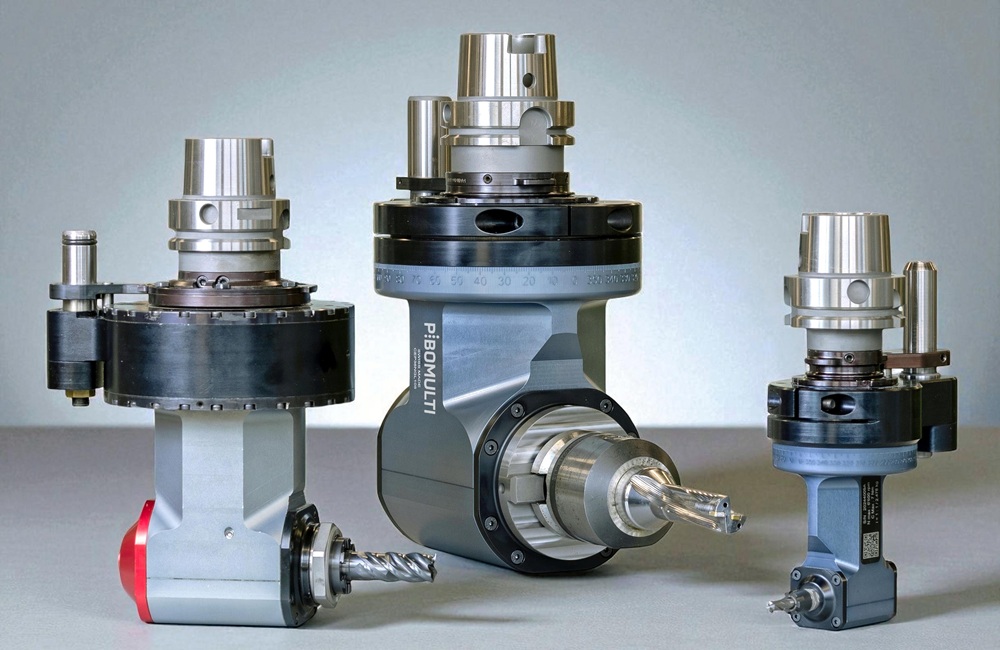
Hurco, as are the angle heads and speeders produced by Swiss firm Pibomulti, which has a
similar exclusive agreement with Gewefa UK.
The firm’s managing director Nicole Lloyd-Foxe says: “The long-standing partnership we’ve
had with Hurco Europe is based on mutual support. We’ve developed tooling packages over
the years that not only meet their customers’ requirements but are also flexible enough to
be tailored to suit the end user’s needs.
“It’s a perfect example of our ability to deliver comprehensive, bespoke equipment
packages from a single source and provide support to machine sellers in the UK and Ireland.

We offer not just back-ends and other tool-holding products, but also ancillary equipment
such as tooling trolleys, all at a competitive price.
“Additional offerings include OTT-Jakob Power-Check milling spindle pull-in force
monitoring devices for predicting when preventive maintenance will be needed, and EWS
Varia Clean for maintaining tool concentricity and optimising the lifetime and performance
of the lathe tool holders.
Waghorn concludes: “Our continued use of products from Gewefa UK is not just down to
the flexibility provided by their ability to deliver a huge breadth of tool-holding products. It’s
also due to the knowledge that the supplier brings to bear to address customer tool-holding
requirements, even those that many potential suppliers would find intractable, and to keep
them running reliably for the duration of their service lives.”
More information www.gewefa.co.uk
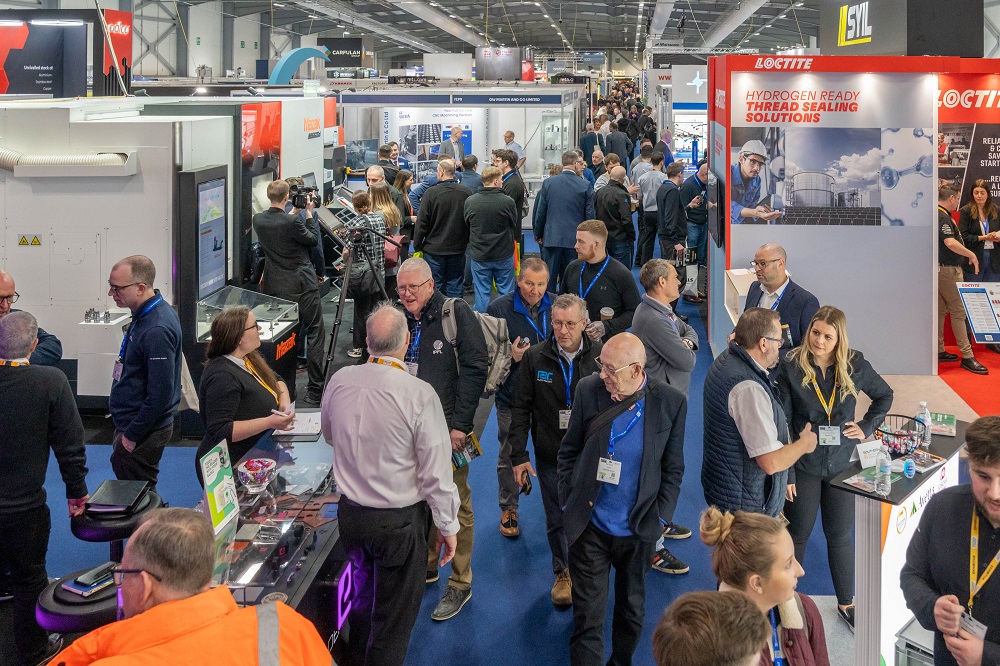
MACH 2026: Visitor Registration Now Live

In just over four months, the MACH 2026 exhibition will open its doors at the NEC, Birmingham to over 30,000 members of the manufacturing community – bringing together buyers, sellers, specifiers and designers. The biennial event offers an unmissable opportunity to experience new technology live and in action and is perfectly timed for UK manufacturers preparing for growth in capacity and capability. 

Registration is now open for the show, owned and organised by the Manufacturing Technologies Association (MTA) and sponsored by Lloyds, which is the UK’s largest for inspiring, innovating and connecting the manufacturing community. It is due to take place across five halls of the NEC from 20 to 24 April 2026. All aspects of manufacturing technology will be on display.More information www.machexhibition.com