

Large investment

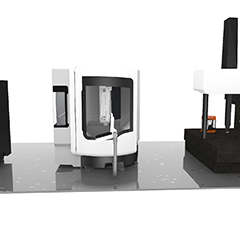
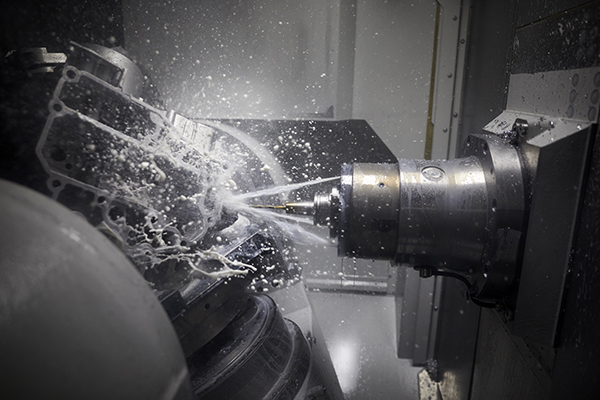
Bedford-based Midas Pattern has taken delivery of a new Haas VF-11/40 CNC machining centre, which with its 3 x 1 x 0.7 m working envelope becomes the largest machine tool on site. The company says that its new investment will make short work of any new MRIM tooling requirements (MRIM is Midas’ proprietary composite resin tooling system) and help to keep pushing the boundaries on polyurethane part size and complexity. Even in challenging times, it is important to keep investing, so when Haas contacted Midas back in April 2020 with a cancelled order, the company was keen to invest in its future.

For further information
www.midaspattern.co.uk

Robots fold scooter into shape

A combination of innovative design and sustainable new production techniques are responsible for the first stainless-steel electric scooter made by Swedish innovation company Stilride. With Semcon as its partner, the company is planning to challenge traditional manufacturing techniques and pave the way for new design by using robots to fold steel.

“Our ambition was to create the world’s most attractive, most sustainable electric scooter,” states Tue Beijer, industrial designer at Semcon and one of the founders of Stilride. “By using industrial robotic origami we can fold structures from a flat sheet of metal in completely new ways and create shapes true to the material’s characteristics and geometric nature.”
It all began as a Vinnova-funded research project, looking at how a new way of shaping steel could pave the way for new design and business opportunities. The first result of the project is the Stilride SUS1 electric scooter, which is now available to purchase. This powered scooter has a novel design, innovative technical features, durable, efficient batteries, and a powerful electric motor.

“The environmental footprint of the production process for this product is minimal, while our ‘Light.Fold’ production technology makes for flexible manufacture,” says Beijer. “In addition, stainless steel can be recycled, and it offers long service life.”

Semcon’s responsibilities in the venture involved CAD, mechanical engineering and project management. The business community and academia will now further examine the advanced production method devised for the project.

For further information
www.semcon.com

Robotic bending system from LVD

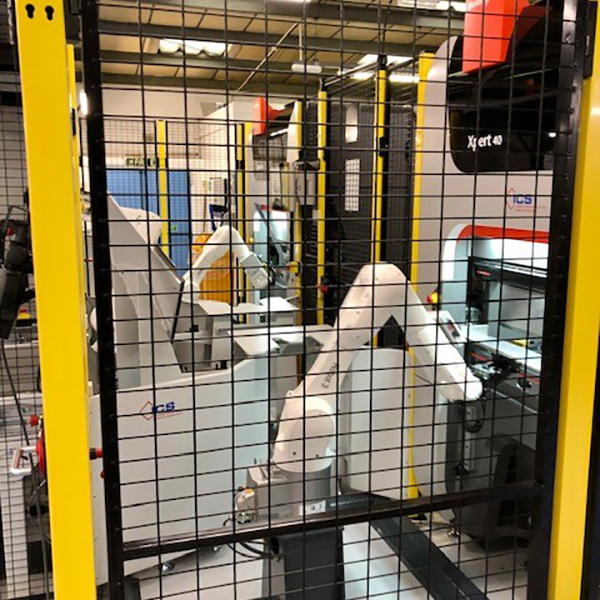
The new LVD Ulti-Form follows on from LVD’s Dyna-Cell robotic bending cell and takes bending technology a step further by incorporating an automated tool-changing press brake. This configuration serves to keep bending productivity at its peak, handling both small batches and long production runs efficiently with minimal changeover time. In short, Ulti-Form delivers high productivity bending with unattended operation.

LVD’s Ulti-Form features a 135-tonne press brake designed using the ToolCell platform, the company’s automated tool-changing press brake, integrated with an industrial robot. The press brake houses a built-in tooling warehouse and uses a gripper mechanism in the machine’s back-gauge fingers to quickly change tools. As the robot picks the first workpiece from the input stack and centres it, the press brake completes the tool change. Ulti-Form handles parts from 50 x 100 mm up to 1200 x 800 mm, weighing up to 25 kg.

Programming of both the press brake and robot is handled offline and no robot teaching is required. CADMAN-B software automatically calculates the optimal bend program. The robot software imports the bending data and automatically calculates all gripper positions, taking into account gripper force, collision detection and robot reach.

LVD’s Ulti-Form robot gripper is a patent-pending, auto-adapting design. The gripper has the flexibility to accommodate a number of part geometries, automatically adjusting to workpiece size. This attribute allows the processing of different component geometries without the need for a gripper change, keeping production continuous and uninterrupted.

Ulti-Form is also equipped with LVD’s Easy-Form Laser-adaptive bending system.

For further information
www.lvdgroup.com

Smartflow expands

Couplings manufacturer Smartflow has expanded its production capacity by moving to a new larger facility in Grimsby as it prepares to step up the manufacture of its new dry-break couplings. The production facility at Grimsby Enterprise Village will replace the company’s previous plant in Scunthorpe, giving more space for stock and parts ahead of launching the new fluid-transfer couplings, which aim to drive safety and sustainability in the oil, gas and chemical sectors. Some £173,000 of funding from Innovate UK helped Smartflow to develop the new devices.

For further information
www.smartflowcouplings.com

Robot density list revealed

According to the latest World Robotics statistics issued by the International Federation of Robotics (IFR), the world´s 10 most densely robot-populated countries are: Singapore, South Korea, Japan, Germany, Sweden, Denmark, Hong Kong, Chinese Taipei, USA and Belgium (with Luxemburg). Singapore has 918 units per 10,000 employees for the 2019 reporting period, while South Korea has 868. Japan (364 robots per 10,000 employees) and Germany (346 units) rank third and fourth respectively. Sweden remains in 5th position with a robot density of 274 units. The UK is 24th on the list (89 units).

For further information www.ifr.org