Vollmer offers 2 in 1 solution

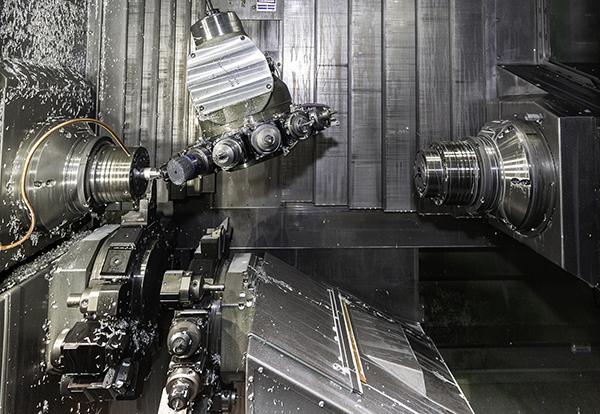
Cutting tool manufacturers have always had the inconvenience of producing solid-carbide and PCD cutting tools on two separate machines. However, Vollmer has eradicated this issue with its versatile new VHybrid 260 solution that can grind carbide tools and erode PCD tools on a single platform.

Importantly, the VHybrid 260 allows users to switch between grinding and erosion processes in next to no time. Utilising Vollmer’s proprietary multi-layered machining technology (first proven in the company’s Vgrind series), the vertical alignment of two spindles allows the grinding and electrode wheelsets to pivot the C axis and ensure operators always achieve optimal results. This configuration allows users to combine both processes. If the tool requires both grinding and erosion, the VHybrid 260 can create one complete and efficient machining process for all tool production requirements.

The multi-layered spindle configuration allows the grinding of carbide tools with diameters of up to 150 mm on the top spindle, whereas the bottom spindle can accommodate both grinding and erosion. Here, the finely tuned Vpulse EDM erosion generator delivers surface finishes to a roughness of 0.1 μRa.

Vollmer has factored automation and ease of use into every element of the VHybrid 260, including the tool loading and unloading facilities. Here, Vollmer offers several options with its HC4 chain magazine that has space for 39 HSK-63A tools or up to 158 shank-type tools with a maximum weight of 5 kg. Alternatively, for manufacturers producing larger tools, Vollmer offers the HC4 Plus, which provides space for 160 shank type tools or 40 HSK-63A tool holders with a tool diameter of 80 mm. With larger tool diameters of up to 150 mm, there is space for 20 HSK-63A tool holders with a maximum weight for individual tools up to 10 kg.

For further information
www.vollmer-group.com

Siemens renews tools and consumables contract

Siemens has renewed its contract with Brammer Buck & Hickman for the supply of tools, consumables, PPE and workwear. The initial contract was awarded in 2010, since when the two companies have worked closely to streamline product supply and provide substantial cost savings; confirmed as over £6.5m to date. Overall sales since the start of the contract have been in excess of £85m. The diversity of the Siemens contract is unusual as it represents the first UK-wide contract to cover all Siemens’ business units, addressing industries such as healthcare, power generation, renewables, rail and traffic.

For further information https://uk.rubix.com

Superfinishing centre reduces running noise

With the increasing spread of electric vehicles, the issue of smooth running is gaining importance and driving demand for superfinishing technology. A case in point: automotive supplier ZF in Thyrnau is today using a NaShaft Eco 612 superfinishing centre from Nagel for e-transmission shafts.

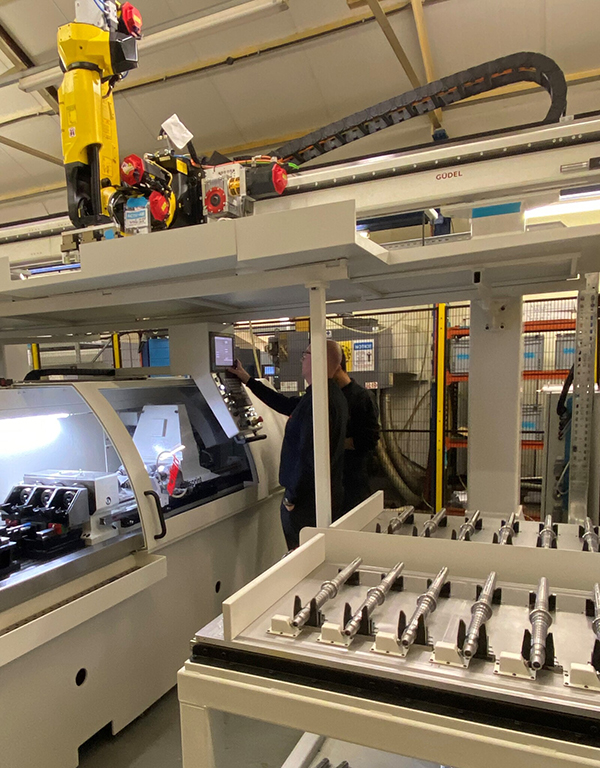
“This machine proved to be the best system for our application,” explains the process planner responsible on site. “It is loaded by a gantry loader through the roof hatch and will be fully integrated into a belt linking system at a later stage,” he says, outlining the automation concept.

Christian Feuchter, technical sales at Nagel, adds: “The NaShaft series is a highly flexible machine platform with a modular design and is therefore a cost-effective solution.”

ZF uses the NaShaft Eco 612 for various transmission shafts with overall lengths from 150 to 380 mm, with bearing journals in the range D = 30 to 60 mm. Tension is applied between centres. After grinding, the values for cylinder shape and surface finish are around 8 µm and Rz 2.5 µm. The targets for superfinishing are <5 µm and Rz <0.7 µm. Nagel developed a hybrid process for this task. “There is a stone process and a tape process,” explains Feuchter. “The stone process ensures an improvement of the waviness on the bearing journals, optimising the cylinder shape or shape accuracy. The subsequent tape process improves surface quality.” The NaShaft Eco finishing centre is equipped with four finishing modules. The shafts that require machining have two bearing locations. Consequently, it is possible to machine both bearing journals simultaneously, first in the stone process, then in the tape process. The machining time for one shaft is 15 seconds. For further information www.nagel.com

£1.4m rotor grinder set for China

A Chinese manufacturer of industrial refrigeration compressors has chosen a British-built PTG Holroyd TG series CNC rotor grinding machine to bring even higher levels of accuracy and speed to its manufacturing strategies. Valued in excess of £1.4m, the machine, a TG350E, will take shape at PTG Holroyd’s Rochdale technology centre, ready for commissioning in summer 2022. The customer will use the machine to precision-grind stainless steel screw rotors of up to 350 mm in diameter and 1800 mm in length.

PTG Holroyd says that its TG series machines deliver fast, accurate and efficient stock removal. Advanced automation means reduced set-up time, while a significant amount of production time can be saved due to the fact that each machine’s diamond dressing discs are dressed continuously during the semi-finish grinding cycles.

The TG range starts with the TG50E, a machine designed to precision-grind components up to 50 mm in diameter and 610 mm in length, with models offering stepped increases in capability up to the production of helical components measuring 450 mm in diameter and 2020 mm in length.

Equally suited to prototyping, batch and volume production, TG series machines are designed primarily for the finish grinding of helical screw components such as worm screws and rotors after they have been milled to a rough or semi-finished state. Fully automated on-machine probing provides closed loop feedback of corrections to the dresser wheel and does not require a high level of operator skill.

For further information
www.holroyd.com

Four Vericut User Exchange events

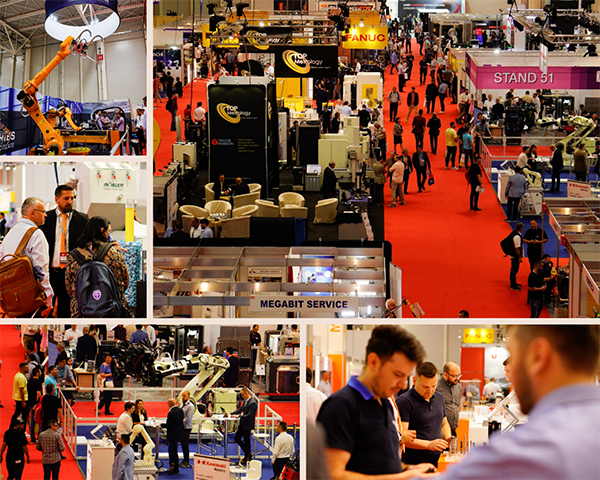
Each year CGTech offices worldwide host numerous Vericut User Exchange (VUE) events for customers and partners. In 2022, a combination of virtual and traditional events will draw thousands of attendees from all over the globe. CGTech has announced four UK VUE events: 7 September, Yamazaki Mazak, Worcester; 14 September, Kyocera SGS, Wokingham; 21 September, Nikken Innovation Centre Europe, Rotherham; and 28 September, Advanced Forming Research Centre, Scotland. Attendees will learn how to make the most of features available in the latest version and get a first-hand look at the next major release, Vericut 9.3.

For further information
www.cgtech.co.uk/company/vue