
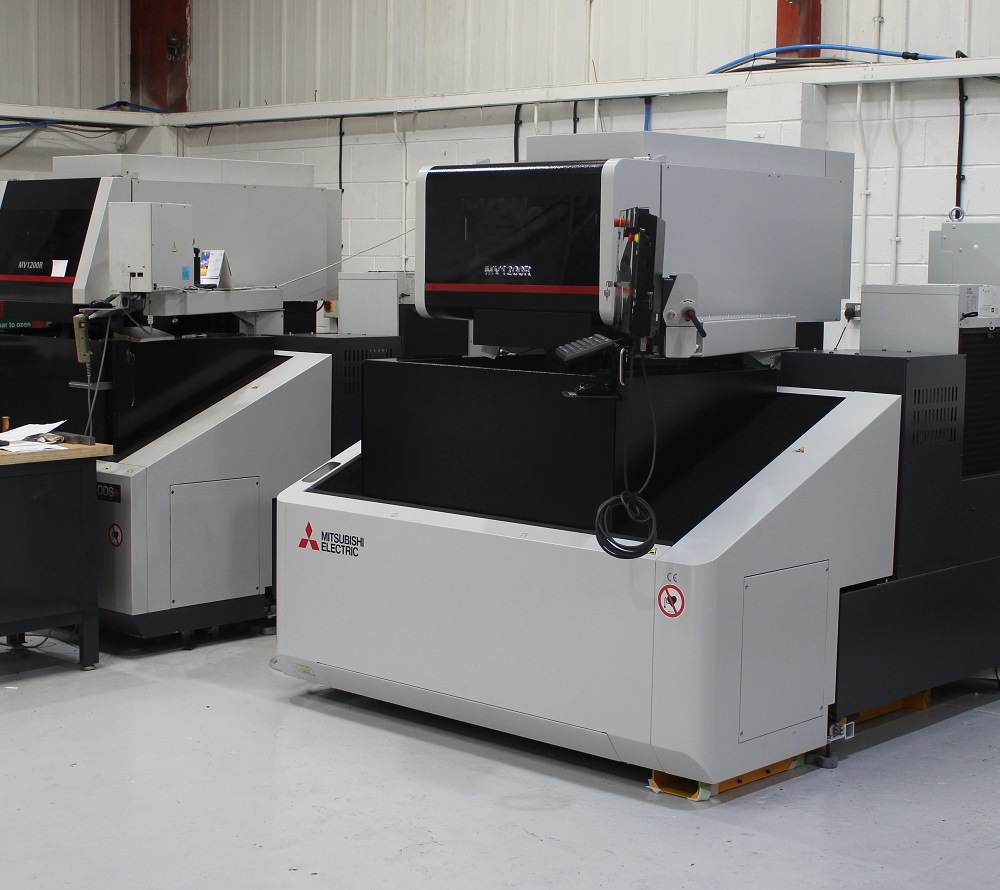
Queen’s Award and relocation for CSS

Paignton-based CSS (Casting Support Systems) Group is having a year to remember with a visit to Buckingham Palace to collect a Queen’s Award for Enterprise and relocation to a purpose-built 60,000 sq ft factory. The relocation will see each of the three group company’s sharing the available space, with the toolmaking side of the business being the stand-out area for development.

With recent investment in new machining technology, the move involved relocating six machining centres from XYZ Machine Tools. CSS managing director James Head estimated that it would take three days per machine to complete the move. However, a concerted effort from XYZ’s machine movers and service engineers saw all six machines back in production, including laser calibration to within 6 µm/m, within seven days. Says Head: “It was an incredible effort by everyone concerned and, as a result of the prompt and efficient service, what we are now calling ‘XYZ alley’ was back machining parts in very quick time.”
For further information www.xyzmachinetools.com

Aiming to plug UK’s five-axis capacity shortage

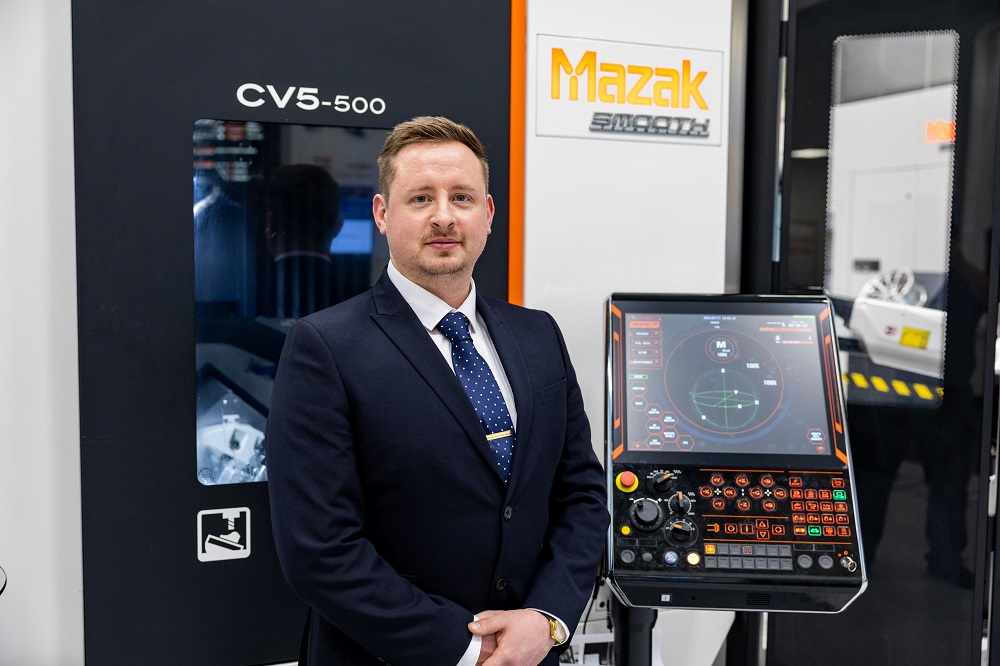
A new subcontract manufacturing start-up is aiming to help plug the UK’s five-axis capacity shortage with a machine manufactured by one of his former employers. Jonathan Butler has set up Butler Precision Engineering, based near Dudley in the West Midlands, with the help of a Mazak VariAxis C-600 five-axis machining centre.

“It’s been a longstanding ambition to run my own precision machining company and there has never been a better time to make the plunge,” he says. “There’s a real gap in the market for five-axis capability due to limited machining capacity in the UK, which leads to too much work chasing too few available machining hours. My hope is that Butler Precision Engineering and the VariAxis can help plug the gap.”

After being operational for only a few weeks, Butler Engineering has already secured two contracts for turbine blade work and medical equipment.

“We’re getting a lot of interest, particularly from customers who want to use us as a development shop or for prototype work, which is perfect for the VariAxis,” he says.

Butler has 30 years’ experience in engineering, including time with Renault F1 as a machinist and programmer, as a machine shop manager for a fabrication company, and most recently as an engineering consultant for Quickgrind. During his time with Mazak, he learned all about the VariAxis i-600 machine, the forerunner to the C-600, as an application engineer.

He says: “It was my job to know the VariAxis like the back of my hand, so when I decided to take the plunge and set up my own business there was only going to be one machine that I wanted. You’ve got to know and trust the technology you’re working with.”
For further information www.mazakeu.co.uk

Earthmoving subcontractor opts for Quaser

When an ageing horizontal boring centre was on its last legs and the world was entering the pandemic, Rockingham Manufacturing found a suitable cure with a Quaser horizontal machining centre from the Engineering Technology Group (ETG).

Founded in 2004 out of the ashes of a previously failed business, Rockingham Manufacturing is a subcontract manufacturer that supports a diverse client base in the food machinery, diesel engine, earthmoving, factory spares and general manufacturing sectors. To cater for its diverse customer base, managing director Martin Scott believes it is imperative to have a horizontal borer or HMC to complement its four VMCs. So, when the Corby-based subcontractor found its horizontal boring machine unreliable and in need of replacing, the company turned to ETG and its Quaser HX504BPF twin-pallet HMC.

“The Quaser has a similar weight to its predecessor, but in a footprint that is 20% smaller. Despite the smaller footprint, the XYZ axis travel of 762 x 640 x 800 mm is considerably larger than the previous machine. Combining this larger work envelope with high-precision indexing of the B axis, we’ve reduced secondary operations as the Quaser can complete more jobs in one hit.”

He adds: “The Z and Y axes are much larger than the previous machine, and this allows us to machine bigger parts. However, it’s not just about large axis travels, but having the stability to machine larger components. For example, we wanted to U-drill some holes at 50 mm diameter in steel with the holes positioned beyond 500 mm high on the Z axis. The rigidity of the Quaser ensured this was no problem for us.”
For further information www.engtechgroup.com
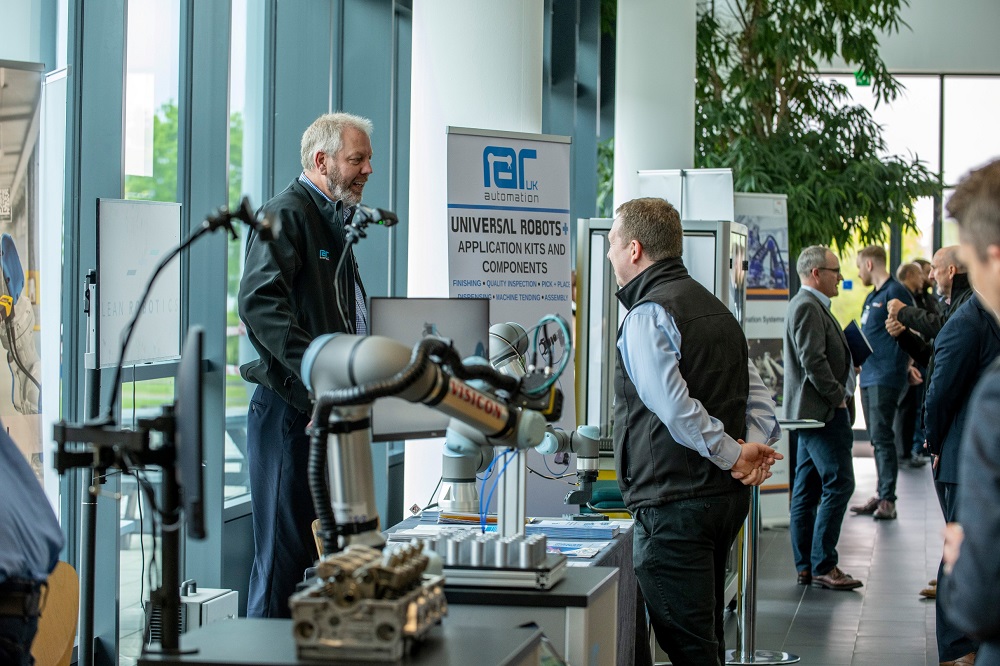
Getting to grips with forged hand tools

The use of a Heckert H55 machining centre from Starrag has enabled renowned hand-tool manufacturer SWM to not only reduce cutting times by around 40% on certain parts, but identify new machining concepts there were previously impossible.

By way of example, SWM recently recognised the potential to optimise the production of its large pliers. Clamping of the plier heads was taking too long, as was the milling of these workpieces due to the limited spindle speed available with existing machinery, which also severely limited product variety and made retooling very time consuming.

The way to shorten the production process – to 30 seconds per plier head – and minimise the set-up times of 26 different workpieces was, SWM discovered, to capitalise on the capabilities of a Heckert H55 machining centre boasting high levels of rigidity (and therefore accuracy), fast traverse rates of 80 m/min and an ability to handle loads of 800 kg on pallets of 500 x 500 mm (optionally 500 x 630 mm).

But why use such a high-precision machining centre on components where tolerances are usually only a few tenths of a millimetre? In SWM’s case, machining accuracy was not the decisive factor; what is important is machine stability (for machining repeatability) and flexibility (to handle a range of component types/batch sizes), as well as the need for minimal space requirements (the H55 is a compact machine occupying a floorspace of just 6.8 x 2.9 m).

Another example of the benefits to SWM of the Heckert machine concerns certain very large parts that previously required half a shift to machine manually. Today, because the Heckert table can easily handle the required half-tonne fixture, it enables the company to redeploy the machinist formerly required.
For further information www.starrag.com

Machining parts to one-third of a micron

In the production of many optical components such as lenses and mirrors, the specified form accuracy and surface roughness are generally an order of magnitude higher than for other machining processes. That is why Son-x GmbH in Aachen, Germany, a spin-off from the renowned local Fraunhofer Institute for Production Technology, uses a five-axis machining centre built by another German firm, Roeders. The manufacturer’s machines are available in the UK and Ireland through sole agent, Hurco Europe.

Son-x manufactures metal components made from various alloys, including high-strength steels, as well as parts made of clear plastic. Quantities range from single pieces to several hundred per year, while dimensions extend from a few millimetres up to half a metre diameter in the case of metal mirrors, for example.

Dr Olaf Dambon, a director of Son-x, says: “Our early work involved ultra-high-precision diamond turning, but parts started coming along that needed a prismatic machining platform able to achieve similar accuracies. We drew up a specification sheet for the machine we wanted and designed a challenging test part for prospective suppliers to produce. Five machining centre manufacturers were shortlisted, including three from Japan, but we chose the Roeders because its trial machining results were the best.”

An order was therefore placed for a Roeders RXP 601 DSH five-axis machining centre.

Dr Benjamin Bulla, another director of Son-x, says: “We have many jobs that run for extended periods, so the long-term stability of the machine’s reference point is crucial. In one instance we had to mill moulds for arrays of hundreds of plastic lenses whose shape required control to within 316 nm. This tolerance was reliably maintained throughout 50 hours of machining.”
For further information www.hurco.co.uk