

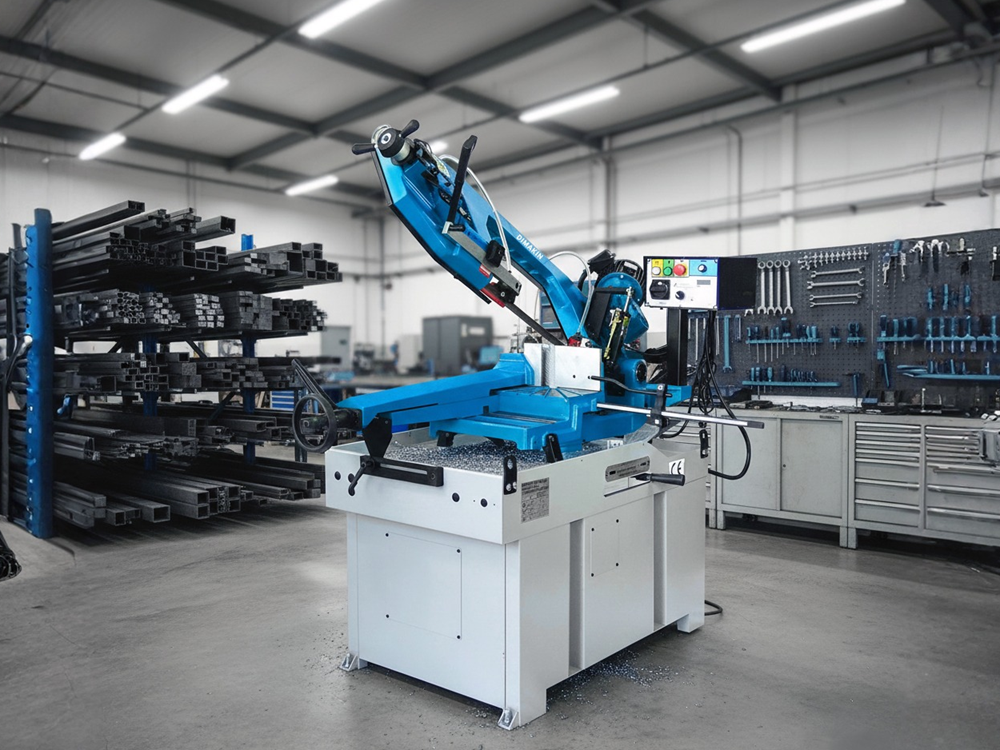
Why bandsaw accuracy drops and how to fix it fast

When the cutting accuracy of a bandsaw drops, the impact is immediate: uneven cuts, higher scrap rates and longer cycle times. In this article, UK bandsaw supplier Dimakin explains why cutting accuracy declines, and how to correct it quickly.

Accuracy rarely disappears overnight. In most cases, clear warning signs emerge first, allowing workshops to correct problems quickly and avoid unnecessary downtime. Common symptoms include angled or tapered cuts, rough or inconsistent surfaces, blade wandering, excessive burr formation, and inconsistent cut lengths. Operators may also notice increased vibration, chatter or unusual blade noise. These indicators typically point to issues with blade condition, set up, alignment or feed control.

Blade condition is one of the most frequent contributors to poor accuracy. Worn blades struggle to maintain a straight cutting path, particularly in thicker sections or higher-strength materials. Incorrect blade selection has a similar effect: fine-tooth blades can clog in thick material, while coarse pitches lack stability on thin sections. Both increase cutting resistance, leading to blade deflection. Prompt blade replacement and correct tooth pitch, geometry and width selection are among the fastest ways to restore accuracy.

Blade tension is equally critical. Under-tensioned blades flex during cutting, while excessive tension accelerates fatigue and places unnecessary strain on machine components. Following manufacturer-recommended tension settings and checking them regularly helps maintain stable blade tracking.

Guide and bearing alignment also play a vital role. Worn, misaligned or contaminated guides allow the blade to drift under load. Keeping guides clean, correctly aligned and positioned close to the workpiece minimises unsupported blade length and improves precision.

Finally, consistent feed control and secure workpiece clamping are essential. Controlled bow descent prevents blade deflection, while firm, square clamping eliminates vibration and movement.

More information www.dimakin.co.uk
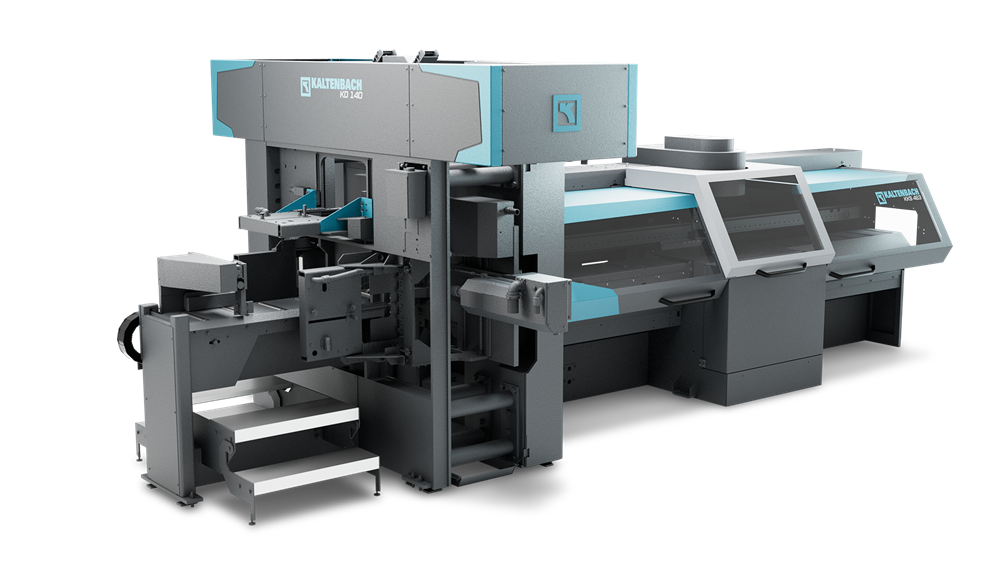
Kaltenbach introduces saw-drill line of machines

Kaltenbach has unveiled its latest innovation: the KKS 463 NA | KD 140 saw-drill line. This versatile all-round machine has been developed to meet a wide range of requirements in metal construction, steel stockholding and steel fabrication. It combines all essential processing steps in one compact system – capable of handling various steel shapes, especially in the smaller dimension range. While large systems are often uneconomical for small-format profiles, Kaltenbach says this machine offers the solution the market has long been seeking.

With the new saw-drill line, steel processing companies can handle nearly all materials and profile shapes: from round material with a diameter as small as 15 mm to special profiles up to 140 x 140 mm or flat material up to 240 mm wide. Mitre cuts of up to ±20° make the machine highly versatile.

The technology enables fully automated and precise drilling, milling, thread cutting, flow drilling and marking on all four sides of the profile. High automation and speed are the hallmarks of this machine, which only requires personnel for loading. Remnant lengths of less than 15 mm ensure maximum material utilisation, making the entire production process more efficient and resource-friendly.

The automatic tool changer, intelligent material preloading with feed magazines and fully automated part sorting boost productivity. Automatic adjustment during material changes – without any manual set up – reduces staffing needs to a minimum.

“Our new saw-drill line was specifically developed to meet the needs of our customers,” explains René Eger, managing director of Kaltenbach Cutting Systems GmbH. “Market demand was high, and we’re proud to offer a solution that combines high automation with fast processing times. This enables our customers to work more efficiently and significantly increase their productivity.”

More information www.kaltenbach.com

Compact storage and sawing from a single source

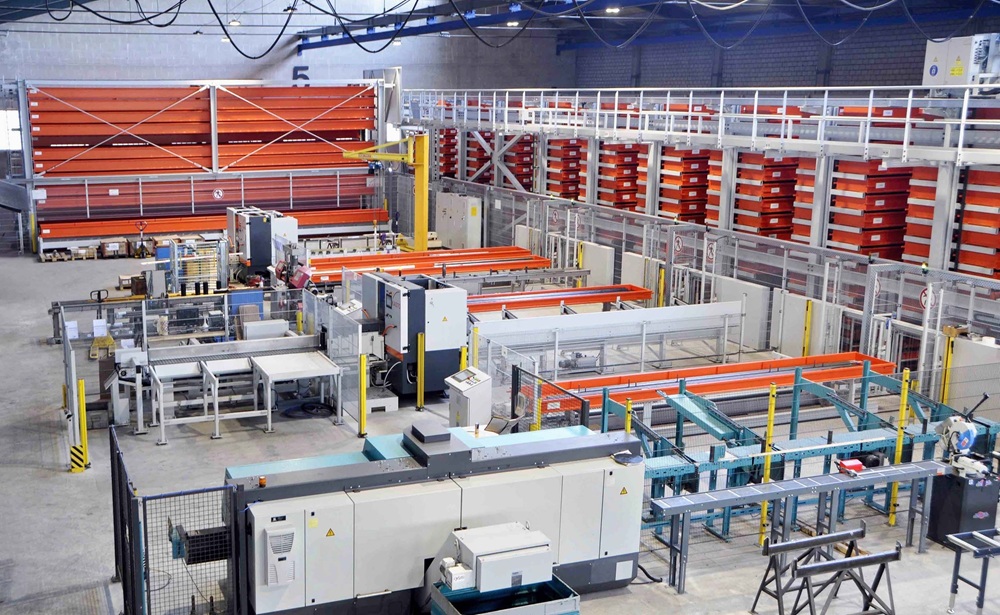
To meet growing demand, stockholder, processor and distributor Brütsch/Rüegger Metals AG, located in Regensdorf near Zurich, has upgraded its operations by replacing a semi-automatic honeycomb storage system for housing long stock with fully-automatic Unitop and Unitower storage systems from Kasto.

Brütsch/Rüegger is witnessing significant growth, today stocking 5500 tonnes of metals of 8000 different types and sizes. However, with this higher level of business came challenges. The honeycomb storage system from the 1980s was reaching the limit of its capability.

“Expanding the existing warehouse was not feasible due to infrastructure constraints, leaving only one option – consolidation,” explains Patrick Epp, managing director of Brütsch/Rüegger. “This led to the initiation of a new project to increase storage capacity, modernise the warehouse and enhance process efficiency.”

The metals specialist had complex requirements for the new installation, which needed to offer twice the storage capacity and fit within the 26 m wide hall. Additionally, the system had to be reliable, easy to operate and able to employ seven different storage and retrieval stations, allowing simultaneous processing of materials with multiple saws.

Says Epp: “We’ve been using a KASTOwin A 3.3 bandsaw from Kasto since 2018 and we’re very satisfied with its performance. This was one of the primary reasons we chose to meet with Kasto at a trade fair to talk about our requirements.”

Kasto recommended its Unitop 3.0 overhead, horizontally-moving gantry crane system with 521 storage positions for storing material up to 6.5 m long, and its Unitower 3.0 cassette storage system, with vertically-moving stacker crane, able to accommodate 12 m long material. Both systems are computer controlled by the KASTOlogic warehouse management system. The installation also includes two new bandsawing centres from the KASTOwin series, models F 3.3 and A 3.6.

More information www.kasto.com

Behringer introduces high-performance bandsaw

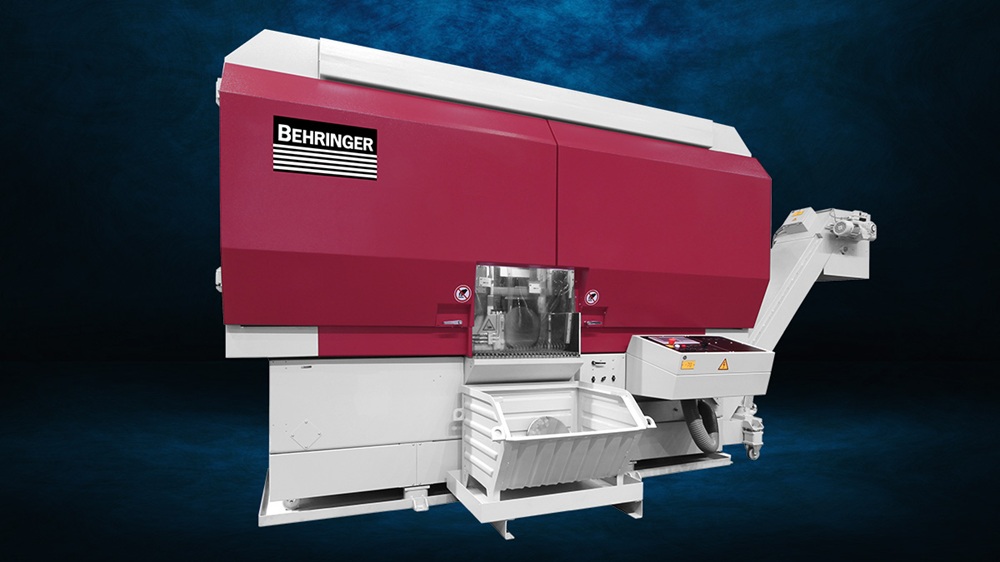
A highlight of the Behringer stand at the EMO 2025 exhibition in Germany towards the end of last year was the company’s new HBM500SC high-performance bandsaw. The HBM500SC saws solid material from case-hardened steel with a diameter of 300 mm in under 2 minutes.

But speed is not everything: the HBM500SC is also highly flexible, offering suitability for a wide range of materials and applications. In addition, the machine impresses with its high energy efficiency and AFC Pro technology, which automatically determines the optimum sawing parameters. This capability simplifies operation. After a short briefing, any employee can start the sawing process.

Other exhibits on show at EMO included the HBE320-523G mitre bandsaw and the LPS-TA automatic table bandsaw, which is suitable for sawing small panels and blocks.

Behringer Eisele  displayed innovations in the field of circular saws. The HCS 150E, for example, is a powerful multifunctional device for the steel trade and predestined for large batch sizes and mass cutting. The VMS 400H and PSU 450H mitre circular saws, and the VMS 370PV vertical circular saw, on the other hand, are designed for manual and semi-automatic applications – suitable for smaller metal construction companies and metalworking shops.

Behringer says now is a particularly attractive time to invest in modern sawing technology: the subsidy programmes of governments around the globe are opening new financial scope for small and medium-sized manufacturers and stockholders – especially for replacement investments. The energy-efficient sawing systems from the Behringer Group typically fulfil the requirements for a subsidy and therefore offer not only technological progress, but also economic advantages.

More information www.behringer.net

A heritage of excellence and strategic diversification

Since its 2013 founding, Antrim-based Anchor Fixings has established itself as a leading supplier of fixings and fittings to the construction and engineering trade across Ireland and the UK. However, beneath the surface of this traditional business lies a company with an extraordinary heritage across multiple sectors.

The combination of experience through a multitude of markets has created a corporate culture that consistently invests in the highest quality equipment available.

“If you install the best machinery, you get fewer problems and better quality: that’s the way we work,” states business development director Guy Walker. “That’s what we’ve also done with our saw blade business – we started investing in Vollmer machines last year.”

Completed between March and June 2025, the sizeable investment package included a Vollmer CS860 with ND 230 automated loading system, a Loroch K850T sharpening machine for steel blade applications, a Vollmer CHHF 21H side dresser, and a Gockel knife grinder capable of handling blades up to 3m in length.

“We did our research on the best saw blade sharpening machines and Vollmer came out on top,” says Walker. “The quality of sharpening is second to none.”

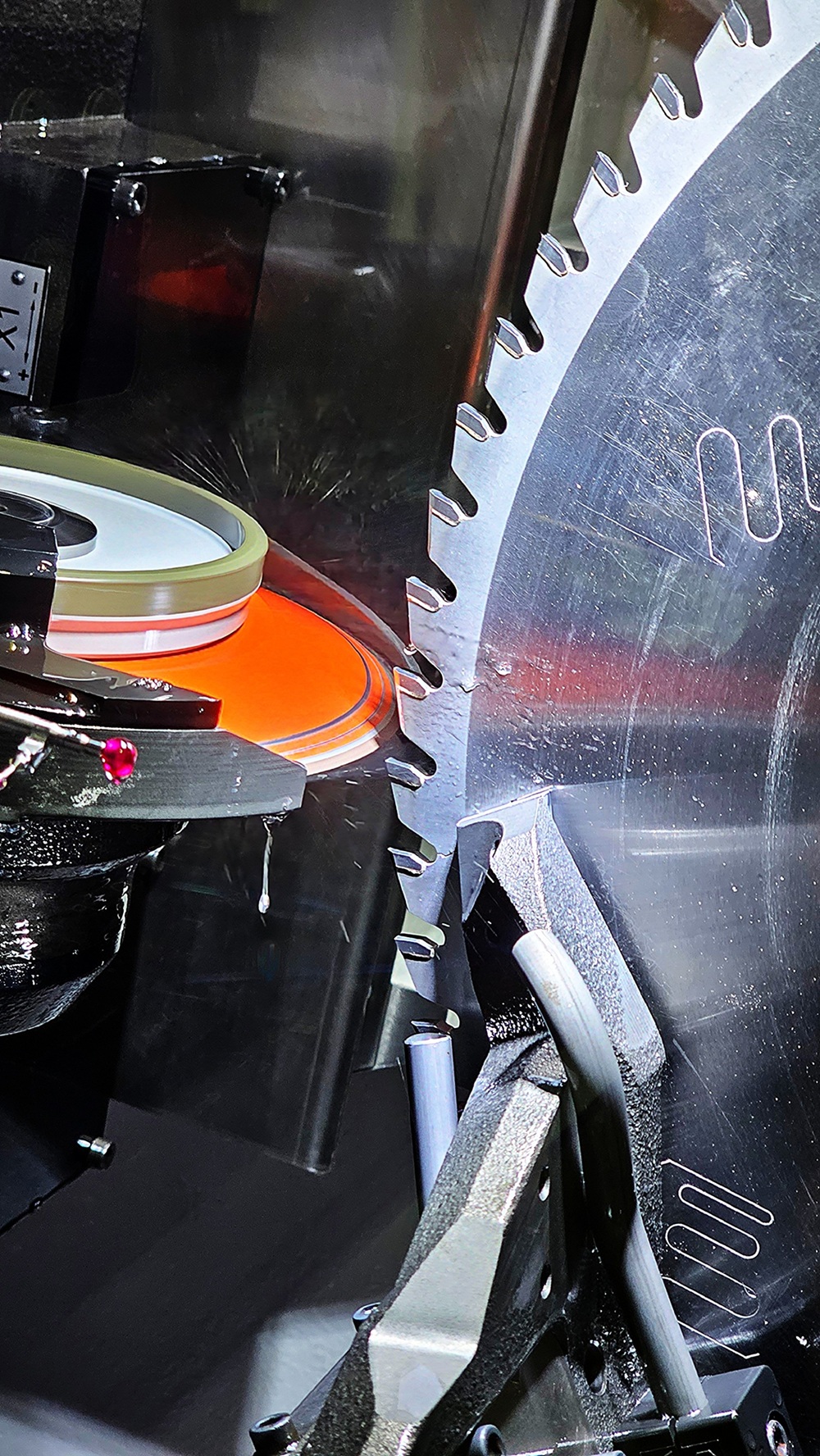
The Vollmer CS860 (pictured) is an eight-axis machine that handles circular saw blades from 80 to 860 mm in diameter with a high level of automation.

Gavin Fleming, the company’s experienced saw doctor, describes its capabilities: “You input the diameter and the number of teeth and, once you’ve done that, the machine does the rest. It probes and checks the gullet and the angle. The machine is very smart – it does a lot of the work itself.”

More information www.vollmer-group.com/en-uk