

VERICUT PROVIDES SAFE MACHINING OF COMPLEX AEROSPACE PARTS AT HMS MAKINA

A leading supplier of complex aerospace components is enhancing the reliability of its machining operations since investing in VERICUT verification, simulation and optimisation software from CGTech. Among many benefits, the implementation of VERICUT has seen this progressive manufacturing business reduce its scrap rate for FAI (first article inspection) parts to almost zero.

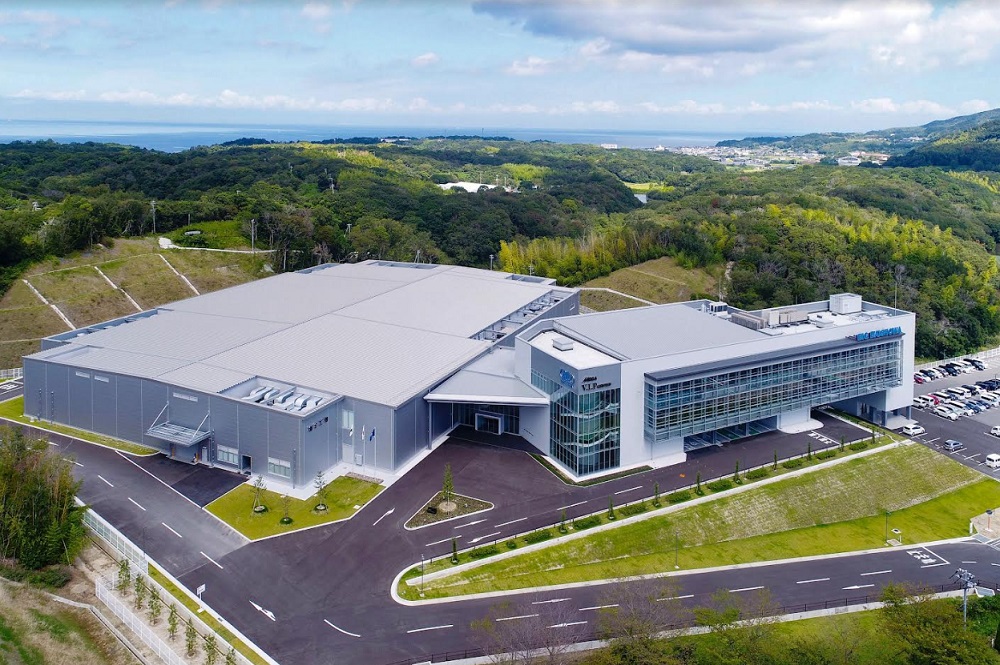
Established in 1979 and today located at Manisa in the west of Türkiye, HMS Makina is a leading machinist of many different parts and products for a global portfolio of aerospace primes and their sub-tiers, mainly in EU countries. The company, which employs 440 highly skilled personnel, exports 70% of total sales from its modern 23,000 sq m production facility. All of HMS Makina’s special processes carry approvals by major OEMs and NADCAP.

“With over 80 high-technology CNC machines we’re able to produce complex and precision parts from all kinds of light and hard metals, including aluminium, steel alloys, stainless steel, titanium, magnesium and nickel-based superalloys from plate, sheet, castings and forgings in compliance with customer specifications,” explains Onur Benzergil, new part supervisor at HMS Makina.

Benzergil leads the team that carries out machining process design and NC programming for aerospace parts. HMS Makina has ability to offer finished aerospace products, providing post-machining services that include NDT (non-destructive testing), shot peening, surface treatment, painting and assembly. This market differentiation, alongside its quality-oriented production, makes HMS Makina a preferred supplier to the aerospace sector.

The company produces a wide variety of aerospace parts for its customers, including forged titanium engine components and structural airframe parts.

“Machining these complex-geometry components requires a simulation program to prevent failure and avoid the expense of scrapping workpieces made from expensive materials,” states Benzergil “As a result, we decided to make this investment because we see VERICUT as superior to other solutions.”

He adds: “We had been researching simulation systems for a long time, but VERICUT is known to every company working in this sector. Since it was such a critical issue, we didn’t want to leave anything to chance.”

Installed in 2023, HMS Makina leverages the benefits of VERICUT to detect errors, potential collisions and areas of inefficiency before actual metal cutting. Innovating and gaining a competitive edge in aerospace means meeting increased demand and tight timelines with high-quality parts. VERICUT is the key to machining components quickly and with confidence.

“Notably, the software has allowed us to eliminate manual prove-out processes, freeing-up machine time to run more parts,” says Benzergil. “It’s also proving highly beneficial in reducing scrap rates. Our scrap rate is now almost zero for first-article parts. In addition, safer machining really stands out for me. Even though this gain is not easy to quantify, I can say safety is the biggest benefit we see on a daily basis.”

HMS Makina also takes advantage of VERICUT’s AUTO-DIFF module at the end of every simulation. The company says AUTO-DIFF helps it detect errors such as potential gouges, providing approximately 99% accurate results.

VERICUT AUTO-DIFF compares a CAD model with a VERICUT simulation, automatically detecting differences, design weaknesses or mistakes in the design. AUTO-DIFF also reduces the time it takes to prepare an NC tool path. Notably, programmers can check for gouges or excess material while working on the program, identifying and correcting issues before machining.

“VERICUT fully meets our expectations,” states Benzergil. “Today, we do not move to the production phase until the VERICUT simulation is complete.”

HMS Makina received comprehensive training and technical support from local VERICUT reseller, Ucgen Yazilimo, on every aspect of the software, helping the company to understand the full potential of VERICUT.

“Of course, VERICUT should not prove difficult to learn for anyone who uses CAD software,” he says. “We became familiar with it in a short time period. Today, VERICUT is definitely helping us use our machinery more effectively, which in turn drives more efficiency. I think any company machining parts in the aerospace sector should invest in VERICUT. The software has a simple interface; so many details are well categorised and it’s extremely easy to access. The graphics are also advanced and I find the Reviewer plug-in especially useful.”

VERICUT Reviewer incorporates all the functionality of NC Review mode in a stand-alone viewer that does not require a licence. The Reviewer can play forward and backward while removing and replacing material. Users can rotate, pan and zoom, just like normal VERICUT.

“I would recommend VERICUT to other businesses because it has very good infrastructure backed by a great team for technical support,” concludes Benzergil. “VERICUT is a proven and constantly evolving program, and we’re finding it highly beneficial here at HMS Makina.”

More information www.cgtech.co.uk

Sustainable Materials Hub

The Manufacturing Technology Centre (MTC) has invested in a new hub for sustainable additive manufacturing (AM), thus opening avenues for research and development to support the design and manufacturing of net zero products with end-to-end circularity.  

The new hub features polymer and ceramic AM machines to manufacture net-zero products alongside material reprocessing equipment that recycles waste AM materials and parts into feedstocks. Notably, a new Carbon M3 machine will enable processing of high-performance polymers for net zero products in sectors including aerospace, defence, and energy.

More information www.the-mtc.org

Sustainable tool packaging

Cutting tool specialist Walter is now supplying its products in packaging made from up to 95% recycled plastic. Known as PCR, a material that is fully recyclable, this new packaging strategy is an important step in increasing economic circularity to above 90%, a goal which the Tübingen-based company wants to achieve by 2030. “And that’s not all,” says Gerhard Schüßler, head of sustainability at Walter. “Our main goal is to be climate-neutral by 2050. It’s essential that we take every opportunity to reduce our CO2 emissions. On multiple levels, PCR packaging plays a part in this ambition.”

More information www.walter-tools.com

Dugard grows sales team

Dugard is once again strengthening its team with the appointment of a new area sales manager. Paul Roberts is now the company’s representative for southwest England and south Wales. He brings vast experience to the company, entering the industry almost 25 years ago as an apprentice toolmaker. Sales director Colin Thomson says: “Paul has a proven track record with a technical understanding and ability to solve problems for customers that will be a genuine asset to Dugard. He has spent several years working with manufacturers in the southwest, so his local reputation and insight will be of huge benefit.”

More information www.dugard.com

OrthoSolutions installs Hurco machines

Maldon-based OrthoSolutions, which designs, develops and manufactures implants and instruments used in surgical repair of the foot and ankle, has invested in a purpose-built production facility and purchased two Hurco machine tools. The move will bring previously outsourced work in-house and accelerate prototyping.

The new Hurco VM10i vertical machining centre (with 4th-axis rotary table and tailstock arrangement) and TM6i CNC lathe will perform a majority of the milling and turning operations required. They have already been busy providing a notable improvement in lead times for prototypes, while allowing quick and easy program editing in response to feedback from surgeons.

More information www.hurco.co.uk