

Retrofit solution facilitates PcBN tool grinding

The cutting material PcBN(polycrystalline cubic boron nitride)is both ultra-hard and extremely temperature-resistant, making it a challenge to process. To enable cutting tool manufacturers to grind PcBN cutting edges with high levels of precision, users of the Vollmer VGrind 360S tool grinder can now take advantage of an optional dressing unit.

By adapting its VGrind 360S grinding machine, the sharpening specialist can make it suitable for machining PcBN tools. Considered the hardest cutting material in the world after PCD (polycrystalline diamond), PcBN can achieve an operating life of up to 25 times longer than solid-carbide tools. In fact, PcBN retains almost all of its original hardness at temperatures up to 1200°C.

The VGrind 360S grinding machine is positioned for the precise machining of PcBN tools with its stable wall concept and rigid, compact design. High system rigidity, in combination with the drive of the X, Y and Zaxes via linear induction motors, allows tool manufacturers to machine a PcBN cutting edge with the grinding wheel oscillating across its contact surface for a chip-free, high-quality surface.

To support the processing of this ultra-hard material, the optional dressing unit for the grinding wheel on the VGrind 360S means that after roughing the PcBN cutting edge, the dressing unit re-profiles the grinding wheel to regain its precise concentricity and correct geometric shape. Subsequent finishing operations give the PcBN tool the desired surface finish and geometric accuracy.

Customers can also retrofit the optional dressing unit with software updates to existing VGrind 360S machines. Tool manufacturers can carry out the installation independently or with the support of the Vollmer service team in just a few simple steps.

More information www.vollmer-group.com/en-uk

MecWash unveils MWX600 aqueous parts washer

MecWash is launching its MWX600aqueous parts washerfeaturing anexpansive wash chamber measuring 600 x 660 x 1000 mm. This significant upgrade in aperture capacity makes the MWX600 the most versatile and powerful system in the company’s MWX line-up.

The MWX600 incorporates an advanced design with enhanced features for maintenance communication and servicing. For instance, the system offers remote monitoring and predictive maintenance capabilities, helping to ensure maximum uptime and efficiency.

According to MecWash, the MWX600aqueous parts washer is not just bigger – it is better. Designed to accommodate larger components such as gearbox housings and bigger engines, the MWX600 offers capacity for heavy-duty cleaning applications. Additionally, the system boasts more ultrasonic rods than ever before, delivering higher cleaning power and precision for demanding industrial needs.

As the big brother of the Maxi system, MecWash says that MWX600 brings a new level of performance to the market that is unmatched by any other manufacturer. Its innovative features and robust design make it a suitable choice for industries requiring large-scale, high-capacity component cleaning solutions.

For 30 years, MecWash has been at the forefront of aqueous component cleaning, providing cutting-edge solutions to applications worldwide. The company says that its quality, innovation and customer service makes it a trusted partner for companies across many industrial sectors. The launch of the MWX600 underscores the dedication of MecWash to advancing technology and meeting the evolving needs of customers.

More information www.mecwash.com

Automatic shot peening of EV gears parts

BMW’s plant in Dingolfing has integrated an RST 200-S15 indexing satellite table shot-blast machine from Rösler into a new manufacturing line for E-vehicle gear components. The company decided to purchase the Rösler equipment because it had excellent experience with machines of the same type regarding productivity, process stability and ease of maintenance.

The rotary table of the compact shot-blast machine contains 15 rotating satellite stations equipped with workpiece-specific fixtures. Depending on the workpiece type, a component loading/unloading system supplied by the customer places one or several parts on the satellite stations. Thanks to the machine’s design, non-productive idle times are minimal.

After loading, workpieces pass through multiple stations in the shot-blast machine at indexing cycles of 20 seconds. These stations include two blast positions. Special lifting gates prevent any spillage of blast media into other stations. During the peening operation, the satellites rotate at pre-set speeds in front of the blast turbines. In combination with automatic blast pattern adjustment to the respective workpiece shape, this ensures the realisation of homogeneous peening results. A compressed-air cleaning station placed in front of the loading/unloading section blows off dust and residual blast media from the finished components.

The master computer of the manufacturing lineselects the workpiece-specific processing programs, including the setting of the turbine position and blast pattern. For this purpose, the controls of the peening machine were integrated into the upper-level computer system at BMW in Dingolfing. 

To meet the automotive industry’s high standards regarding process stability and traceability, the machine’s controls allow the continuous monitoring of all relevant shot-blasting parameters. Replenishment of the blast media also takes place automatically.

More information www.rosler.com

UK tube train production

Following an investment of up to €230m, Siemens Mobility is opening a UKtrain manufacturing facility as part of the company’s new Goole Rail Village on a site which spans 67 acres, the size of 35 football pitches. London Underground’s new Piccadilly Line trains will be assembled at the factory before they start entering passenger service from 2025. Overall, Siemens Mobility’s investment in the region will create up to 700 new jobs and an additional 1700 supply chain opportunities by 2030. The company is also investing up to €50m in a new facility (also in Goole) to assemble and overhaul train bogies. More information www.bit.ly/3Yo3fWF

Refurbished Tech Centre

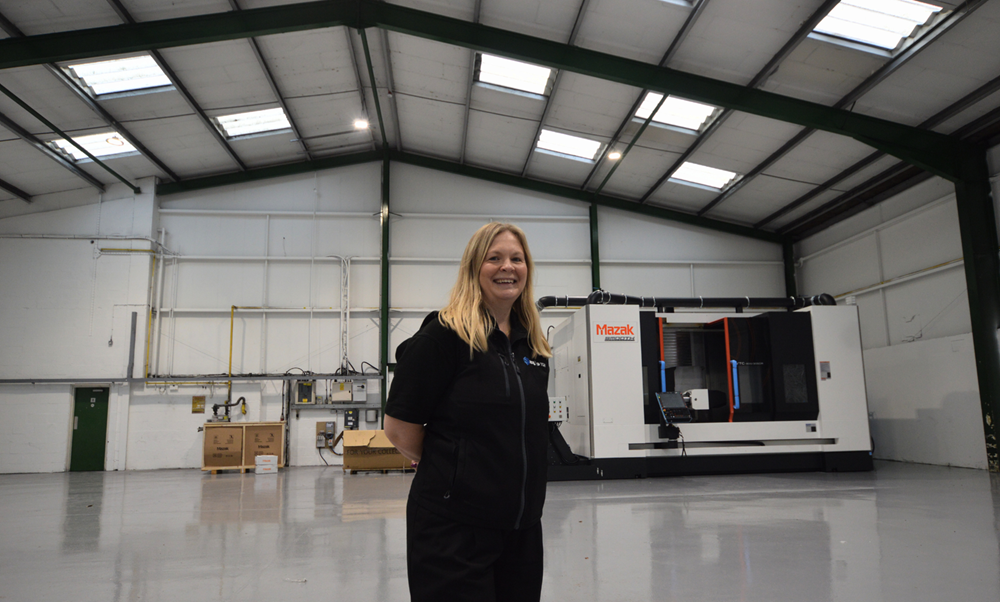
Cutting and profiling technology specialist Kerf Developments hosted a successful open house at its Rochdale headquarters last month to celebrate the opening of its new technical and demonstration centre. The fully refurbished facility is where engineers can investigate the company’s complete range of profile cutting solutions, including fibrelaser, oxy-fuel, plasma and waterjet technologies. Expert advice and the ability to offer a full suite of technologies enables Kerf to determine the ‘best-fit’ solution based on customer requirements. Four new machines are permanently in-situ at the refurbished facility.

More information www.kerfdevelopments.com