
Industry Industrial manufacturing around the world is undergoing rapid change. Geopolitical tensions, structural shifts in key industries, a weak economic outlook in Europe and new challenges in global supply chains are changing the way companies do business.
At MAPAL, several of these developments are coming together at the same time. The company group has deep roots in Germany and Europe, holds a strong position in the automotive industry, and supports its customers through long-term investment projects. These are precisely the areas that have come under significant pressure in recent years.
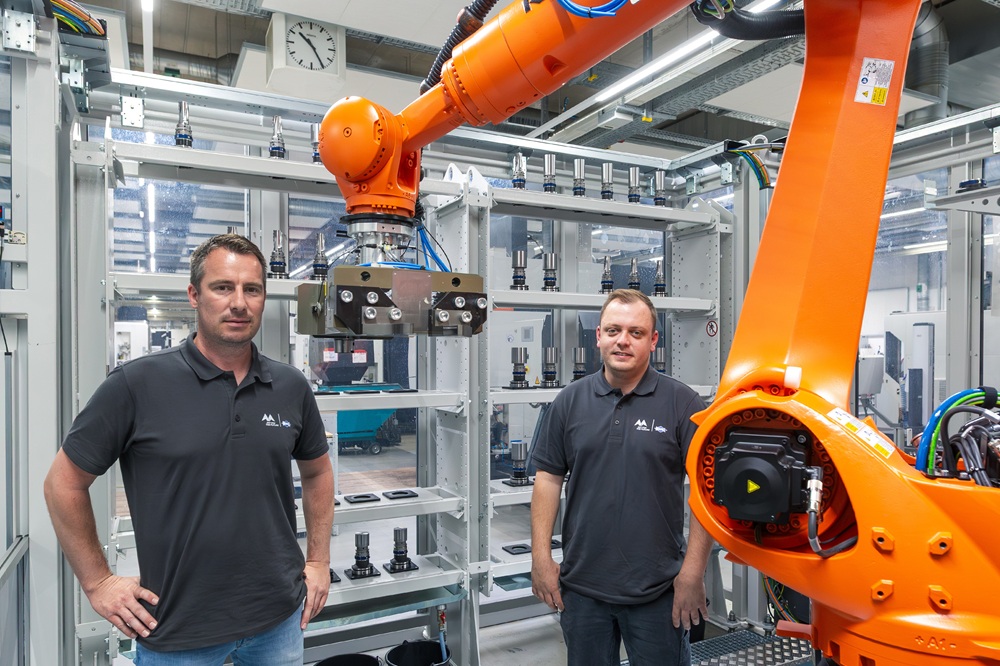
“We’re not experiencing a temporary market slowdown, but rather profound changes across many of the markets that are important to us,” explains Dr Jochen Kress (pictured), president of the MAPAL Group. “These changes affect economic conditions, technological developments and geopolitical influences alike.”
Since mid-2025, growing uncertainty in global raw material markets has added to the challenges, driven in particular by export restrictions and rising prices for carbide pre-products.
“Developments in the raw material markets highlight just how important resilient supply chains and long-term partnerships are,” says Kress. “Reliable supply is becoming an even more important issue for the industry as a whole. The MAPAL Group is currently well positioned in this regard and remains a reliable supplier.”
Against the backdrop of these market changes, the 2025 financial year developed in line with expectations. The MAPAL Group generated revenue of €514m, around 7% below the previous year’s figure of €551m. Performance varied across regions. While economic growth in Europe and China remained subdued and the automotive industry continued to be shaped by far-reaching changes, individual markets in North and South America, as well as Asia, proved more resilient.
By the end of 2025, the MAPAL Group employed around 4500 people worldwide. The adjustment of the workforce structure was made in response to market conditions. In doing so, the family-owned company focused on socially responsible solutions and long-term decisions.
“The environment was challenging and remains so. That makes it all the more important to focus on things we can influence ourselves. That’s exactly what we’ve done, driving MAPAL forward with determination.”
With the merger of its German entities, MAPAL completed the largest organisational project in the company’s history. At the same time, the group was realigned as a process-driven organisation. Standardised workflows, clearly defined responsibilities and structures, and end-to-end processes provide the foundation for more transparency, higher efficiency and, most of all, greater speed.
“Many of these changes initially took place behind the scenes and were not visible to the outside,” states Kress. “Transformation initiatives of this scale require time, consistency and a willingness to challenge established ways of working. For us, 2025 was mainly a year of implementation.”
The intensive work on structures and processes is beginning to deliver results. The organisation is gaining speed, and customer requirements are being implemented more efficiently.
MAPAL reached another milestone in spring 2026 in achieving TISAX certification at Assessment Level 3. The certification confirms the company’s high standards in information security and meets the requirements of demanding customers, particularly in the automotive industry. At the same time, it reflects the ongoing development of processes, structures and the organisation as part of the company’s transformation journey.
Alongside its organisational progress, the strategic direction MAPAL has pursued in recent years is also proving successful in key market segments. This is particularly evident in the aerospace sector. Over the past two years, MAPAL has achieved double-digit growth in its aerospace business, outperforming the market as a whole. As a result, MAPAL has further strengthened its position in this technologically demanding segment and is benefiting from strong global demand in the aerospace industry.
MAPAL also remains committed to its long-term investment strategy. In the 2025 financial year, the MAPAL Group invested around €25m in its sites, production capabilities, digitalisation and future technologies. The company expects to reach a similar level of investment by the end of 2026 financial year.
Following its 75th anniversary year, MAPAL continues to combine the strengths of a long-established family-owned company with a clear focus on meeting the demands of future markets.
Despite its extensive transformation projects, innovation remained a central focus of the company’s activities. In 2025, for example, MAPAL introduced the NeoMill-16-Finish indexable insert milling cutter, a new milling system for cost-efficient semi-finishing and finishing. The new standardised chip-breaking geometries for fine-boring inserts increase process reliability and deliver productivity gains. These examples are representative of the company’s ongoing commitment to innovation. The goal remains to help customers make their manufacturing operations more productive and efficient through high-performance tools, intelligent processes and comprehensive system solutions.
Alongside its established market segments, MAPAL is also keeping a close eye on emerging industrial growth areas. These include applications in the defence sector as well as industrial applications arising from new requirements in security, infrastructure and energy supply.
The company is deliberately taking a long-term approach in these areas. New markets and technologies are evaluated according to clearly defined criteria: they must align with the company’s technological strengths in precision machining, offer sufficient market scale and production volumes, and demonstrate long-term potential.
“We closely monitor new developments and stay technologically connected to the topics that matter,” says Kress. “At the same time, we invest selectively in areas where we see sustainable market opportunities and can create real value for our customers. Not every trend automatically becomes a market.”
Market conditions will remain challenging throughout the 2026 financial year. Economic growth in Europe continues to be subdued, while geopolitical uncertainty, changes in global supply chains and developments in raw material markets continue to influence the business environment. At the same time, investments in aerospace, infrastructure and other future-focused technologies are creating new opportunities.
For the 2026 financial year, the company expects revenue to remain at a similar level to the previous year. Nevertheless, MAPAL believes it has created the conditions to respond to market opportunities more quickly and decisively in the future.
“The challenges in our markets are not going away anytime soon,” he concludes. “What matters is how quickly and decisively we respond to change. That’s exactly why we’ve created the right conditions: we’re becoming faster, strengthening our ability to get things done. And we’re sharpening our focus on identifying opportunities earlier, making decisions more quickly, and bringing solutions to our customers faster.”
More information www.mapal.com