AI print assistant optimises 3D printing technology

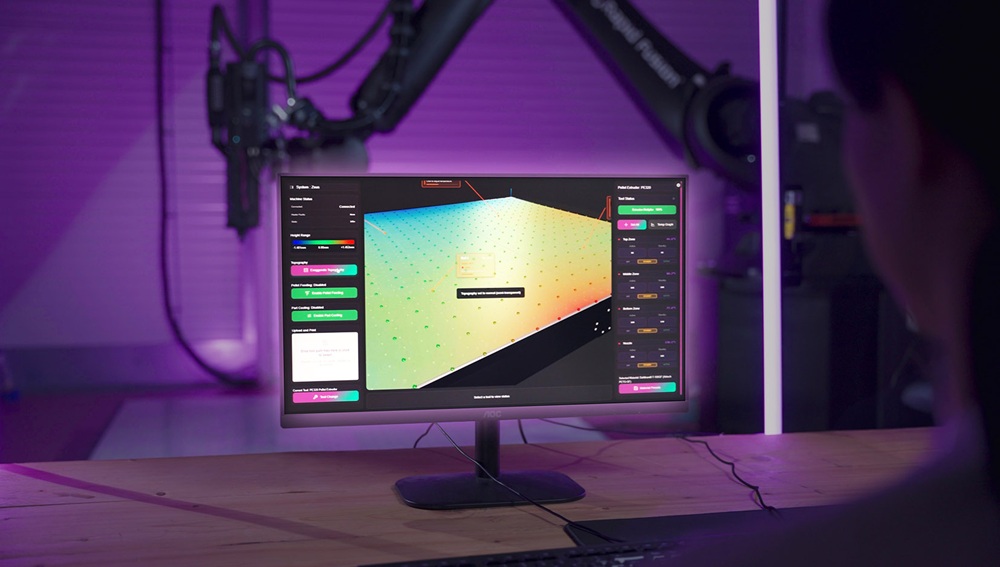
Rapid Fusion has unveiled an AI print assistant that will help enhance the performance of its robotic additive manufacturing (AM) systems. Based in the southwest, the technology specialist’s team of developers leveraged the power of AI to optimise solutions for customers printing complex components for the automotive, aerospace, construction, medical and military sectors.

After eight months of coding, troubleshooting and various live tests, ‘BoB (Base of Build)’ is rolling out to existing clients and promising to optimise their robots by making them easier to use, providing greater operator control and ensuring less downtime through preventative maintenance.

The pre-loaded knowledge bank, anticipated to be one of the largest collections of 3D printing expertise ever created, functions in both secure online/cloud-connected and offline/air-gapped configurations for military or IP-sensitive clients. This works with Rapid Fusion’s existing models like Apollo and Zeus and for its most recent system, Medusa, the first UK-built large-format hybrid 3D gantry printer.

“There’s a lot of talk about how AI can transform the business world and numerous companies are jumping on the bandwagon,” explains Martin Jewell, CTO at Rapid Fusion. “It’s something we’ve been aware of from day one and all of our robotic AM systems have been built so that we can use AI to unleash the full potential of our technology.”

He continues: “Having our own AI print assistant is a gamechanger and will cut machine downtime and boost efficiency. We’re teaching our systems to understand challenges and different scenarios, which means we can make the user interface more responsive and simpler to embrace – opening it up to all the workforce. In essence, if we can make our systems as ‘plug and play’ as possible it means we’ll have more adopters.”

More information www.rapidfusion.co.uk

Maritime project benefits from large-scale AM

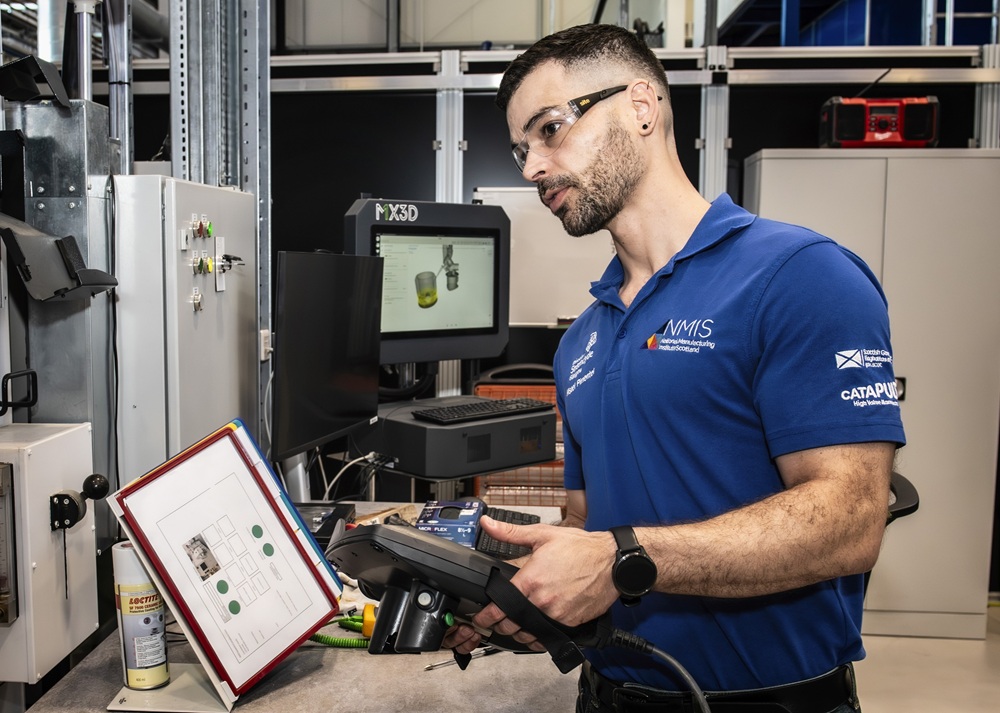
A project using large-scale additive manufacturing (AM) to produce shipbuilding components has completed its second phase, with results showing strong potential to reduce greenhouse gas emissions, secure supply chains and deliver significant economic benefits for the maritime sector. The project’s redesigned metal component – a topology optimised tapping ring – delivered a 10% reduction in emissions, cut lead times by 90% and reduced vessel weight by 13% in testing.

Led by Glasgow-based Malin Marine Consultants (MMC), part of Malin Group, with support from the National Manufacturing Institute Scotland (NMIS) – operated by the University of Strathclyde – Marine Vessel Lightweighting (MariLight) 2.0 builds on an initial feasibility study aimed at shifting the sector away from traditional manual fabrication towards automated, flexible and environmentally friendly manufacturing approaches.

The redesigned part underwent rigorous hydrostatic and leak testing under sustained pressure, which project partner Lloyd’s Register witnessed to ensure independent verification of the tests – a crucial step towards wider sector adoption.

The tapping ring was manufactured using Direct Energy Deposition-Arc (DED-Arc) technology at NMIS’s Digital Factory – an AM process that builds metal parts layer by layer using advanced welding techniques. This enabled local, on-demand production of lighter, optimised components with minimal material waste.

Other project partners included BAE Systems, Caley Ocean Systems (part of the Pryme Group), Siccar, Altair and Hexagon Manufacturing Intelligence. Altair produced the topology-optimised design for the tapping ring using its design optimisation software (Altair Inspire and Altair Optistruct).

Hexagon provided advanced computational modelling solutions, simulating the DED-Arc process and assessing factors such as temperature gradients and distortion prediction, while Siccar delivered a secure data-sharing platform, enhancing supply chain transparency through data traceability and real-time access to verified information.

More information www.nmis.scot

IMPROVING LAYER BY LAYER: TOOL MATERIAL OPTIMISATION ATWALTER

Metalworking appears to make daily advances in innovation, focusing on continuous
optimisation. Insights into the development process of the new Walter cutting material
grade, Tiger-tec Gold WPP35G, demonstrate the strategic and practical challenges of
refining established solutions to meet specific application needs.
 
When companies launch a new product, there is no margin for error in marketing, even in
the metalworking industry. The new hole-making grade from supplier X elevates process
reliability to unprecedented levels; the new cutting material grade from supplier Y surpasses
the previous model or competing products.
For those who only focus on marketing, innovations in the metalworking industry come
thick and fast – and it does it not seem particularly challenging to develop and introduce
increasingly better tools consistently. However, every day, users of cutting tools understand
that the reality is, of course, somewhat different.
In metalworking, the wheel is not reinvented every few weeks; instead the industry is
characterised by ongoing improvements across manufacturers. In fact, more than a
thousand patents related to mechanical engineering are registered annually in Baden-
Württemberg alone (source: Patent-Atlas Baden-Württemberg 2024 & DPMA Patents 2024).
Most of these are enhancements to existing products, technologies and processes. For
example, the geometry of a carbide drill is further refined using new digital technologies
such as 3D modelling and simulations, or machine learning. This minimises the risk of tool
breakage when machining challenging materials or deep holes through improved chip
removal, vibration control or other optimisations identified by developers.
 
Optimisation is central to the strategy and approach of most research and development
departments within machining. Manufacturers gravitate towards the specific needs of their
applications. In particular, metalworking companies face intense cost pressures. They are
not only exploring new processes and the associated investment costs, but also seeking to
unlock optimisation potential within existing processes and gradually enhance them. For
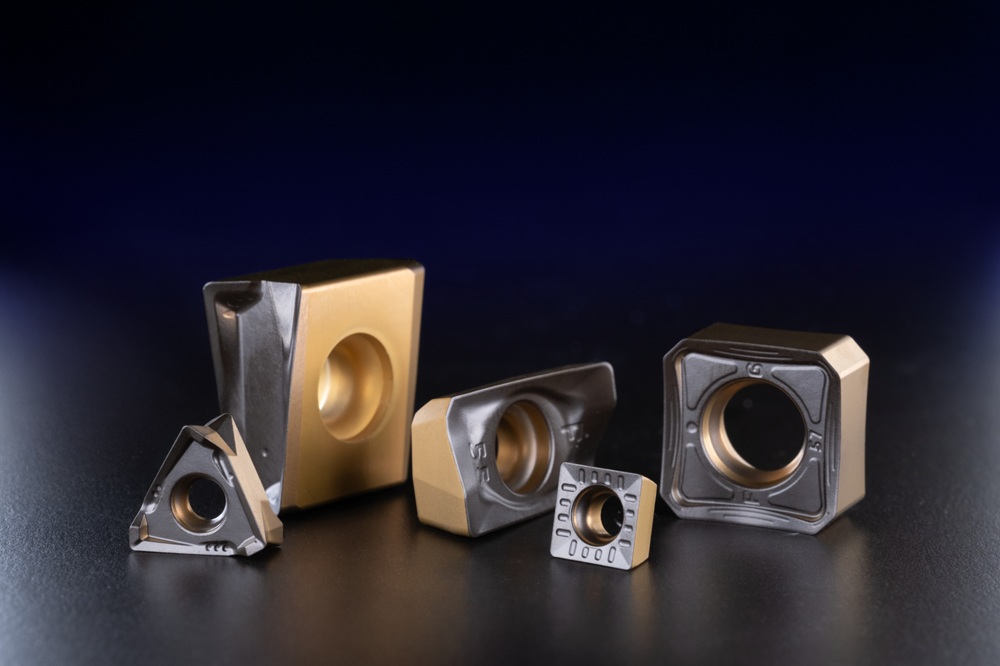
example, a new optimised indexable insert grade, such as the Tiger-tec Gold WPP35G from
cutting tool specialist Walter, often provides advances more than a completely new
technology.
 

The development process for the new insert grade exemplifies the strategic and practical
parameters within which the innovation-focused research and development departments
operate. Just under a third of the products in the Walter portfolio are less than five years
old. With a new sales ratio of around 30%, the cutting tool expert says it ranks among the
top providers of innovative machining solutions.
The number of employees in Walter’s development department is relatively high compared
with the company’s size. This is where the company’s goal to deliver solutions that keep
customers at the forefront in terms of cost-effectiveness and efficiency is realised. Walter
typically expects a lifespan of 7-9 years for cutting tool materials before launching the next
generation. Each new iteration must offer substantial improvements over its predecessor or
address specific new application challenges. In recent years, for example, the proportion of
light metal and HRSA alloys in metal machining has steadily increased, with Walter
supporting this trend through innovative machining solutions.
 
The basic usage area of the new Walter grade Tiger-tec Gold WPP35G, on the other hand, is
very traditional, focusing on the rough milling of steel and cast-iron materials. ISO P and ISO
K materials still account for the largest share of the world’s machined materials.
With the previous Tiger-tec Silver WKP35S generation, Walter had a solution in its portfolio
that was successful due to its wide range of applications and performance. The grade was
one of Walter’s best-selling grades in this application field for many years. Improving this
popular grade, which is also a central component of many of Walter’s customers’ production
processes, was a real challenge.
The result of an intensive process, in which Walter application engineers were also involved
from the onset, is the Tiger-tec Gold WPP35G grade. As a prototype, the solution now
launched has proven its qualities in numerous field tests under realistic operating conditions
at real Walter customers. According to Walter, the Gold generation once again increases the
performance of the tried-and-tested Tiger-tec Silver, particularly in terms of wear
resistance, process reliability and tool life. Here, the WPP35G outperforms its predecessor
by an average of 35% when machining steel, while the increase in performance is over 15%
when machining cast-iron components.
 
To achieve this level of efficiency, Walter’s development engineers optimised the entire
physical structure of the indexable insert. The technological centrepiece of the Tiger-tec
Gold generation is the highly textured, multi-layer MT-TiCN structure. MT-TiCN is a titanium
carbon nitride coating applied to the carbide substrate using a medium-temperature CVD
(chemical vapour deposition) process. This technology enhances resistance to abrasive
wear, as well as the elastic properties of the coating and its adhesion.
 
A highly textured layer of aluminium oxide (Al 2 O 3 ) is applied on top and, in this process, the
crystals are given a uniform, precise arrangement. The homogenised crystal structure has
improved mechanical strength compared with cutting tool materials featuring non-

directional structures. At the same time, the Al 2 O 3  layer acts as a wear-resistant heat shield
that protects the underlying carbide from extreme temperatures that occur during milling.
The final characteristic, the gold-coloured TiN layer on the flank face, aids the visual
identification of wear, enabling timely tool changes and the reduction of unplanned
downtime.
 
Alongside the highly developed texturing of individual layers, the multi-stage post-
treatment enhances the wear resistance of this CVD grade, which was specially designed for
milling. The process microscopically smooths rake faces, reduces friction and minimises
build-up on the cutting edge. Simultaneously, it increases the toughness of the cutting edge
and improves resistance to chipping.
The high process reliability of the WPP35G makes it suitable for reducing labour
requirements in mass production environments. It can be used for medium-to-good
machining conditions, both in the dry machining of steel and with lubricants, across all
standard Walter milling cutters from the M4000, Walter BLAXX and Xtra-tec XT lines.
More information www.walter-tools.com

PROVEN WAYS FOR MACHINE SHOPS TO OPTIMISE FLUID MANAGEMENT

For many organisations, particularly larger enterprises, fluid management and maintaining
optimal fluid performance while ensuring compliance and minimising costs has become a
significant operational challenge. Cutting fluids and oils specialist Oemeta has developed a
comprehensive fluid management service that the company says positions it as a leading
provider of not just advanced cutting fluids, but also the complete management solution.
Says Oemeta UK managing director David Woodford: “If you’re looking to implement fluid
management or you’re not happy with your current provider and looking for an alternative,
that’s where we can fit in.”
The challenge of managing cutting fluids is multifaceted, as Woodford observes: “When you
start to get to large, complex machines, bigger factories, supply chains, consignment stock
and subsequent waste disposal, you have to think seriously about who’s going to do this.
You can either train up your own people or bring somebody in who has the experience.”
He continues: “Smaller companies can typically look after 10 or 20 machines themselves,
but when you start to get to big, complex machines and larger businesses with more
machine tools, those companies don’t have the internal resource and expertise to run the
products effectively.”
Oemeta’s experience suggests significant market demand for either setting up on-site fluid
management or, for businesses where this already exists, an alternative solution.
“Our experience with certain companies is that they’re not getting the most from their
existing providers and are unaware of alternative providers or offerings.”
Unlike traditional approaches that focus on supplying fluid in volume, Oemeta emphasises
process optimisation.
“Our competitors are going in with inexpensive products and selling them in volume,”
explains Woodford. “They’re selling products cheaply, but their consumption is extremely
high. Our approach is to sell a lot less of a better-performing product.”
This philosophy centres on a strategy of continuous improvement.

“Rather than just managing top-ups, we focus on process optimisation, often through
products or services that are unique on the market. In contrast, our competitors provide
more of a monitoring rather than an improving structure.”
Louisa Johns, sales manager at Oemeta UK, emphasises the knowledge gap: “When we go to
shop floors where they have a fluid management agreement in place, the support they
receive can be sub-standard. Internal staff don’t have the knowledge and expertise that we
bring. Every time we go somewhere where a competitor is providing fluid management,
there’s barely any support. We offer so much more.”
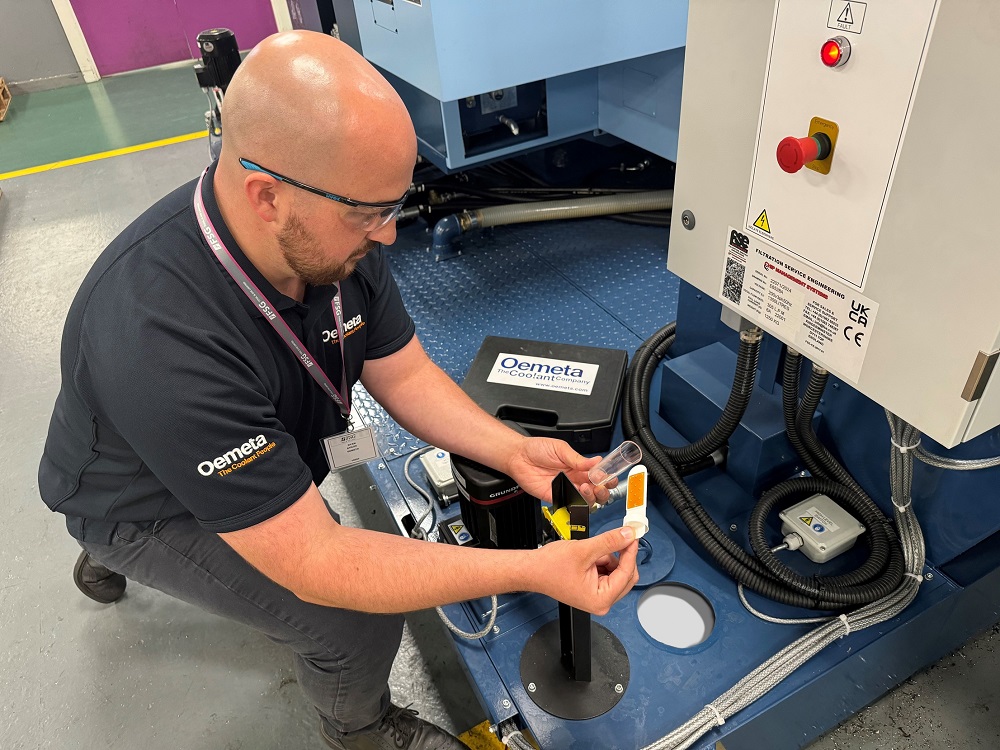
Oemeta UK says its comprehensive service offer encompasses the complete fluid lifecycle.
“We control the stock levels, bring the stock in, and manage distribution into machines and
processes,” explains Woodford. “Oemeta UK does all the testing and analytics, all the
supporting data, and all the health and safety documents. We work to improve the process,
extend product life and, when the fluid is ready to be changed, we handle all the machine
cleaning, waste collection and disposal.”
One example is at a large engine manufacturing facility in the Midlands where Oemeta
manages 42 machines that run 24/7 and require 12 different fluid types.
“We have staff permanently located on-site on different shifts, and the scope extends way
beyond cutting fluids,” he says. “For instance, we also manage their wash systems, chemical
treatment plants and undertake all the titration testing. The cost savings and efficiencies we
deliver more than cover the cost of our staff on-site full-time.”
Johns highlights the bespoke nature of each project: “The requirements and the subsequent
solution is bespoke to each shop floor. One company might want to reduce misting, while
another might want to look at material staining issues or corrosion. The knowledge and
expertise we bring compared with our competitors is a whole new level.”
Central to Oemeta’s offering is its cloud-based software system.
“Customers can look at fluid consumption of machines, operating parameters and the tasks
being carried out by the fluid management team,” says Woodford. “They can sit from
anywhere in the world and see whether tasks are being done. At one industry-leading
aerospace customer we did a process improvement on their neat oil machining and
improved tool life by 30%. They also reduced fluid consumption and the associated costs of
fluid and disposal by more than a third. This more than covers the cost of our engineer on
site.”
He continues: “In addition, their process stability and customer auditability have been
significantly enhanced because we’re controlling the process. When they are audited by

customers in the highly regulated aerospace industry everything is in place, and they no
longer face fluid-related audit issues.”
By identifying hydraulic oil leaks from machine tools into the fluid, the aero-engine
manufacturer will reduce fluid consumption by 20%. It is also able to highlight machine tool
patterns of maintenance concern, which feeds into their preventative maintenance
programme.
“We’re not only assisting in extending machine uptime and maintenance cycles, we’re also
delivering savings that will pay for our on-site technician,” says Woodford. “The cost savings
will pay for our engineers within the first 12 months.”
Adds Johns : “It actually pays for itself and takes the headache away from the customer. The
full management and traceability, extended machine uptime, enhanced performance and
component quality are all benefits stacked on top of the significant cost savings and reduced
environmental impact.”
“Our engineers are embedded into the company when a business agrees to a fluid
management service,” states Woodford. “This approach enables predictive maintenance
where we can set lower and upper limits for hydraulic oil contamination. If we’re topping up
beyond a certain point, it flags to maintenance that there’s obviously a leak. We’re almost
an early warning system. We see all those issues developing. Our team does all the on-site
bacteria monitoring, so from a health and safety point of view, the documentation is all
covered.”
Innovation is central to the offering, as exemplified by an aerospace customer where the
requirement is to reduce misting.
“Our R&D department is working on reducing that misting characteristic. We bring the latest
technology to the customer because we understand their processes. For instance, there was
a new technology that recently became available. We knew their process and forecast a
30% improvement to fluid and tool life – we’re actually going to get more. Most companies
find a supplier and ‘just go with them’ because it works to a small degree. What we’re
offering is something more proactive with more impactful results.”
Modern manufacturing requires specialised expertise, as Woodford confirms: “The material
mix on the shop floor now means that our products have to be specialised. The ‘fit and
forget’ products from 20 years ago are no longer there. Products are more sensitive and
require corresponding management. We’re always aware of legislation long before
customers, so we can position the user to meet any pending legislation way in advance,
rather than having surprise product changes.”
Environmental considerations are also integral.

“Reducing consumption by 30% is a quick sustainability win,” he says. “We also offer non-
fossil fuel alternatives. Our products last forever if you avoid contamination. We help reduce
contamination, which extends life dramatically.”
The final word goes to Johns, who reinforces the market education need: “The cost-saving
potential around fluids is huge. We quite often ask what customers are paying for
competitor products. Yes, the price looks attractive to buyers, but they don’t realise they
will be using twice as much fluid. We approach customers with a better-performing product.
The cost savings come from process improvements, extending tool life, improved surface
finishes and less scrap.”
More information www.oemeta.com

Sheffield Forgemasters Opens Training Facility

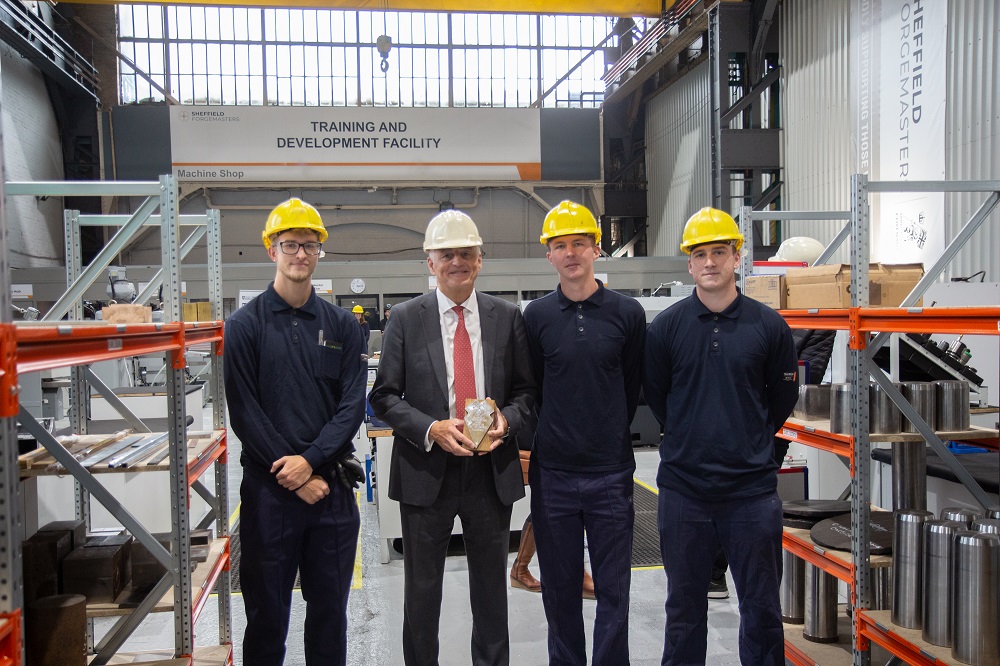
Sheffield Forgemasters has formally opened a 6700 sq ft training and development facility
to upskill its apprentices for the next generation of nuclear-grade engineering. The facility
was formally opened by company chair, Admiral Sir Tim Fraser, who unveiled no less than
18 new machine tools on site, including a state-of-the-art five-axis mill-turn machine.
Sheffield Forgemasters has partnered with the University of Sheffield AMRC Training Centre
to deliver a four-year engineering training contract, which will see the placement of a
permanent engineering skills coach at the facility. Jay Shaw, head of machine shops at
Sheffield Forgemasters, says: “We’re now able to prepare trainees for the next generation
of machines and digital operating systems at our new 30,000 sq m machining hall.”
More information www.sheffieldforgemasters.com