

Major Orders for Automotive Degreasing Work Secured

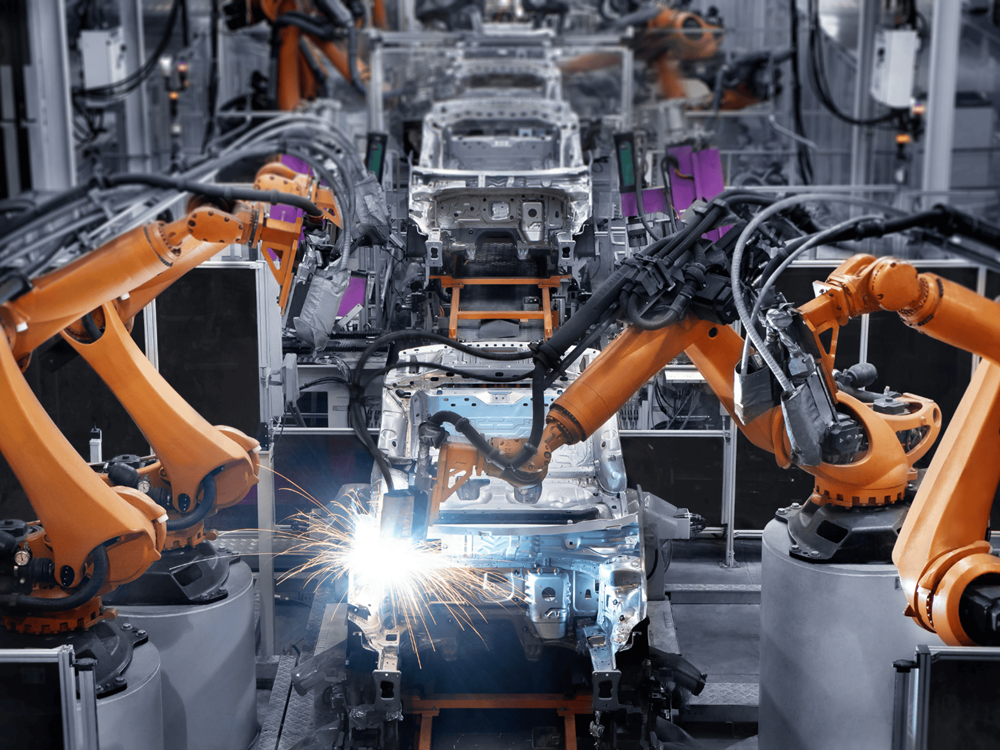
Lye-based finishing specialist Midland Deburr & Finish has secured major orders for its solvent and vapour degreasing plant to support tier-one automotive component work for a leading UK-based OEM.

As modern manufacturing becomes increasingly complex, precision finishing processes like deburring and degreasing are more essential than ever. These operations are vital to ensuring components meet stringent performance, safety and reliability standards. Yet, with high investment costs and a deepening industry-wide skills gap, many manufacturers are turning to outsourced solutions to meet these needs.

Midland Deburr & Finish says it is playing a pivotal role in helping manufacturers stay ahead of these demands. Managing director Chris Arrowsmith confirms the company’s new orders mark a significant vote of confidence in their capabilities and long-standing expertise: “We’re proud to be supporting tier-one and tier-two automotive supply chains with our solvent and vapour degreasing technologies. These orders reflect the trust major OEMs place in our ability to deliver precision and consistency at scale.”

The investment will support the firm’s growing role in the UK automotive sector, where components must adhere to the highest standards of cleanliness and finish. Vapour and solvent degreasing are critical processes in this space, removing minute contaminants that can compromise the performance or durability of parts – particularly those used in engines, transmission systems and braking components.

“These processes are essential in modern manufacturing,” Arrowsmith notes. “But they require significant expertise, and that’s where we step in – so our customers don’t have to divert their resources away from their core operations.”


By offering a comprehensive subcontract solution, Midland Deburr & Finish enables manufacturers to focus on core production without sacrificing quality.

More information www.midlanddeburrandfinish.co.uk
Perfecting coated brake discs in grinding processes

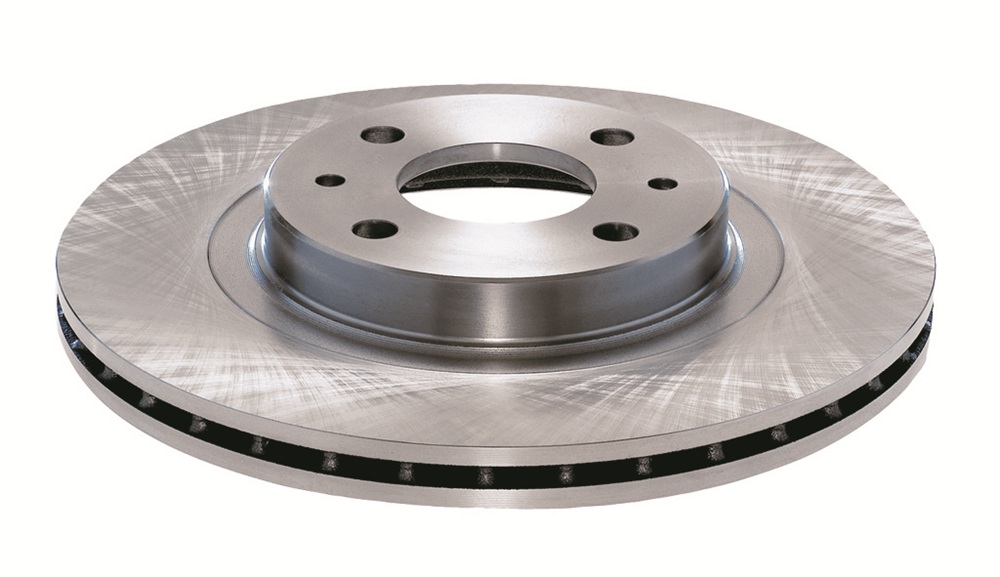
The car brake disc of the future is coated as it is the only way to meet the stricter particulate matter limits of the Euro 7 standard. The braking surface is also protected against corrosion and wear. But which machining process can guarantee this quality can be achieved reliably and in large quantities? With its VLC 450 DG machine and the combination of laser cladding and subsequent double-sided face-grinding, EMAG says it has the answer.

Jannik Röttger, head of grinding technology at EMAG, says: “Our laser cladding in particular opens up many possibilities: matrix material and hard material carbide are fed into a laser tool and welded to the preheated surface. In this way, first an adhesive layer and then the overlying wear protection layer are applied – at least in the case of so-called two-layer systems. There are also developers who rely on a one-layer solution, such as for the rear axles in compact vehicles.”

He continues: “Our USP is that, on one hand we can control and influence the turning process and the entire laser welding process on EMAG machines if the customer so wishes. On the other hand, we keep an eye on the subsequent grinding process right from the start. After all, the turning process and central coating parameters should be configured in such a way that the surface produced results in the shortest possible grinding cycle times and low grinding wheel wear with the highest component quality. Isolated solutions for just one of the two processes generate problematic performance figures.”

The VLC 450 DG grinding machine is a special solution for brake discs that has been designed for the respective coating system and desired production process.

More information www.emag.com

Laser investment opens business opportunities

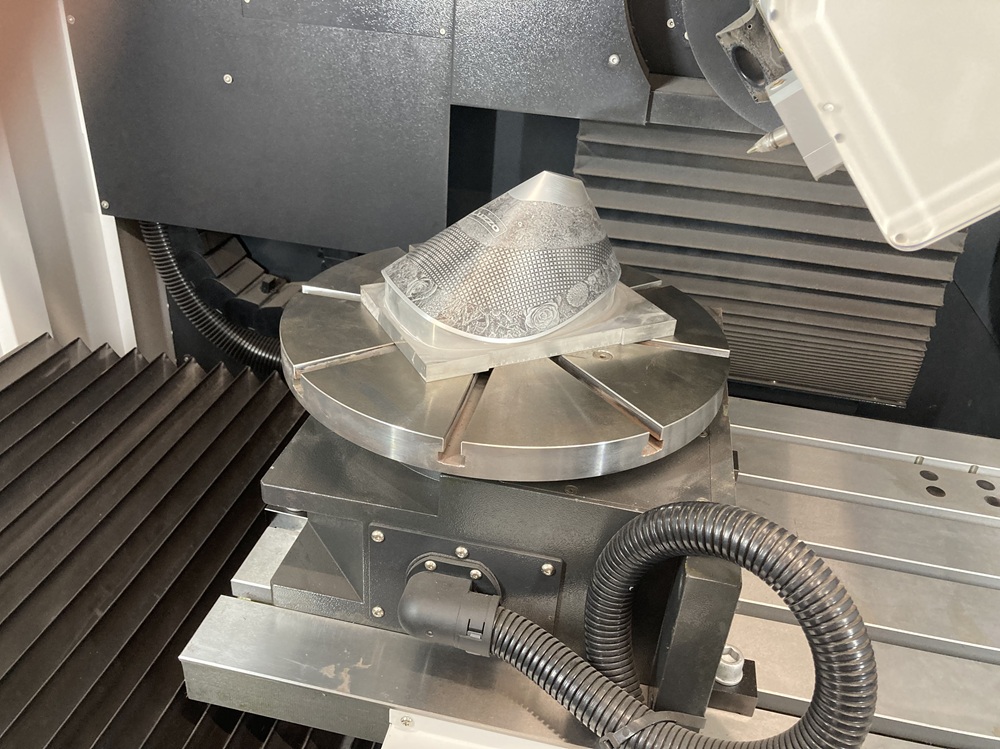
Luzzo Bespoke, a creative engineering specialist supplying highly-bespoke products to a range of customers in the automotive, marine, lifestyle and consumer luxury markets, has acquired a new Charmilles LASER P 1000U five-axis digital laser texturing and engraving machine from GF Machining Solutions, now United Machining.

The new machine, installed in early 2025, is proving to be transformative. It has increased and strengthened Luzzo Bespoke’s in-house design and manufacturing capabilities, and helped the company expand the range of 2D and 3D surface textures it can apply to machined products.

The machine, installed at the company’s 1000 m² manufacturing facility in Brackley in January 2025, is the first laser machine Luzzo Bespoke has acquired from GF Machining Solutions in its 28-year history. However, the company is no stranger to GF Machining Solutions’ machine tool technologies, having previously invested in a number of Mikron five-axis machining centres with integrated workpiece pallet changers.

Since 2022, Luzzo Bespoke has received request to produce laser textured patterns and details on complex 3D-shaped metal parts with concave and convex surfaces. To achieve the desired effects on such components it was clear that a five-axis fibre laser was the way forward. This ‘need’ was the catalyst behind Luzzo Bespoke’s LASER P 1000U investment.

“GF Machining Solutions were extremely supportive – they liked what we were doing and could see that we would be an ideal, UK-based, de-facto reference site for their laser technology,” explains Brian Challenger, Luzzo Bespoke’s managing director. “As a result, they offered us a great deal on a new LASER P 1000U and we decided, from a cost, machine specification and availability perspective, to place the order with GF.”

More information www.gfms.com

Parts Finishing 2025 exhibition cancelled

According to the IFO Business Climate Index, the mood among companies improved slightly in July. However, there is still a great deal of uncertainty when it comes to expectations. This is reflected not only in very cautious investment activity, but also in trade fair participation. The situation has now led the organiser of Parts Finishing 2025 to cancel the event planned for November.

Parts Finishing 2025 was set to launch with an innovative trade fair concept: presenting three topics under one roof over two days.

“Actually, we received a very positive response to this idea from the outset and, until about six weeks ago, had a promising number of registrations,” reports Nicolas Herdin, managing director of fair organiser fairXperts GmbH & Co KG. “In the meantime, however, various companies cancelled their registrations.”

The reasons vary. Cost-cutting measures are cited, as are the uncertain economic situation and difficulties in assessing the company’s business development. This situation has now prompted the trade fair organiser to cancel the event planned for 12-13 November 2025 at the Karlsruhe Exhibition Centre.

“Despite the financial losses, we believe this is a better alternative than holding an event that would ultimately leave both exhibitors and visitors dissatisfied,” adds Herdin.

The company management will now discuss the further development of Parts Finishing with the exhibitor advisory board and consider a new date for the trade fair.

“We believe it is fairer to both exhibitors and visitors to cancel this year’s trade fair and hold it successfully at a later date when conditions are more favourable,” he says.

More information www.fairexperts.de

Solutions from coarse to high-purity parts cleaning

Whether solvent or water-based cleaning, initial or final cleaning, or ultra-fine and high-purity cleaning, the tasks in parts cleaning have never been as varied as they are today. Ecoclean (Hall 10, Stand D36) will be presenting a complete product portfolio for these very different applications and requirements in the various industrial sectors at the Parts2Clean 2025 exhibition.

As a full-service provider of future-oriented, flexible and resource-efficient solutions for industrial component cleaning, Ecoclean and UCM will be presenting a tailored range of products and services at this year’s Parts2Clean on 7-9 October in Stuttgart.

Four cleaning systems will be on show. These include the new EcoCvario aqueous chamber system, which is equipped with PPC as standard and can therefore handle even very demanding cleaning tasks reliably and economically.

The cost-efficient and flexible EcoCcompact for solvent cleaning will be shown in the L version. Notably, this product family is available in three working chamber sizes, and batch weights of up to 150 kg and can be easily converted from hydrocarbon to modified alcohol. Adapted to the cleanliness requirements, these compact plug and play systems can be equipped with all process technologies available for solvent cleaning and for use in high-purity cleaning.

With the UCMIndexLine, the manufacturer is presenting a compact rotary indexing system. Equipped with six cleaning and rinsing stations – with and without ultrasound or PPC – almost all processes for aqueous-based precision cleaning can be mapped. The system was designed for cleaning small and compact components.

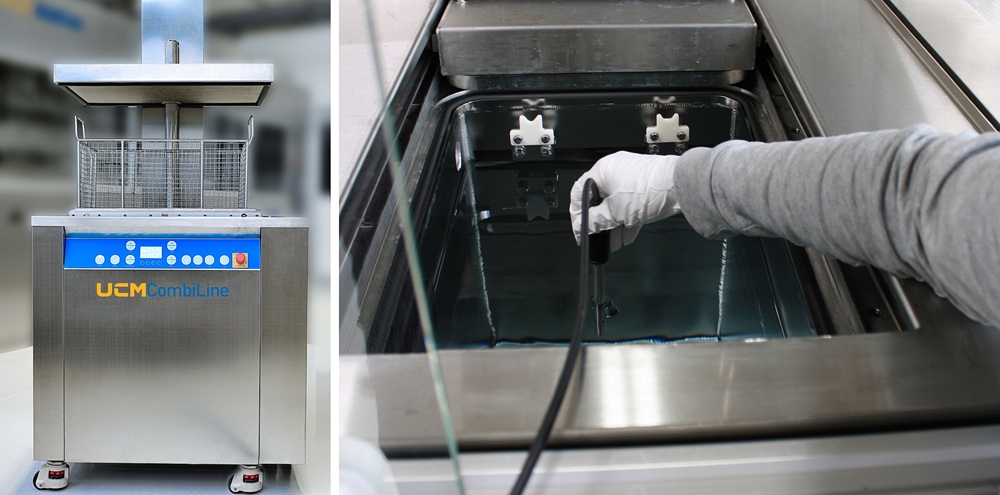
Ecoclean will also be exhibiting the UCMCombiLine, a modular ultrasonic cleaning system for low throughputs and high cleanliness requirements.

More information www.ecoclean-group.net