

PRODUCTION TIMES CUT 50% WITH HECKERT FIVE-AXIS MACHINE

“Only the best is good enough for our customers,” states Karl Kordik, responsible for
contract manufacturing at Neuson Hydrotec GmbH in Linz, Austria. With the new Starrag
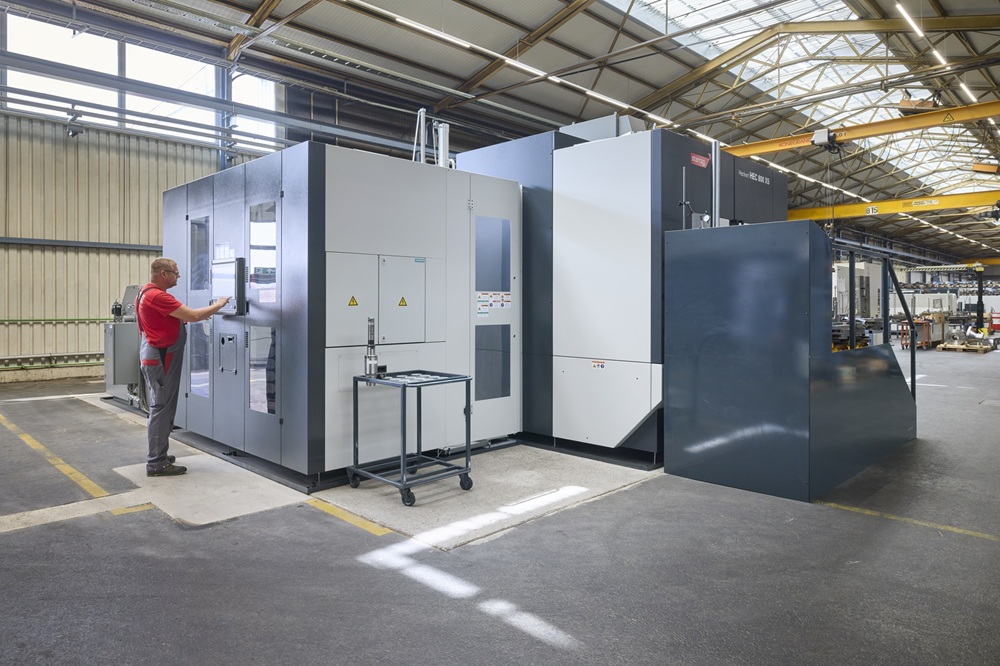
HEC 800 X5 MT machining centre, his machining team can even produce complex housing
with numerous holes at different angles with maximum precision – in a single clamping
position and in half the time.
 
Neuson Hydrotec GmbH is a company where mechanical engineering, mechatronics and
hydraulics are intertwined in many ways. With around 50 employees, contract
manufacturing is the largest business unit.
Walter Füreder, one of two managing directors responsible for this division, describes it as
essential for the company: “We generate around half of our turnover with our contract
work. Some 20% of this involves doing the groundwork for other business units, while we
achieve the rest with leading companies in the plastics recycling, railway and mechanical
engineering sectors.”
 
Karl Kordik, sales manager for contract manufacturing, has known his customers and their
needs for many years. Components for injection moulding machines are also part of the
recurring contract work, such as shredder shafts and bearing blocks, all supplied to machine
tool manufacturers.
“We supply the largest proportion of our work, around 40%, to the plastics recycling sector,”
he says.
 
The services range from procuring raw material to CNC milling, grinding, lapping, honing,
welding and superfinishing to pre-assembly.
Kordik says: “Our customers appreciate that we supply them with a complete component,
including a 3D measurement report.”
 
The central topic in contract manufacturing is machining, with various CNC turning and
grinding machines – and several machining centres with pallet pools – available for this
activity. Among the highlights is the HEC 800 5X MT five-axis machining centre purchased in
2024.
Neuson Hydrotec’s investment was triggered by a complex component for a plastics
recycling machine that requires turning and milling, and numerous holes which need drilling
at different angles. In this particular recycling plant, used plastics are heated to around
400°C after shredding. A spindle presses the liquefied mass through a plate with tens of

thousands of holes about 0.2 mm in diameter, which retains contaminants that are removed
using a rotating scraper disc. The cleaned plastic flows to a cooling station and is cut into
pellets. Neuson Hydrotec manufactures the housing for this laser filter. It contains intricate
contours and numerous channels through which the contaminated and cleaned plastic first
flows.
“One hole runs through the entire component, and other channels meet at a certain angle,”
explains Kordik.
 
High precision is required for fluidic reasons where the channels must not be offset when
they meet.
“We manage this because we achieve a positioning accuracy per hole of less than 0.03 mm,”
he adds. “Although that doesn’t sound particularly difficult, the value corresponds to only a
few microns per axis if the holes are drilled at 45°.”
 
Until recently, the contract manufacturer was producing this housing on a vertical turning
and boring mill and a three-axis milling machine, in seven clamping positions. When the
customer ordered significantly larger quantities, Neuson Hydrotec decided to modernise
production to reduce manufacturing times. The solution pursued was complete machining
on a five-axis machining centre with a turning function.
 
There were several reasons why the decision was made in favour of the HEC 800 5X MT.
According to Kordik, one crucial factor was that the HEC 800 allows the component to
be clamped vertically.
“These components can only be clamped on a horizontal turning and milling centre with
great difficulty. Fast, automated workpiece replacement is even more difficult. The HEC 800
has a standard dual pallet changer, enabling set-up parallel to the primary processing time.”
 
On the HEC 800 5X, the fifth axis is located in the workpiece, not the tool, which saves the
company having to re-clamp. Ultimately, however, the decisive factor was the possibility of
obtaining a bed extension along the Z axis and an extended Yaxis.
Kordik describes the background: “We want to clamp components with a length of 1.1 m
and drill through. The standard Z-axis path of 1.3 m is insufficient for this task.”
Starrag supplied the HEC 800 5X MT with travel paths of 2050 mm along the Z axis and 1300
mm along the Y axis.
“No other machine manufacturer had offered such extensions. We would have had to
switch to much larger machines, which would have been more expensive and associated
with reduced dynamics.”
 
Instead, Neuson Hydrotec preferred to invest in functional additional equipment, such as a
cooling lubricant temperature control system.

“Our roughing operations generate much heat, which would otherwise be transferred into
the cooling lubricant and onto the component,” says Kordik. “But this would run the risk
that exact fit sizes would no longer be correct after cooling.”
 
The control software for interpolation turning was also on our ’to-buy list’. This is because
the laser filter housing requires a 350 mm hole offset from the centre by 8 mm.
“Thanks to the precisely controlled interpolation of the X and Y axes, we can create this
without any problems,” confirms Kordik.
Alternatively, his production colleagues would have to take the additional step of clamping
the component to be centred on the hole.
Arno Berger from Starrag says this can be done without problems: “We have tested this.
Despite the imbalance, we align with all required tolerances on the quickly rotating table.”
 
However, producing the eccentric hole using interpolation turning saves more time. Success
can be seen after just a few weeks. In the case of the filter housing described, reducing the
number of clamping positions from seven to one was possible.
“The time saving is 48%,” says Kordik, who had campaigned for this investment. “Essentially,
the reduced non-productive time has an impact. Moreover, as the component is now on the
machine for longer, the operator has more time for other tasks.”
The Heckert milling and turning centres also pay off when machining other components.
He concludes: “Now that the vertical turning and boring mill is no longer available, we
simply use the HEC 800 5X MT to produce turned parts. Even here, we are around 20%
faster due to multi-cutting tools, shorter tool change times and faster rapid traverse.”
More information www.starrag.com
Universal tap facilitates easy chip removal

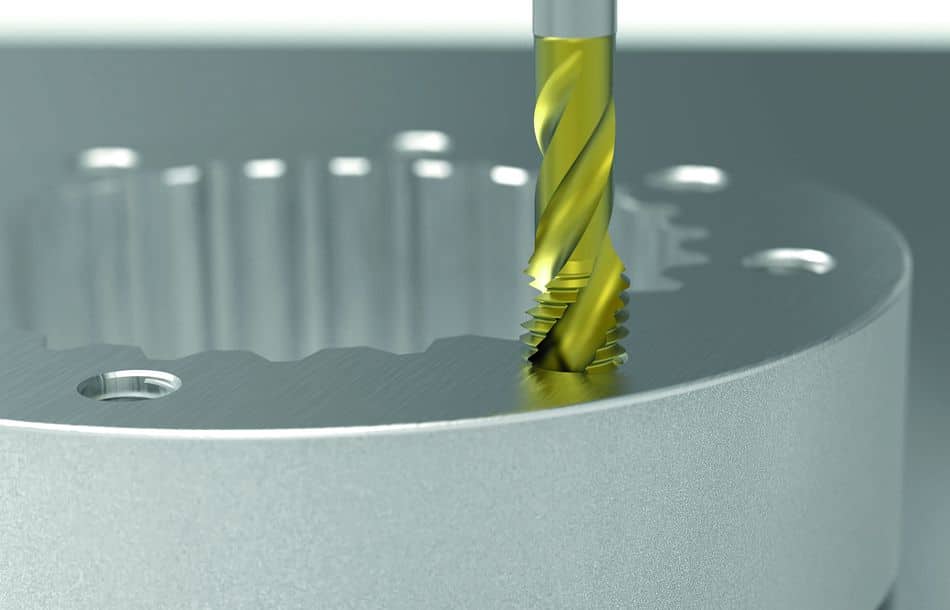
LMT Tools says its new EASYTap “combines outstanding performance, maximum flexibility, and highest efficiency in one product range, enabling powerful thread machining in a wide range of materials”.

EASYTap was developed with the key challenges in thread production in mind, offering characteristics for chip removal, long tool life, a wide range of applications, process reliability, and a reduction in time and costs in production.

Manufactured from HSS-E material and finished with a TiN coating, LMT Tools says EASYTap guarantees maximum precision and durability. A newly developed lead geometry, optimised flutes and a helix angle of 45° ensure stable and efficient chip formation without chip wrap. The uniform and low torque has a positive effect on tool life.

The EASYTap produces threads containing gauges up to 3xD and covers a wide range of applications. It is suitable for blind holes and through holes, can be used in almost all materials – be it steel, stainless steel, cast iron or aluminium – and enables the production of all common thread types such as metric standard and fine threads, UNC, UNF, NPT (blind hole), G and EG-M.

As standard, the range covers diameters from 1 to 30 mm. Larger diameters or other lengths are available upon request. The EASYTap can be used universally in synchro and compensating chucks or collets and is compatible with oil, emulsion and MQL (minimum quantity lubrication).

a blind hole application with a thread depth of 12 mm in martensitic steel, the tap achieved a tool life of 26,500 threads.

More information www.lmt-tools.com

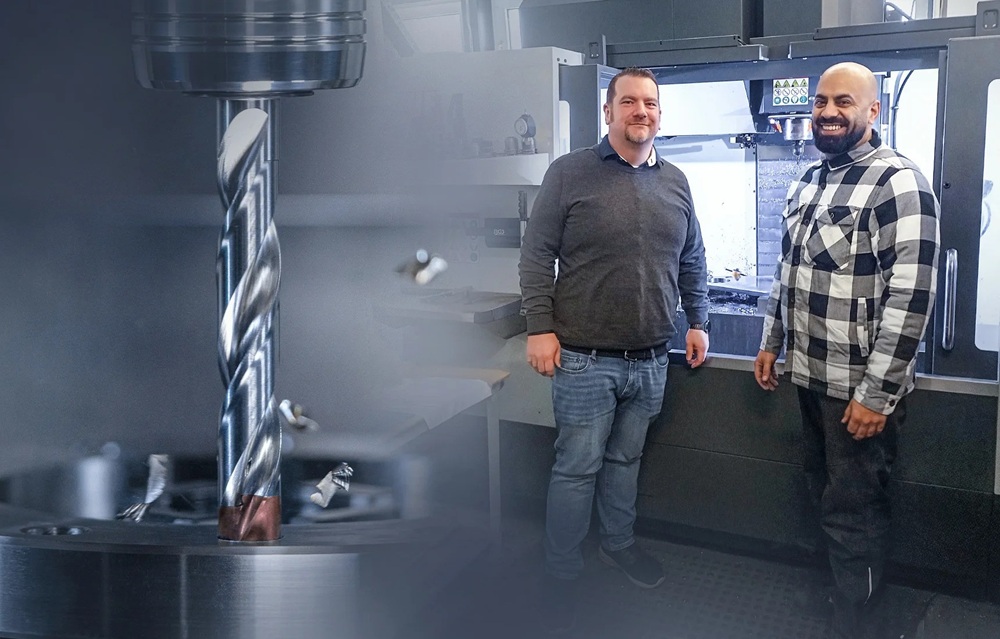
Modular drill reduces set-up times and scrap

From individual parts and small series production to the finishing and reworking of metal parts, Remscheid-based Kurt Metallverarbeitung manufactures various components for large-scale industry, such as spare parts for presses, cranes and excavators. Reliable tools that deliver the best machining results and maximum efficiency are essential. This is why the company focusses on modular drilling systems that impress with their flexibility and savings potential.

“Before we adopted the BT 800 interchangeable-head drilling system from Gühring, we were using a competitor’s modular drilling system, which allowed drill heads to be changed directly in the machine without a screw,” says director Samet Kurt

In this system, the drill head and carrier were connected using assembly keys with slotted engagement points. However, practical experience revealed shortcomings.

“The drill head often got stuck in the tapered interface,” says Kurt. “It then had to be removed with a lot of force, making it easy to slip and damage the sheath.”

The centrepiece of the BT 800 is the wear-resistant bayonet interface. Compared with Kurt Metallverarbeitung’s previous system, the mounting key now engages in the flute, enabling the drill head to be changed quickly, precisely and safely without damaging the cutting head.

Kurt tested the modular solution while drilling a cog made from C45 quenched and tempered steel (1.0503). The through-holes with a depth of 10 mm were milled on a Haas VF-1 vertical machining – ideal for use with the BT 800 interchangeable head drill. The result was convincing across the board.

“The quick-change system from Gühring is simply better,” says Kurt. “There are no problems when changing the drill heads – handling is simple and safe.”

More information www.geuhring.com

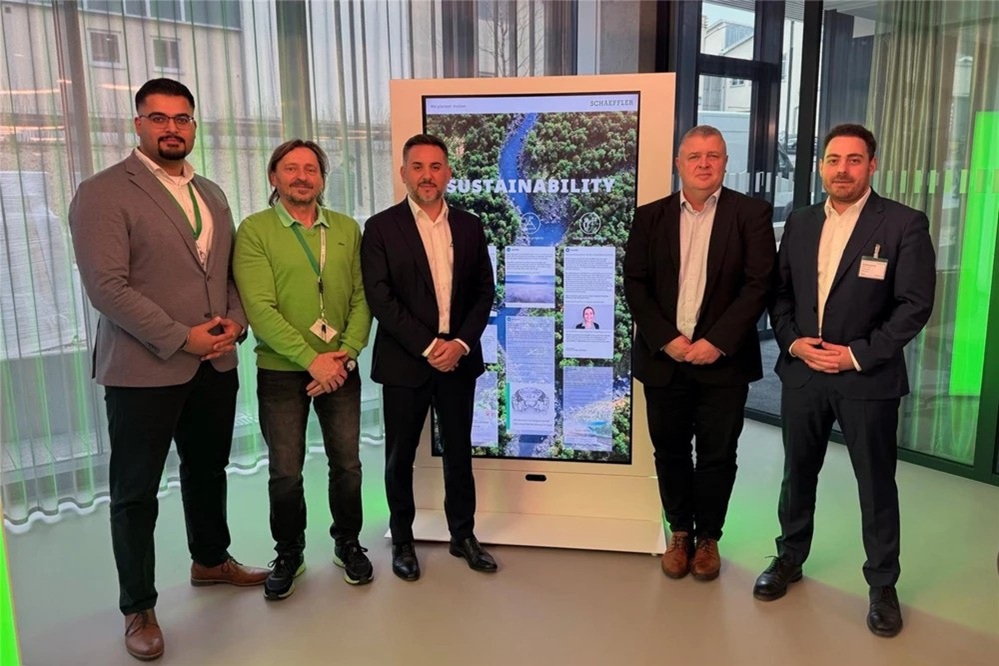
Schaeffler and Ceratizit set sustainability targets

Tooling and work-holding equipment manufacturer Ceratizit has recently signed a second sustainability target agreement with bearing giant Schaeffler. The jointly developed sustainability agreements involve prioritising environmentally friendly materials and promoting ethical and eco-friendly practices. They are the result of close collaboration and deepen the long-standing co-operation between the two companies.

In the latest agreement, the companies have agreed on targets for wear protection products made of carbide – a material that due to its durability and reusability, reduces resource consumption over the whole product live span. With the ecological footprint and a further reduction in resource consumption in mind, the Ceratizit portfolio also includes a range of premium carbide grades made from reclaimed carbide powder, which are characterised by a low CO2 footprint.

In the previous agreement, it was decided to focus on the sustainable development and production of high precision cutting tools. First results show lower product carbon footprint (PCF) figures across the portfolio.

“Our ambitious sustainability strategy has enabled us to fulfil the necessary requirements for the two agreements, which underscores our ambition to lead our industry in terms of sustainability,” says Adrien Zoda, director of global sales – hard material solutions at Ceratizit.

Ceratizit’s ambitious sustainability strategy and the progress made in recent years were crucial in meeting the requirements for agreements with Schaeffler. For example, CO2 emissions of 2023 were reduced by 22% compared with 2020. Another key component for the agreement is the transparency provided by Ceratizit’s PCF information, applicable to both cutting tools and wear protection solutions.

More information www.ceratizit.com

Kennametal invests in CAM AI software company

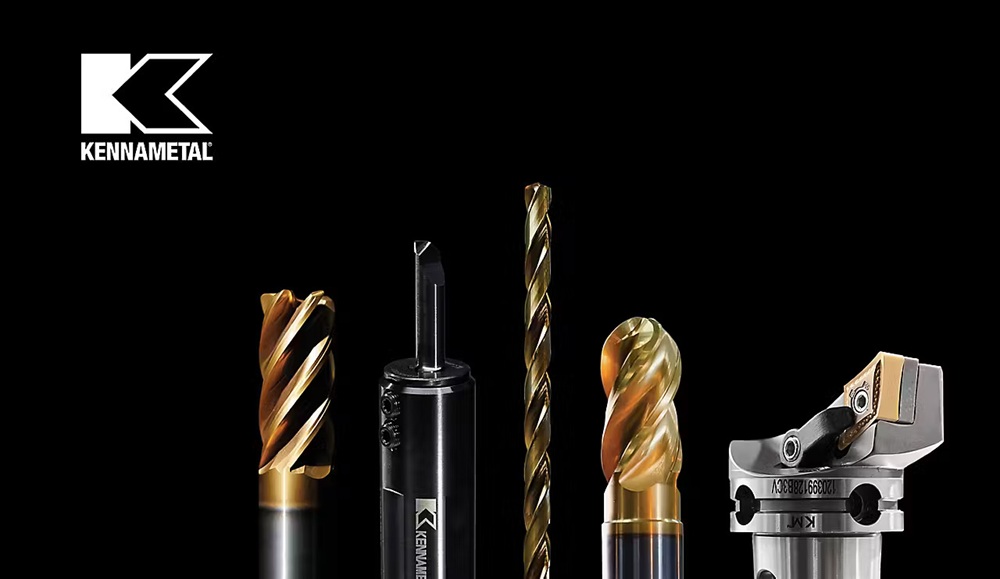
Cutting tool manufacturer Kennametal has made a strategic investment in Toolpath Labs, an emerging leader in AI-powered CAM software. The new partnership supports Kennametal’s growth initiatives to expand its suite of digital capabilities and offerings.

“This partnership represents another bold step in our digital transformation journey,” says Dr Carlonda Reilly, VP and CTO. “Toolpath’s platform amplifies our application engineering expertise through its intuitive, intelligent software. It’s a smart, scalable solution that brings the power of AI right to the shop floor in a practical and impactful way.”

Toolpath’s software integrates AI into the CAM process, optimising tool selection and tool-path strategies. The technology unlocks efficiency for customers and empowers them to overcome industry skill gaps by making advanced tool-path strategies and application engineering more accessible. The partnership will create new opportunities to co-develop and commercialise solutions that combine Toolpath’s AI-first approach with Kennametal’s tooling and application engineering expertise.

“Toolpath represents a compelling opportunity for us to extend what we do best – application expertise and advanced tooling – to a broader audience of customers,” says Dave Bersaglini, president of metal cutting at Kennametal. “Together, we’re building a bridge between human expertise and digital intelligence to deliver measurable performance improvements on the shop floor.”

Al Whatmough, CEO of Toolpath, adds: “Kennametal, a company with deep roots in American manufacturing, is an ideal partner for us not only because of its tooling expertise, but because of our deeply personal shared vision of empowering machinists and transforming the manufacturing world with practical AI. “Together, we’re combining advanced software with real-world application and machining knowledge.”

More information www.kennametal.com