Andritz cut-to-length line set for Olympic Steel

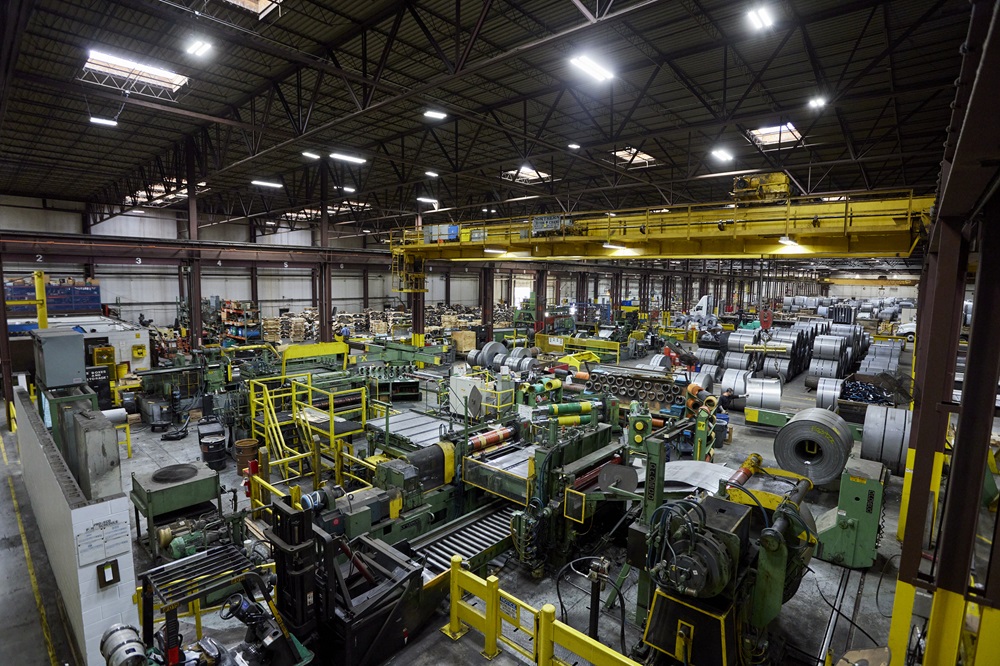
International technology group Andritz has received an order from Olympic Steel to supply a cut-to-length line for its facility in Minneapolis, Minnesota, USA. The new line will enhance the company’s production capabilities and efficiency. Commissioning is scheduled for the fourth quarter of 2025.

Founded in 1954, Olympic Steel is a US metals service centre focused on the direct sale and value-added processing of: carbon and coated sheet, plate, and coil steel products; stainless steel sheet, plate, bar and coil; aluminium sheet, plate and coil; pipe, tube, bar, valves and fittings; tin plate and metal-intensive end-use products, including water treatment systems; commercial, residential and industrial venting and air filtration systems; Wright brand self-dumping hoppers; metal canopy components; and EZ-Dumper dump inserts.

The cut-to-length line has a coil capacity of 3.5 x 1525 mm wide x 27 tonnes and operates at 91 m per minute. It can handle yield strengths up to 5515 bar and process cold-rolled, pickled and oiled, stainless, and coated materials.

Key features of the new line include a heavy-duty precision leveller designed for increased separating loads, a split leveller drive system ensuring greater levelling performance, and a high-performance roll-feed system offering high accuracy and repeatability. The production shear has a capability of 60 cuts per minute, with sheet inspection following the shear.

Additional features include a reject stacking mode, an air float stacker and weigh scale, as well as a line safety fencing with gate interlocks per ANSI requirements. The electrical panels are UL-certified for safety and reliability.

This advanced equipment will ensure high performance, accuracy and repeatability in Olympic Steel’s operations. Andritz says the order underscores its proficiency and success in the metals processing industry.

More information www.andritz.com

Sutherland Gen2 Mark series shines at WIHG

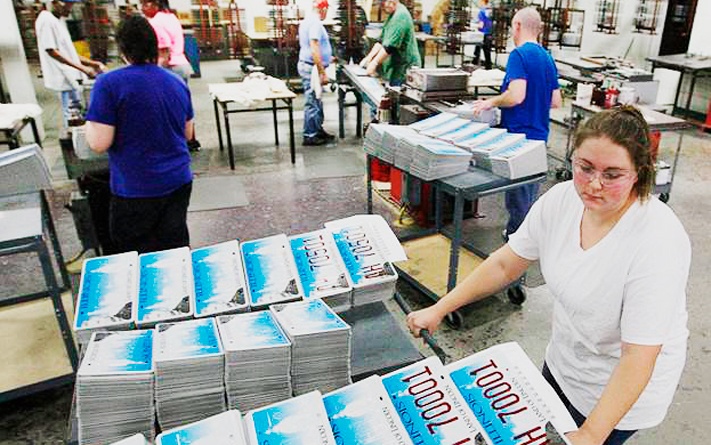
Waldale Irwin Hodson Group (WIHG) is North America’s largest private manufacturer of licence plates, servicing 20 American states and Canadian provinces. The combined output of WIHG’s multiple factories results in 11 million plates printed per year in nearly 1000 different designs. The licence plate manufacturing process begins with massive coils of aluminium, which are fed into a press line that stamps out standard blanks of 6” x 12” rectangles with rounded corners. These blanks go on to a traditional embossing process. 

Sutherland Presses has been a manufacturing partner for WIHG since 1996. Jean Bourque, WIHG’s engineering manager for tooling, relies on Sutherland to meet the high standard of quality and efficiency that such a high volume of output demands: “I like it when I can deal with the owners directly. I also like that the presses are made with North American parts.” 

In March of 2016, one of WIHG’s factories was in need of a new press for its blank stamping line. Bourque knew that Sutherland was his best bet: “I didn’t do a lot of shopping around.”

Sutherland and WIHG agreed that the right press for the job was the next generation of the Mark series press.

The Gen 2 Mark series single-point gap-frame press exemplifies Sutherland’s commitment to innovation in metal forming, with numerous improvements made over the first generation. Featuring more steel in the C-section of the frame, angular deflection is reduced under full stamping loads, allowing for better performance in bottom coining, and permitting WIHG to form the letters of the plate with reliable high definition. Furthermore, the slide guides are designed with a taper wedge to assure long die life during production runs.

More information www.sutherlandpresses.com

Press hardening of large, complex components

Electrification, multi-part integration (MPI) and a higher share of recycled material: the shift in technology in the automotive industry is driving new developments. AP&T’s new press-hardening line, AP&T Skylines, has been developed to meet these challenges and lead the way to more effective, flexible and sustainable vehicle production.  

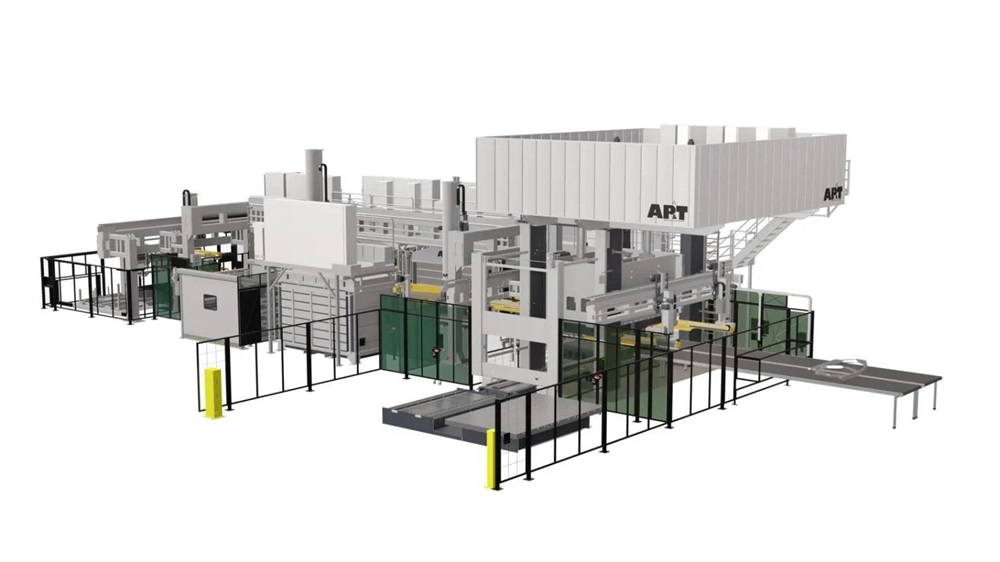
Skylines is a fully automated line that has been specially designed for effective press hardening of large and extra-large sheet metal and MPI, even in material with a high recycling rate.

To maximise production capacity for large-scale sheet metal with minimal energy consumption, AP&T Skylines has a flexible, vertical design that uses a modular and scalable solution. The line thus requires little floor space even though it includes energy-efficient servo presses, compact multi-layer furnaces, linear automation with Speedfeeders, and tools. Each modular section has been developed to meet customers’ specific needs and ensure long-term performance.

Says Magnus Baarman, managing director and CEO of AP&T: “Skylines is a result of our commitment to help customers meet both technical and environmental requirements. With Skylines, we provide them with a solution that combines sustainability and efficiency without compromising on performance.”

One of the most prominent features of AP&T Skylines is its compact and energy-efficient multi-layer furnace system. Unlike traditional roller hearth furnaces, this vertical system can handle significantly larger sheet metal and more complex components without being limited by the furnace’s dimensions. In addition, it offers significantly lower energy consumption and CO₂ emissions, which makes it a central part of a sustainable production process.

“With this flexible and scalable technology, we make it possible for manufacturers to meet both technical and environmental challenges,” concludes Baarman. 

More information www.aptgroup.com

World’s largest RTM press system revealed

Langzauner, a pioneer in advanced hydraulic press systems, has achieved a breakthrough in aerospace manufacturing technology through its collaboration with the University of Sheffield Advanced Manufacturing Research Centre (AMRC). AMRC’s Composites at Speed and Scale (COMPASS) is a major boost to aerospace R&D in the UK, providing a new innovation facility that will initially house Boeing’s research project to de-risk and develop high-rate sustainable structures.

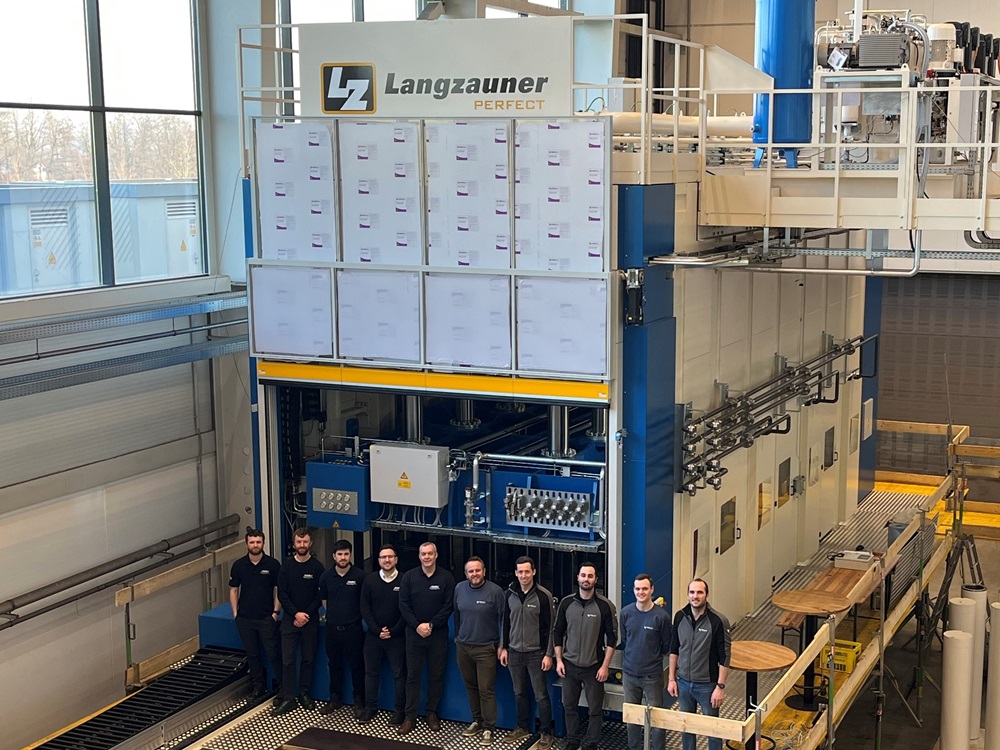
At the heart of this innovation is Langzauner’s newly developed resin transfer moulding (RTM) press system, said to be the largest-of-its-kind globally for integral aero-structural parts. Using this state-of-the-art press system, the project aims to reduce large component process times by a factor of 10 – from approximately 40 hours to just four hours – while maintaining high quality standards.

Darren Wells, senior technical fellow for large composite structures at the University of Sheffield AMRC, says “When we created the specification for such a groundbreaking piece of equipment, we knew we’d set the bar very high in what was achievable. Langzauner’s solution not only meets all of our targets but exceeds in many of them meaning this press will be at the forefront of high-rate composite manufacturing research for years to come.”

The press system features a 10,500 x 3500 mm platen size and delivers high precision with adjustable pressing force up to 2400 T.

The system also offers: press force regulation accuracy of 0.1%; a sliding table system accommodating 180 T mould mass; plate parallelism control within hundredths of a millimetre; individual cylinder control with active parallelism management; and gap injection functionality with two-axis rotation capability. The system is fully integrated with IIoT capabilities, enabling data collection for artificial intelligence and machine learning applications in factory-scale process optimisation.

More information www.amrc.co.uk

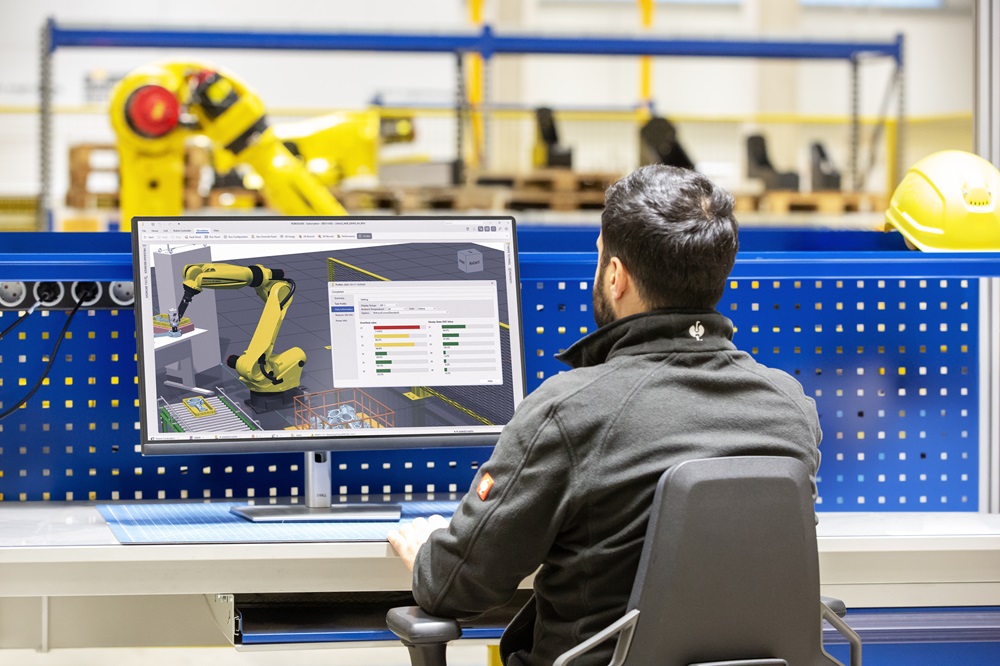
TIME TO AUTOMATE: SHIFTING THE MANUFACTURING NARRATIVETOWARDS PRODUCTIVITY

The latest IFR figures show just how far British manufacturing has to climb in terms of
automation adoption. Now down to 23 rd in the global robot density league table, the UK has
just 119 robots per 10,000 workers, against a global average of 162. If we remove the
automotive sector from these statistics, the picture is worse still, with just 69 robots per
10,000 workers. The UK has also dropped out of the top 10 world manufacturing rankings
for the first time, falling to 12 th place. Oliver Selby, head of sales for FANUC UK and chair of
BARA (British Automation and Robotics Association), reveals his thoughts.
Despite a proud history as a strong manufacturing nation, UK productivity rates have to rise
if the company is to remain a force on the international stage. In Q4 2024, productivity was
estimated to be 0.8% lower compared with a year ago, and 19% lower than the US. With a
clear correlation between automation adoption and higher productivity rates, why are not
more UK manufacturers investing in robots?
One often overlooked reason is a focus on job creation over productivity. It has been well
documented that the UK manufacturing industry is in the grip of both a labour crisis and a
skills shortage. According to a recent report by The Manufacturer, 97% of manufacturers say
that hiring and retaining staff presents a challenge to the growth of their business, with 36%
of manufacturing vacancies proving hard to fill (compared with an average rate of 24%
across all industries).
Despite this, news stories appear regularly regarding how government funding towards
large manufacturing projects for companies such as Nissan, Rolls Royce or BAE will create
“thousands of new jobs” for the industry – with no mention of where these workers will
come from or what this funding will deliver in terms of output. A shift in government and
media focus towards increasing productivity levels among manufacturing firms of all sizes –
rather than job creation via large corporations – would be far more useful for boosting
overall manufacturing output. Support for investment in automation projects would be a
sure-fire way to do this.
Exacerbating the labour crisis is the fact that young people are not currently entering the
sector in sufficient numbers to replace workers leaving the industry. Working culture has
changed hugely over recent years and digitally native Gen Zs are looking for stimulating
roles that offer career progression, instead of a steady but low skilled ‘job for life’.

Investing in automation to replace the dull, dirty and dangerous roles that are now so hard
to fill has numerous benefits for business owners, existing workers and new entrants alike.
Robots do not get sick or tired, can work 24/7 even in the dark and carry out tasks to a
consistently high level, improving product quality and increasing output for manufacturing
firms. At the same time, existing workers can be upskilled and redeployed to higher value
tasks, increasing job satisfaction and improving retention rates. Furthermore, a company
employing advanced manufacturing capabilities such as robotics, automation, vision
technology and AI will find it far easier to attract new talent to help futureproof its business.
Another potential barrier is the perceived cost of robotics, combined with an unrealistic
attitude towards payback. In the UK, the typical expectation is that payback on an
automation project will be under two years. Yet the value that the right automation solution
can deliver to a manufacturing business will last far longer than that. Focusing on an
unrealistic sub-two year payback can lead to businesses making compromises when
developing their manufacturing strategy and getting a solution which is not fit for purpose,
or choosing not to invest at all.
By contrast, prioritising total cost of ownership over initial purchase price gives a far truer
representation of the real cost, and value, to a business of an automation solution. This is
reflected in Europe where companies typically expect payback in three to five years – and
may help to account for their higher levels of both automation and productivity. German
workers produce around one-sixth more per hour than their UK counterparts.
Aside from this, it’s also worth mentioning that the price of robots has barely increased in
the past 15 years, rising at near, and at times slightly under, inflation levels. Compare this
with price rises in the automotive sector over a similar period, and it is clear that in 2025,
robots represent good value for money. In addition, opportunities for financing automation
projects have improved greatly in recent years, with options including hire purchase and
robots-to-rent making solutions accessible to manufacturers of all sizes.
A final barrier to consider is a perceived lack of automation expertise. Outdated perceptions
of robots as complicated, difficult to program and inflexible have prevented some
manufacturers from taking the plunge, potentially impacting their ability to be competitive
on both the domestic and international stage. In fact, today’s industrial and collaborative
robots are user-friendly, easy to configure and simple to operate, with many plug-and-play
options now available.
What’s more, robot suppliers such as FANUC, as well as its system integrator partners, can
help to reduce the risk of investing in automation and make a project more attractive to
potential funders. Using FANUC’s automation experience and expertise, the company works
with manufacturers across all sectors to understand the problems they need solving,
ensuring they get the right solution, at the right price, at the first time of asking.

In conclusion, today’s automation solutions are flexible, affordable and easy to use. They
can help to solve labour challenges, improve product quality and consistency, increase
output, and ultimately boost the UK’s overall productivity. The time for manufacturers to
invest is now.
FANUC will be exhibiting at Smart Factory Expo 2025 in conjunction with a number of its
system integrator partners on stand 5/F40, NEC Birmingham, 4-5 June 2025.
More information www.fanuc.eu