


Machining long-chipping steel materials like stainless steels has always been a challenge. With the development of a new, standardised chip breaker geometry for fine-boring blades, MAPAL says it has achieved a crucial breakthrough that has both technical and economic benefits.
In metal machining, chip formation plays a key role in process reliability, tool life and surface quality. Controlled chip formation is particularly crucial to the fine machining of unalloyed, alloyed and stainless steels.
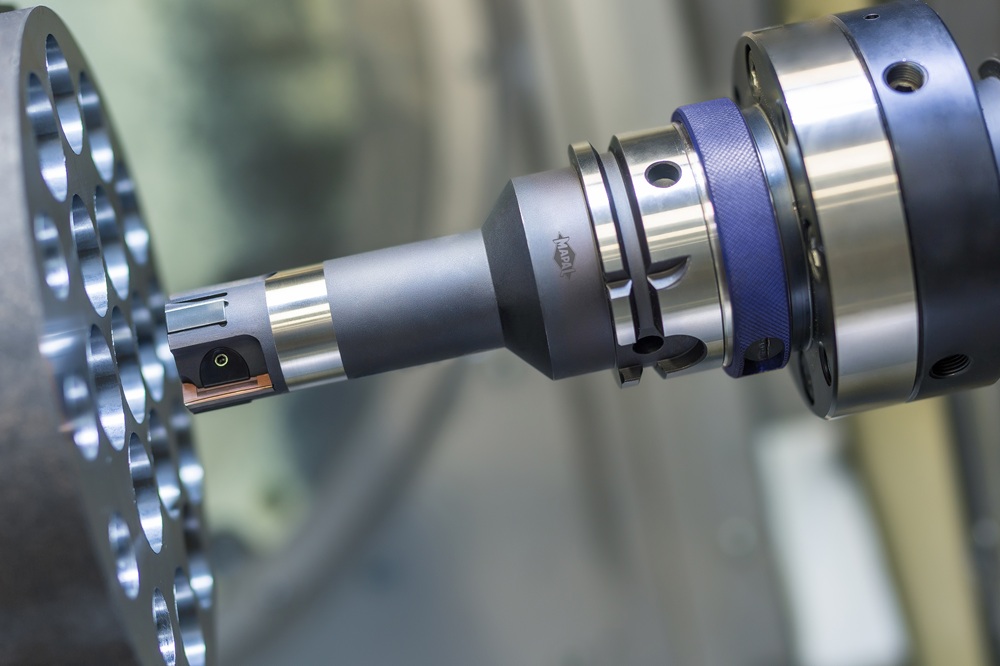
MAPAL has developed a brand-new approach to chip breaking for fine-boring tools. The solution combines a precisely defined lead and rake angle geometry with optimally adapted cutting data and cutting depths. According to the company, this precise adaptation enables perfect chip formation, even for challenging materials. The result? Optimal chip removal, reduced heat development and much greater process stability.
The benefits of this technology can be seen not only in the quality of the finished workpieces, but in the cost-effectiveness of manufacturing. Less machine downtime and tool wear and greater dimensional accuracy make this approach a real leap forward in machining technology.
Chip breakers are not a new invention, but the idea of implementing standardisation for long-chipping steel materials in fine boring is. The chip-breaker geometry developed by MAPAL combines decades of experience in this area with a clear focus on cost-effectiveness and user orientation. Until now, MAPAL has used chip-breaker technologies for custom solutions. With this new innovation, the company is taking a big step towards standardisation and efficiency.
The fine-boring blades with chip-breaker geometry for unalloyed, alloyed and stainless steels are now available from stock with defined geometries and coatings.
More information www.mapal.com