An alliance of more than 20 years has existed between machine tool provider Hurco Europe
and tool-holding equipment supplier Gewefa UK. The company has been a perennial
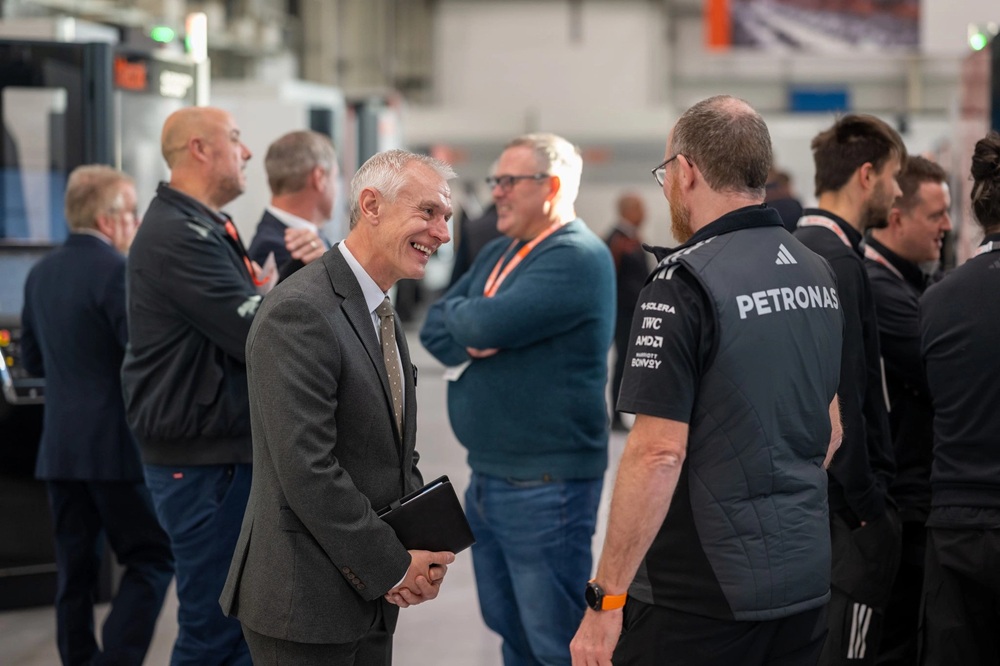
participant at the annual Hurco open houses held in its High Wycombe showroom and
technical centre, along with about a dozen other supplier firms promoting everything from
cutting tools to metrology, work holding to fire suppression, finance to CADCAM software.
David Waghorn, managing director of Hurco Europe, says: “I regard our association with
Gewefa UK over the years as a partnership rather than a supplier arrangement. About 20%
of the machining centres we supply to customers include back-end tooling packages and
three-quarters of those are sourced from Gewefa UK.”
He goes on to explain that the remainder of the back-ends are mainly Hurco’s own tool
holders, which are suitable for entry-level, lower-spindle-speed applications. For Hurco
machines that offer higher spindle speeds, generally from 12,000 to 18,000 rpm – especially
Hurco five-axis models in the SRT, SW, VC and U series – Gewefa UK is the preferred tool-
holder supplier and a majority of machines are shipped with its products.
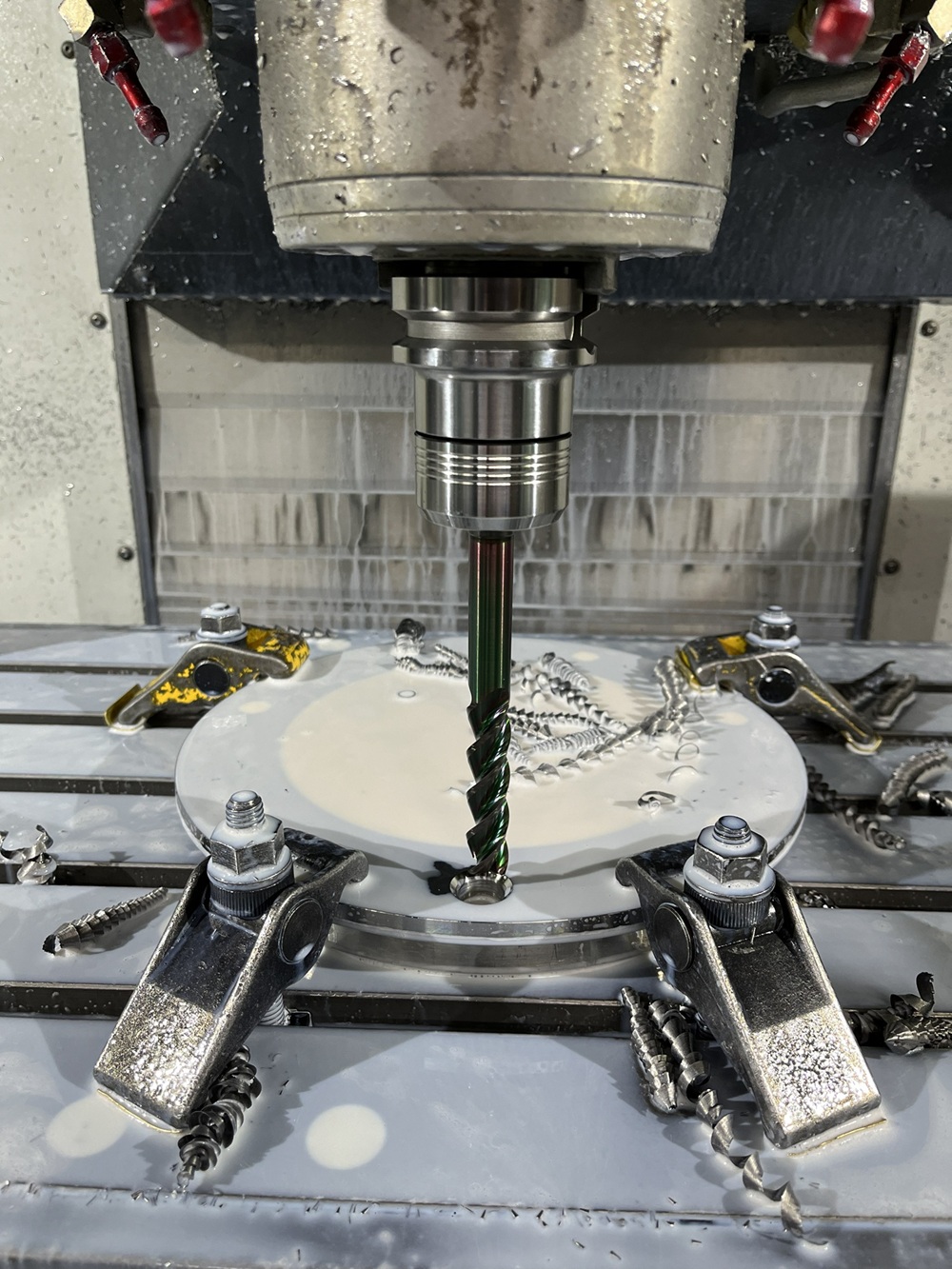
“One Hurco machining centre, our three-axis VM10HSi, which is now fitted with an HSK-40
interface rather than the previous BT30, is offered with a 30,000 rpm spindle and it’s
difficult to imagine it being delivered with anything other than holders from Gewefa UK,”
says Waghorn.
The reasons for adhering to this supplier are many. Waghorn asserts that the quality-price
ratio of the tool holders is equivalent to that of the machines Hurco supplies and that the
holders are positioned towards the upper end of the market in terms of their functionality.
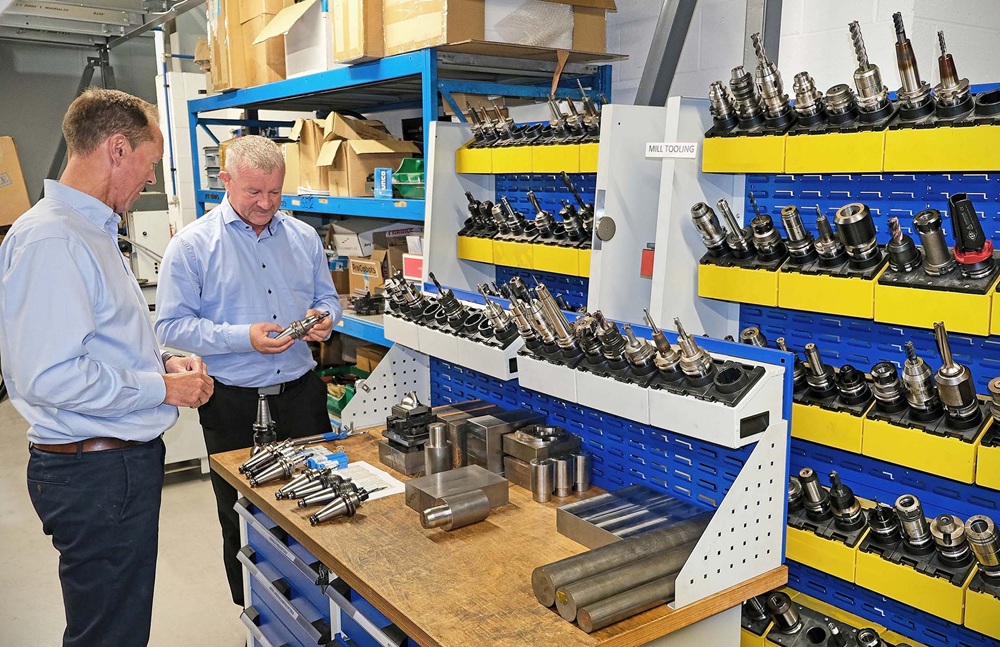
Gewefa UK has in its portfolio a vast range of BT and CAT 30, 40 and 50 holder options. Its
HSK and DIN equivalents suit any requirement and the company is willing to tailor its
standard tooling packages to suit end-user needs.
For example, collet holders will frequently be swapped out for other varieties, such as a
side-lock (Weldon) type, or a shrink-fit or hydraulic holder with through-coolant or air
delivery, both of which are designed for high tool grip, vibration damping and repeatable
accuracy. Likewise, special extended holders are often supplied. All tool holders are
dynamically balanced as standard, with those destined for high-speed machining receiving
an additional, higher-grade precision balance.
Once the content of a typically 14- to 24-piece Gewefa tooling package for prismatic
machining has been established, consistent with the type of work generally carried out by
the OEM or subcontractor (from fairly open tolerance up to extremely tight tolerance),
delivery is described by Waghorn as prompt. Perhaps more importantly, the aftersales
service provided by Gewefa UK to Hurco customers to provide any additional tooling is also
timely, as well as comprehensive.
In the case of the fixed-head turn-milling machines that Hurco supplies, the relationship
with Gewefa UK is somewhat different. More than 90% of driven-tool Hurco lathes, whether
they have a VDI or BMT turret, are delivered with a tooling package from EWS Weigele in
Germany, one of six European tooling product manufacturers represented in the UK
exclusively by Gewefa UK under sole agency agreements.
The Gewefa Varia.VX range of tool holders with dual face and taper fit was introduced a few
years ago for the rapid exchange of driven tools in lathes. It has proved popular with users
of Hurco turning machines due to its rigidity, reliability and accuracy, and the good surface
finish achievable on machined components. Recently, for exchanging static turning tools
quickly and easily, the compatible Varia.VXT quick-change system was launched and these
tool holders are also offered by Hurco.
Another new introduction, this time by Gewefa UK itself, is the M96 and M96+ hydraulic
adapter range for live tooling, which converts ER-driven toolholders into inexpensive
hydraulic chucks. The innovation avoids the limited clamping force, runout issues and
lengthy tool change times associated with mechanical ER holders, while also damping
vibration and extending tool life.
The co-operation between Hurco and Gewefa UK goes even deeper. Another of Gewefa
UK’s sole agency sales agreements is with German firm OTT-Jakob Spanntechnik, which
manufactures drawbars used in the construction of Hurco machining centres.
An additional German company that has appointed Gewefa UK to sell its products in the UK
exclusively is Rineck Werkzeugtechnik, whose tool-holder shrink-fit machines are sold by
Hurco, as are the angle heads and speeders produced by Swiss firm Pibomulti, which has a
similar exclusive agreement with Gewefa UK.
The firm’s managing director Nicole Lloyd-Foxe says: “The long-standing partnership we’ve
had with Hurco Europe is based on mutual support. We’ve developed tooling packages over
the years that not only meet their customers’ requirements but are also flexible enough to
be tailored to suit the end user’s needs.
“It’s a perfect example of our ability to deliver comprehensive, bespoke equipment
packages from a single source and provide support to machine sellers in the UK and Ireland.
We offer not just back-ends and other tool-holding products, but also ancillary equipment
such as tooling trolleys, all at a competitive price.
“Additional offerings include OTT-Jakob Power-Check milling spindle pull-in force
monitoring devices for predicting when preventive maintenance will be needed, and EWS
Varia Clean for maintaining tool concentricity and optimising the lifetime and performance
of the lathe tool holders.
Waghorn concludes: “Our continued use of products from Gewefa UK is not just down to
the flexibility provided by their ability to deliver a huge breadth of tool-holding products. It’s
also due to the knowledge that the supplier brings to bear to address customer tool-holding
requirements, even those that many potential suppliers would find intractable, and to keep
them running reliably for the duration of their service lives.”
More information www.gewefa.co.uk