University to use Prima metal3D printer

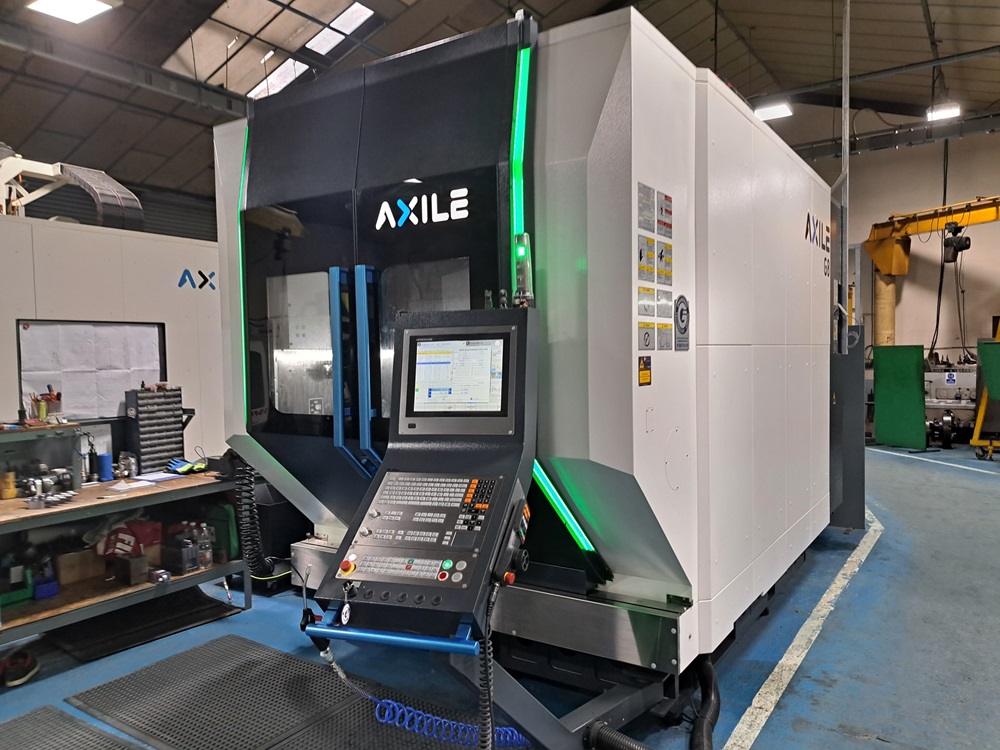
Prima Additive will supply a system for metal additive manufacturing based on powder-bed fusion technology to the University of Birmingham. The Print Genius 150 Double Wavelengthmodelwill find use at the Advanced Materials & Processing Laboratory (AMPLab) within the School of Metallurgy and Materials.The system is a unique configuration on the market, featuring two lasers of different wavelengths: a 300 W infrared laser and a 200 W green laser which can work alternately within the same 150 x 160 mm diameter cylindrical work area.

For further information www.primaadditive.com

Renishaw inspires budding engineers

To help more young people get excited about engineering, Renishaw is supporting the Technology Club at Blue Coat CEVA Primary School in Wotton-under-Edge, Gloucestershire. The sessions are run by Technology for Fun, enabling year-six students to experience hands-on engineering activities and build real working models that they then take home.

The club runs for one term each year, with every session supported by a Renishaw science, technology, engineering and maths (STEM) ambassador.Technology for Fun is dedicated to inspiring young people about engineering. It offers fun, engaging STEM activities and resources including project books, class kits and teacher resources.

For further information www.renishaw.com

Transatlantic deal puts AWI in good shape

The UK’s leading manufacturer of round, flat and profile wire is heading to Wire 2024 (Dusseldorf, 15-19 April) off the back of one of its largest ever export orders. Alloy Wire International (AWI), which is taking its 60-strong range of exotic alloys to the show, has just sealed a $400,000 contract with a US springmaker to supply a high-strength nickel cobalt alloy.

The DFARS-compliant material will find use in an aerospace application that requires heat and corrosion resistance, with AWI chosen for its quality and the ability to process the order in just a matter of weeks.It is these two qualities, alongside 400-tonne stockholding capacity, that AWI will be pushing in Germany when it looks to increase its international sales even further.For further information www.alloywire.com

World-unique forging research centre opens

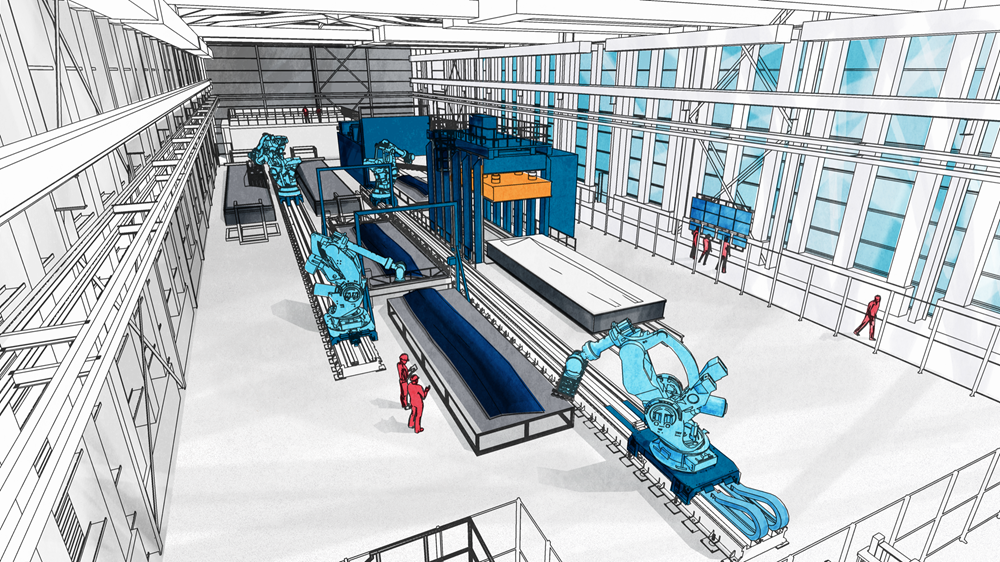
The world’s most advanced research and innovation hot-forging platform opened on 21March at the University of Strathclyde’s Advanced Forming Research Centre (AFRC), part of the National Manufacturing Institute Scotland. The new facility connects the $75bn global forging sector with the Scotland-based team and industry-scale testbed no matter where they are in the world.

Based in Renfrewshire, FutureForge is a world-unique platform for hot-forging innovation with advanced industry 4.0 capabilities that enables companies from overseas to connect in real-time with the AFRC remotely. FutureForge comprises: a tri-modal 2000 tonne press offering open-die, closed-die and isothermal forging capabilities; instantaneous data analytics;two furnaces;and a custom-built smart robotics manipulator arm.

For further information www.bit.ly/3vqwGvo

Citizen machine helps TAS rebalance business

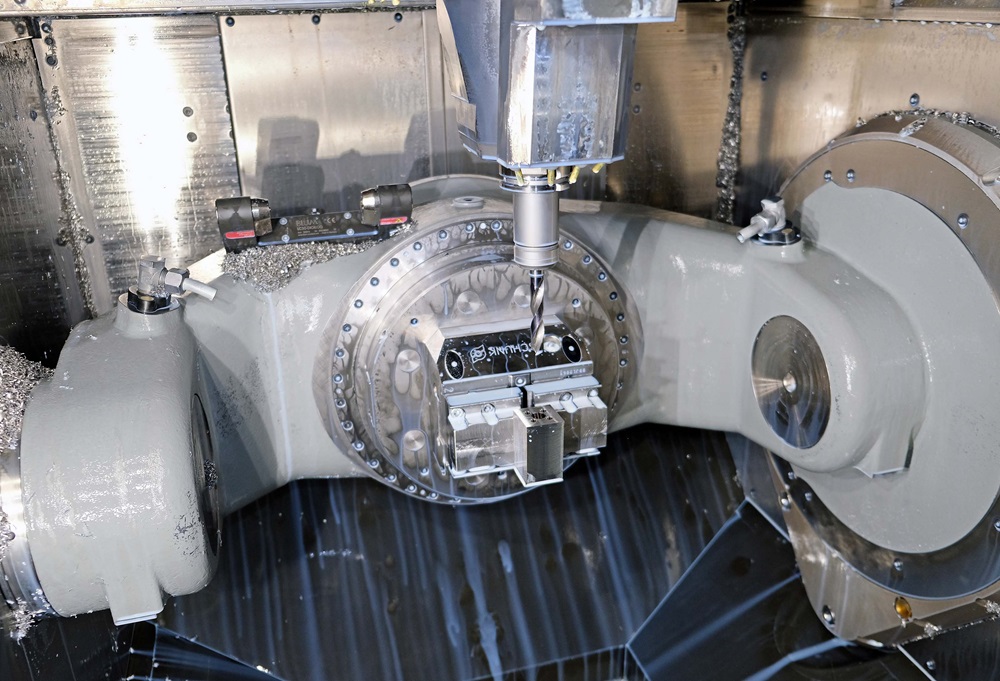
Around 20 years ago, Gareth Davies started Burton-on-Trent company TAS Engineering as a steel, stainless steel and aluminium fabrication shop.In 2014, he established a machine shop to add extra value to the products the company was forming and welding. Today, there is a pair of three-axis vertical machining centres on-site and a trio CNC lathes, the latest of which is a pre-owned Cincom L20 sliding-head turning centre from Citizen Machinery.

What prompted the purchase in October 2023 of this 20-year-old lathe, the company’s first sliding-head model, was a desire for more efficient turningof components in various materials from bar up to 20 mm in diameter. A case in point is the ongoing production of a 16 mm diameter, 316 stainless steel magnet holder, which is welded to a small, laser-cut and bent plate to form part of a safety unit for industrial switchgear. The turned component, of which 200 are required per month, was previously produced complete on one of two fixed-head, twin-spindle lathesin a 2.5-minute cycle.

It was apparent that the steel magnet holder could be produced more quickly on a modern Citizen L20 twin-spindle sliding-head turning centre due to the faster axis motions of the gang tool carriers on the former compared with the turret movements of fixed-head lathes. However, Davies was surprised to find it was possible to machine the part more than three times faster on the Cincom: the cycle now takes just 48 seconds.

He says that although the purchase price of the lathe was only about 24% of the investment needed for a modern 20 mm capacity L-series Cincom, he was treated by all Citizen Machinery UK staff as though he were purchasing a new L20.

For further information www.citizenmachinery.co.uk