

Laser for heavy-duty cutting

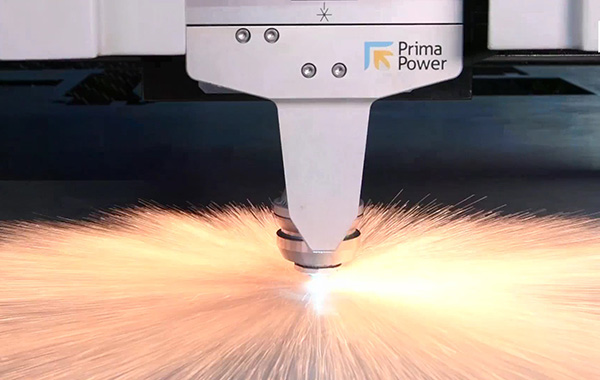
Prima Power’s Laser Sharp 2060 is a newly developed large-scale fibre laser cutting machine that is designed for heavy-duty applications found in sectors such as yellow goods, agriculture and commercial vehicles.

Laser Sharp 2060 completes the Prima Power 2D laser line with a machine featuring a large work area (6070 x 2045 x 120 mm) and a conventional, robust construction made for heavy-duty environments. The machine design features a carbon steel electro-welded structure and a rigid yet lightweight aluminium extrusion gantry carriage.
According to the company, fibre lasers up to 10 kW output can be fitted to the machine, providing a productive solution, with a piercing time of less than 1 second. In addition, the machine offers low operating costs and reduced maintenance. Cost-effectiveness is also granted by a quick installation process that does not require special foundations, and a machine footprint that is the smallest possible with respect to its travel lengths.
The fibre laser head is designed by Prima Power and, thanks to adaptive optics, allows for the automatic management of the focal position and diameter. Integrated Group’s own Prima Electro Open Laser 2D CNC control and the Tulus Laser 2D HMI facilitate user-friendly operation.
As with all Prima Power products, Laser Sharp is compliant with Industry 4.0 guidelines, helping customers turn their production sites into smart factories. The machine interacts with the factory and the whole enterprise, and customers have the power to remotely monitor and control the production process.
For further information www.primapower.com
DMG Mori open house

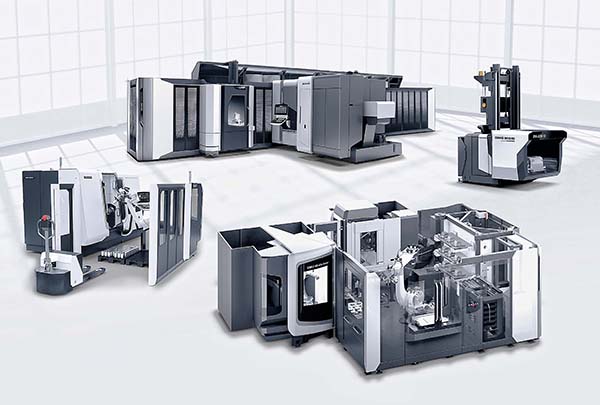
At DMG Mori’s traditional open house to be held in Pfronten, Germany from 11 to 15 February 2020, areas of focus will include end-to-end connectivity as the standard for all machines, updating existing versions of the CELOS machine interface, the new customer portal ‘my DMG Mori’, and the co-operation with US software provider TULIP as an entry into digitalisation.

Among more than 40 machines on show there will be three world premieres: the DMC 65 H monoBLOCK universal, horizontal-spindle machining centre, the modular PH Cell automated pallet handling system and the LaserTec 400 Shape for laser texturing.
For further information https://pfronten.dmgmori.com/en

Quaser acquires Winbro Group

Winbro Group Technologies Ltd has been acquired by Taiwan headquartered Quaser Machine Tools (QMT).

QMT, a publicly traded company, is a manufacturer of multi-axis machine-tool technology with locations in Taiwan, USA and Europe. The Winbro Group provides manufacturing solutions to the aerospace and industrial gas turbine industries, based upon its core laser and high-speed EDM cooling hole machining technologies, as well as viper grinding and ECM machining processes. Winbro provides turnkey machining systems, services and manufactured components from its UK and USA sites.
For further information www.winbrogroup.com

Robots hit 300,000 mark in Korea

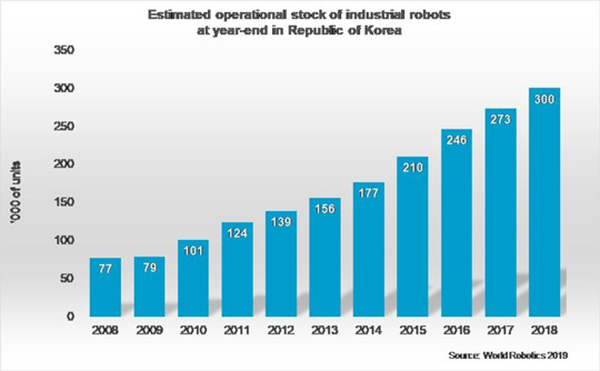
IFR (International Federation of Robotics) has released its latest World Robotics report, which shows a new record of about 300,000 operational industrial robots in the Republic of Korea in 2018 (+10%).

Based on this figure, the country has doubled its number of industrial robots in the past five years. Following Japan and China, the country ranked third in 2018. With 774 industrial robots per 10,000 employees, the Republic of Korea has more than twice the number of Germany (third with 338 units) and Japan (fourth with 327 units).
For further information https://ifr.org/

Medical firm installs five-axis Hermle

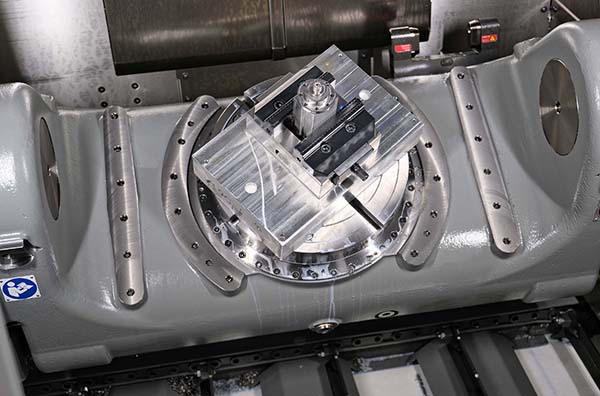
Medical sector specialist and recent university spin-out, Hooke Bio in Shannon, has purchased a German-built Hermle C250 five-axis VMC through sole UK, Ireland and Middle East agent Kingsbury.

Hooke Bio’s R&D engineer Shane Devitt explains: “We wanted a five-axis machine to produce components in one hit rather than two, as we need to hold tolerances down to ±5 µm and that is difficult if a part has to be re-clamped. Even with a drilled hole, where the accuracy of the diameter is defined by the cutter rather than the machine, it can have a slight offset if it has to be drilled from either side to meet in the middle, and that causes a dramatic alteration to fluid flow.
“Unlike when early prototypes were being made at the University of Limerick on a three-axis VMC of another make, work is now automatically repositioned in-cycle using the rotary axes of the Hermle,” he continues. “It allows us to hold the accuracies we need and there is no tolerance build-up.”
Engineering manager Daniel Murphy adds: “We moved into our new premises in April 2019 and the Hermle arrived soon after. We need to make around 40 different parts for an Enigma prototype platform, half of which are rotational and would normally be produced on a lathe.”
The Enigma platform aims to use 3D cell cultures to generate more-reliable data than current drug screening technologies, and at higher throughput.
“To avoid the expense of investing in a turning centre at this early stage in our business, we make all components on the VMC, despite it not having a torque table and integral turning capability, as that also would have cost more. Round components are produced by circular interpolation milling, and the rigidity of the Hermle ensures that all features are within tolerance.”
For further information www.kingsburyuk.com