Starrag introduces Heckert X70 f-axis machine

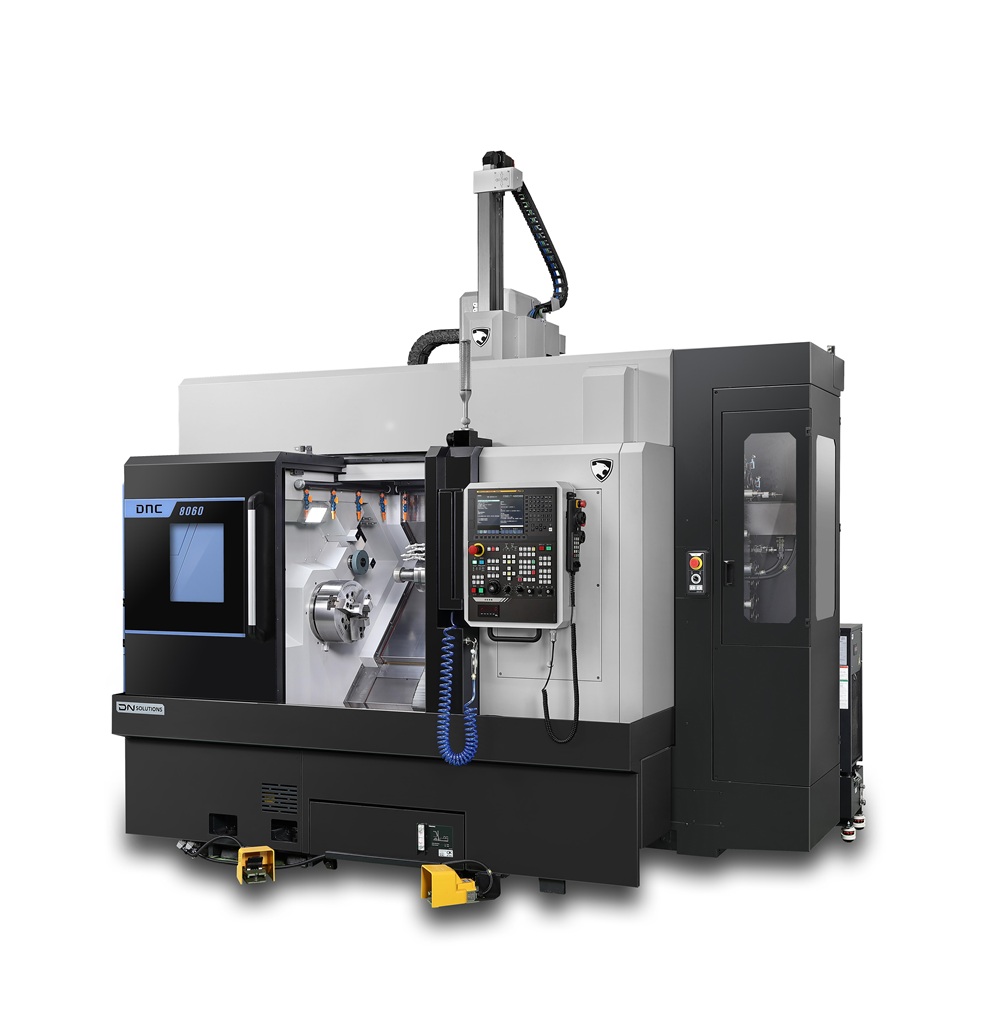
Starrag has launched the Heckert X70, a versatile five-axis machining centre designed to deliver precision and productivity within a compact footprint. Building on the features of the Heckert HEC X5 series, the Heckert X70 incorporates a swivel unit on the workpiece side, facilitating dynamic five-axis machining from a single clamping position.

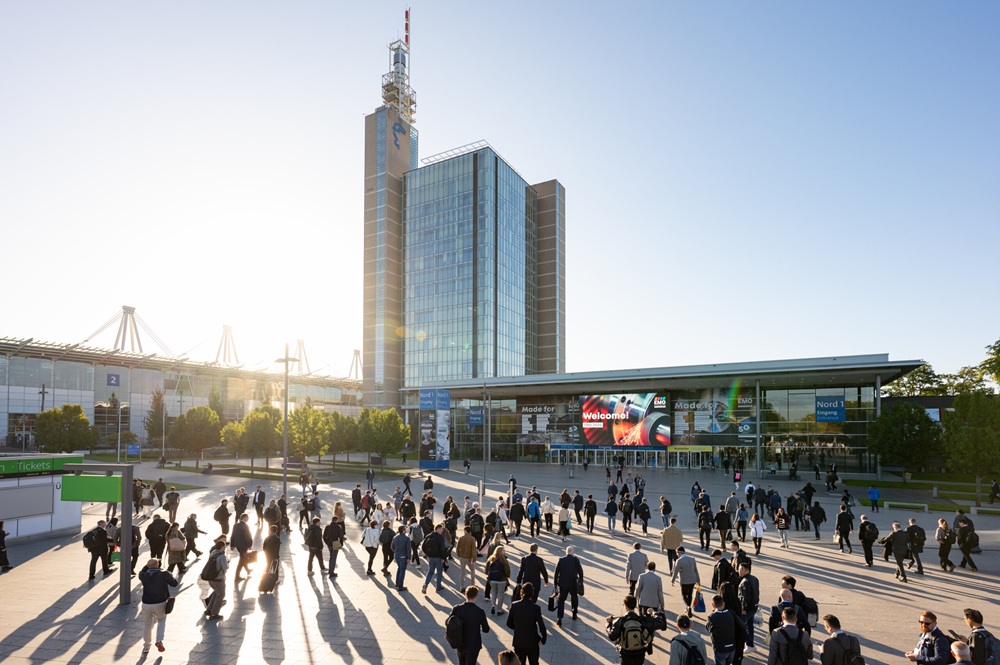
Due to receive its world premiere at the EMO 2025 exhibition in Hanover on 22-26 September (stand C35, hall 12), the Heckert X70 offers X, Y and Z-axis travel of 1200 x 1100 x 1200 mm. The compact machine requires 18% less installation space than its predecessor: the Heckert HEC 630 X5. It accommodates workpieces with a core contour diameter of 960 mm and a maximum height of 800 mm, supporting a mass of up to 1000 kg.

Turning is an integral part of the machine concept and can be configured as an option. Using specially developed assemblies and software modules, both classic and complex turning operations are possible with the productivity of a machining centre, reports Starrag. Unlike a turning centre, the machine benefits from various set-up options. Not only can users clamp workpieces vertically for extra convenience, they can also clamp them during the machining operation thanks to the pallet changer.

The Heckert X70’s rapid traverse rate of 65 m/min and fast component changeover times enhance productivity. Pallet changes are completed in 17.5 seconds, while the tool changer provides a chip-to-chip time of 7.4 seconds.

Customers can choose from a range of tool magazine options, including a timing belt magazine with 45 or 60 positions for HSK-100 tools, a chain magazine with a capacity of up to 120 HSK-100 tools, and a tower magazine capable of supporting up to 440 HSK-100 tools.

More information www.starrag.com

Five-axis HMC has novel chip-breaking function

NCMT has introduced to the British and Irish markets the Makino a500iR, a five-axis, twin-pallet horizontal machining centre that is available with a choice of three spindles. One has a BT40 interface and a maximum speed of 14,000 rpm, while the other two feature an HSK-A63 interface with a maximum speed of 20,000 rpm or 24,000 rpm.

The centre of gravity of the 500 mm square pallet and fixtured workpiece is close to the vertical centreline of the -110° to +180° rotary B axis, enabling high-speed workpiece positioning at up to 267° per second. Notably, the rotating C axis facing the horizontal spindle has an even faster rapid motion of 600° per second. Maximum workpiece size is 900 mm diameter by 600 mm high and the table will accept a load of 400 kg. Linear travels in X, Y, and Z are 900, 750 and 800 mm.

As with all high-performance machining centres, the a500iR generates copious amounts of swarf that is efficiently evacuated by means of slanted panels in the working area and with the assistance of coolant delivered from the spindle head, nozzles and the ceiling of the chamber.

A new feature is the GI (Geometric Intelligence) chip-breaker function, which introduces micro-movements into a drilling operation to break stringy swarf into small chips, avoiding accumulation within the hole and possible damage to the cutter and component. Manufacturers can therefore leave the Makino to run unattended with confidence. Notably, the GI breaker works without impacting the cycle time. This is in contrast to options offered by other machine tool manufacturers, reports NCMT, which tend to lengthen a cycle.

More information www.ncmt.co.uk

Autonomous five-axis machining around the clock

Since 1983, Peter Josef Klein Feinmechanik GmbH (PJK) – a 50-employee subcontractor based in Sankt Augustin near Bonn, Germany – has been producing precision components and assemblies from aluminium, titanium, stainless steel and high-performance plastics for customers principally in the medical, food and aerospace industries. For metal cutting, the company mainly uses machine tools from DMG Mori, including seven DMU 60 eVo machining centres, all of which feature automation.

Two of the machines are connected via a pallet handling system, which has 40 locations and can accommodate 300 fixtures that are exchangeable between pallets. An Erowa MTS zero-point clamping system serves as the basis for the flexible, automated cell.

Second-generation Peter Klein, who runs the company with his brother Julian, says: “Our main challenges are the extreme quality customers require and the high degree of competitive pressure. Our components are accurate to within microns, while at the same time we also have to continuously check and optimise our processes.”

One way of meeting these challenges is autonomous manufacturing, with PJK using automated cells to maximise machine utilisation since 2011. It means an employee can operate several machines during day shifts, while the company gains extra production output during unmanned running overnight and at the weekend.

To ensure precise and dynamic machining, the majority of DMG Mori machining centres on site at PJK are fitted with linear drives.

Says Julian Klein: “The machines produce our range of components efficiently by five-axis machining and meet our tight tolerance requirements. Customers stipulate accuracies down to single-figure microns, which we have to hold consistently. Five-axis machining contributes to our ability to control this level of quality, as the number of manual re-clamping operations is reduced or even eliminated.”

More information www.dmgmori.com

SW to launch BF 12-21D at EMO 2025

The right solution for every application, from small to large series production: at this year’s EMO 2025 exhibition in Hanover, Schwäbische Werkzeugmaschinen (SW) is presenting a new machine tool on stand C05 in hall 12. With the BF 12-21D, SW says it is responding to the current trend in automotive engineering toward die-cast aluminium body parts. The BF 12-21D is suitable for high production volumes, in particular for the fast machining of frame and structural components.

“In automotive engineering, we’re seeing a clear trend toward the use of aluminium die-cast parts in vehicle body construction,” explains product manager Michael Kreuzberger. “These parts require less manufacturing precision than, for example, gearbox or stator housings. With the BF 12-21D, we offer an economical and dynamic machine concept for precisely these applications.”

The BF machine series differs from other SW machines in its structural design: to fit specific market conditions it features a hybrid axis configuration, utilising a linear drive for the X axis, while the Y and Z axes are driven by ball screws. SW also relies on proven twin-spindle technology to meet high productivity requirements. With two three-axis units and one spindle per working area, the BF 12-21D can replace two conventional single-spindle machines and achieve higher output with a smaller footprint, reports the company. When components are changed in one working area, the second spindle in the other working area can be used to achieve even higher productivity.

SW will also exhibit an established machining centre at EMO. The BA 442 is one of SW’s fastest and most sustainable machines. With four spindles, it offers high effectiveness per square metre of space while also being energy-efficient.

More information www.sw-machines.com

Robotic Production with Autonomous Process Control 

Flexxbotics says that Precision Metal Industries – a manufacturer specialising in precision sheet metal products, precision machining, and complex mechanical and electromechanical assemblies – has selected Flexxbotics for robotic machine tending to enable robot-driven manufacturing with autonomous process control in multi-machine processes. The result is greater unattended operation, increased capacity and higher yields.

With Flexxbotics, Precision Metal Industries achieves a cellular-based set up based on a single robot managing multiple factory machines, including a Haas vertical machining centre with tool breakage sensors, a CMM for in-line inspection, along with deburring and cleaning blow-off stations. By increasing per shift throughput productivity and running an additional ‘lights-out’ shift each day, an overall production capacity increase of 125% is achieved with a 17:1 machine-to-man ratio.

Flexxbotics solution seamlessly connects the robot to each piece of equipment, co-ordinating the work so the robot has command and control of the machines in the work cell. Based on inspection results, closed-loop feedback corrections are provided to the CNC machine in real-time for autonomous process control to maintain continuous operation while achieving tight tolerances.

“Our customers demand precision quality and Flexxbotics takes advanced robot automation to the next level with autonomous process control,” says Greg Wilson Jr, owner of Precision Metal Industries. “We especially like Flexxbotics ability to detect tool breakage and automate tool change to keep production running without downtime.”

He adds: “We were impressed with Flexxbotics full turnkey deployment services, which ensured our business goals and requirements drove the solution’s design.”

Precision Metal Industries makes custom missile containers, cabinets, electronics enclosures, chassis, medical equipment housing and many other parts and components for the defence, medical, electronics and avionics industries.

More information www.flexxbotics.com