

New machine for cost-effective CMM measurement

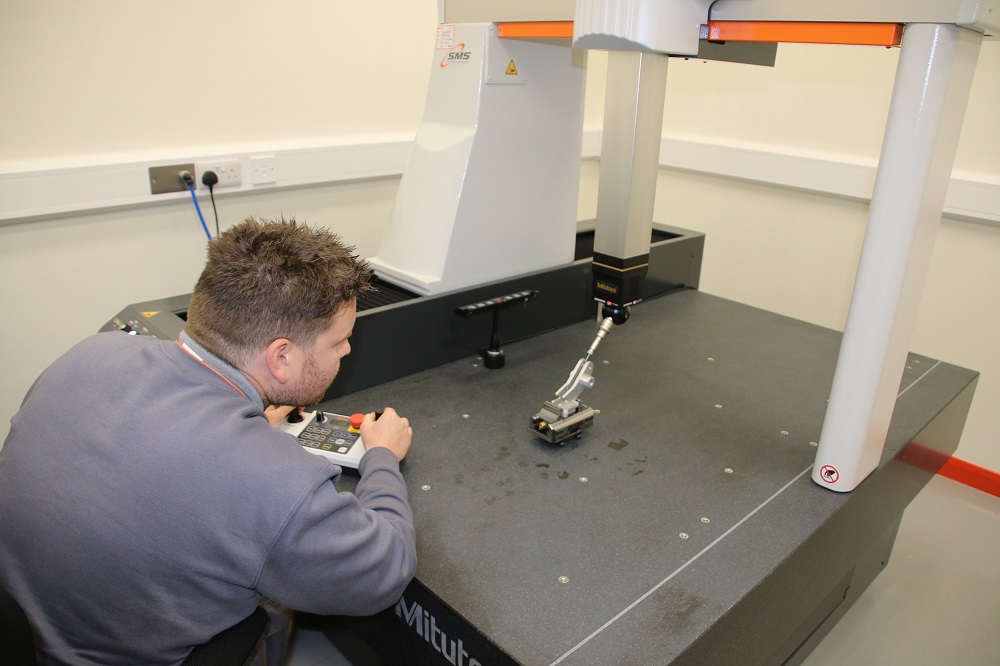
Manufacturers wishing to progress from manual metrology to using a CNC CMM have a new option to consider: the new ALTO 6.5.5 from LK Metrology. Appealing to the entry-point of the CMM market, the machine has guideways made from aluminium, lowering the capital cost compared with using ceramic, as is the case with most LK CMMs. Several design features deliver a surprisingly compact measuring machine, with the high accuracy and rapid throughput normally associated with more expensive systems, reports the company.

The CMM is of half-gantry design, which improves accuracy by shortening on one side the leg supporting the bridge. Additionally, the fixed aperture created beneath the short leg facilitates the easier loading and unloading of components from that side of the machine.

Micro-machining of the aluminium elements by fly-cutting an unclamped condition eliminates distortion that might occur on releasing conventional fixtures after milling. All of the aluminium parts undergo hard anodising before assembly of the CMM, creating a 50 µm thick layer that imparts extreme durability and prevents corrosion.

Designed for touch-trigger probing only, the CMM is capable of capturing precise measurements very rapidly, as it is able to deploy a motorised PH20 five-axis probe head from Renishaw for a three-fold increase in inspection speed. Continuous angular rotation and infinite positioning (similar to the company’s top of the range REVO2 probing system) avoids having to move the machine’s X, Y, and Z axes at high speed, minimising dynamic errors. For some measurements in a cycle, it is not necessary to move the linear axes at all. The results are better accuracy and repeatability.

Furthermore, five-axis motion allows the measurement of larger parts on the CMM by minimising the space required around the component for head rotation. Unsurprisingly the PH20 is the most expensive probe head on offer. So, mindful that price is likely to constrain many potential ALTO purchasers, LK alternatively offers lower-cost motorised and manual head options.
For further information www.lkmetrology.com
Creaform releases VXelements 11 scanning software

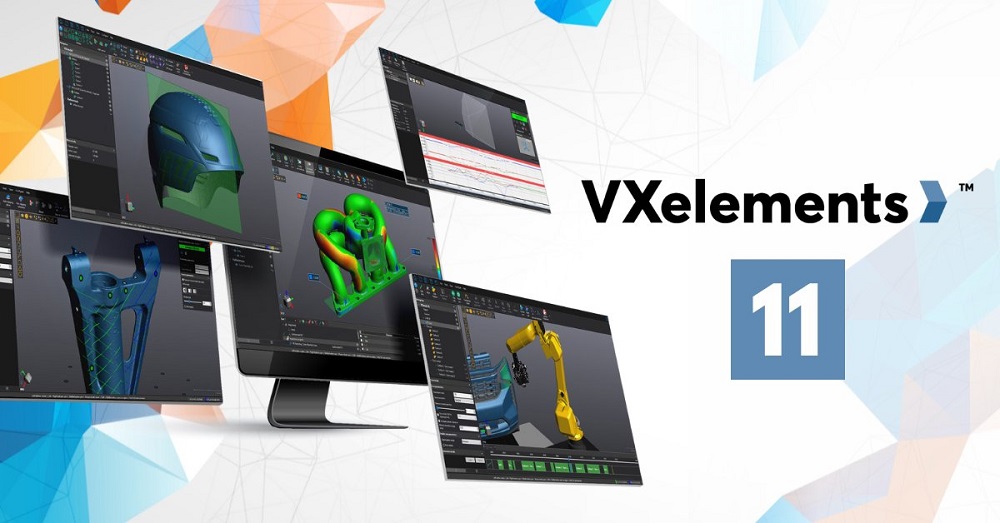
Creaformhas launched VXelements 11, which the company describes as an upgrade with an impressive array of new features and increased performance levels.The biggest change in VXelements 11 involves VXinspect, VXelements’ dimensional inspection module. VXinspect has been segmented into two distinct modules: VXinspecAnalysis and VXinspectQuality Control. Creaform says it has completely rethought and optimised both based on two distinguished phases of the manufacturing quality control process: VXinspect Analysis is an intuitive and user-friendly inspection software that streamlines designs and manufacturing dimensional root cause analyses, whileVXinspecQuality Control is a complete 3D inspection software for advanced quality control applications in subsequent production phases.

VXelements’ scan-to-CAD module for reverse engineering and additive manufacturing workflows, VXmodel, is now compatible with Fusion 360, acloud-based CAD software for product design and development. Fusion 360 has become part of the line-up of seamless integrations with other CAD solutions, including SolidWorks, Inventor and Solid Edge. Users can transfer CAD files directly from VXmodel to Fusion 360 for easier reverse engineering processes.

With the goal of improving flexibility and simplicity, Creaform has extended interoperability between VXscan-R, its digital twin environment software module,and new robot brands and models such as UR10, and FANUC CRX-25i and M-10iD/8L. VXscan-R also enables users to record trajectories directly from teach pendants with some collaborative robots.

In preparation for the new release, Creaform carried out extensive usability and ergonomics improvements to VXelements’ application modules, making the platform more intuitive to enhance the user experience by operators of all skill levels.
For further information www.creaform3d.com

Moore & Wright supportsuniversity racing team

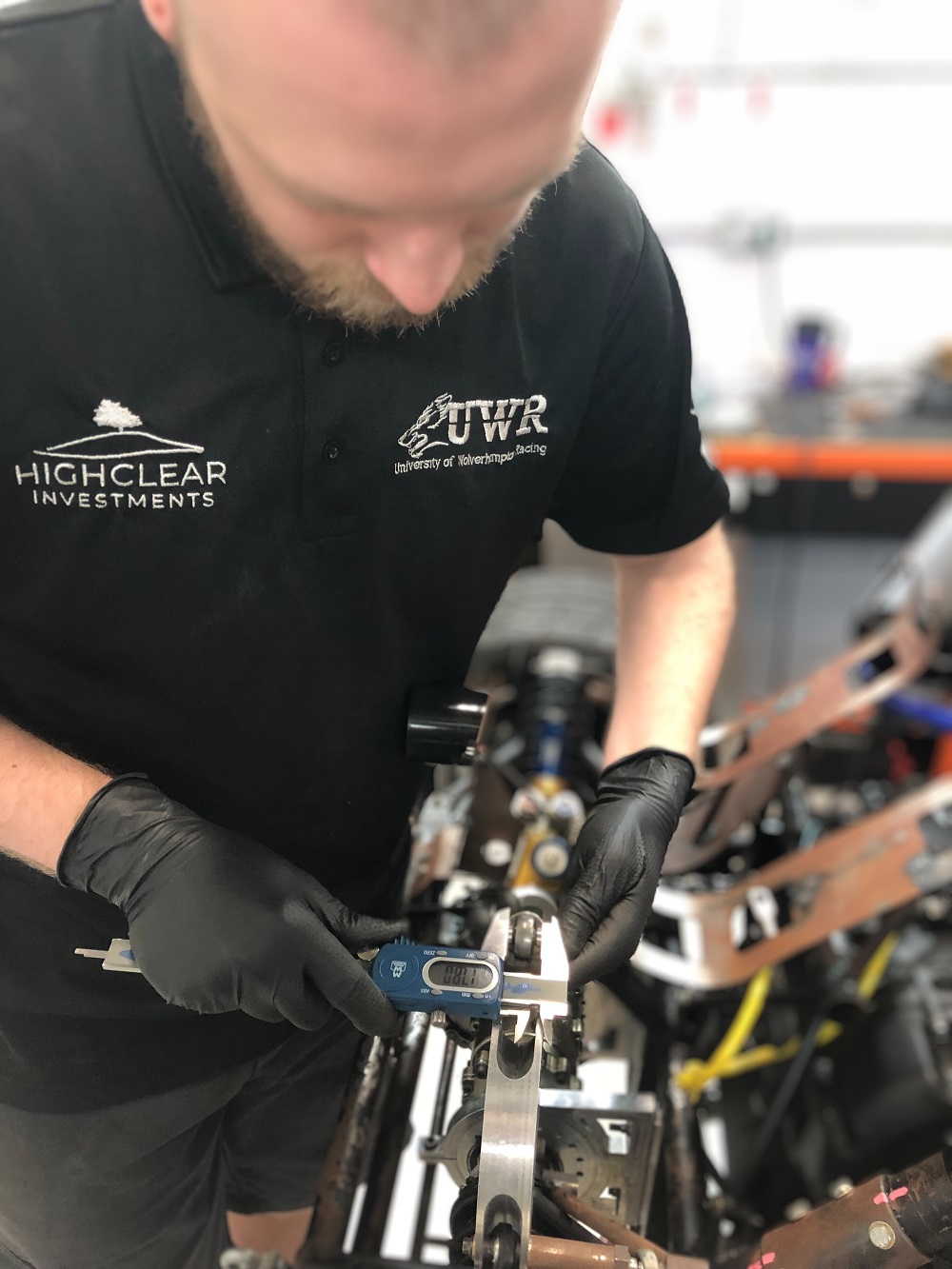
The University of Wolverhampton Racing Team (UWR), which competes in the annual Formula Student competition,is using Moore & Wright metrology tools from Bowers Group.
Formula Student places rigorous demands on participating teams, requiring them to design, constructand race a single-seat race car. The process is one in which precision engineering plays a vital role in ensuring both optimal performance and vehicle safety.

As part of the annual event, the UWR team faces the challenge of creating a car from scratch that not only meets rigorous performance standards, but also adheres to strict design and manufacturing tolerances. Bowers Group has been a valued sponsor of the University of Wolverhampton Racing Team for many years.Through its sponsorship, Bowers Group supplies both the UWR team and the School of Engineering with the tools needed to maximiseracing performance and enhance practical learning.

Paul Bates, technical andbusiness resource manager at the University of Wolverhampton, says: “The Moore & Wright tools available in our metrology suite offer hands-on experience for our students, including those in the Formula Student project. It helps them understand precision measurement and the importance of accuracy.”

He adds: “These tools play a significant role in our Formula Student team’s daily work. They rely on them for accurate measurements, and it’s notable that many team members have even purchased their own sets. That speaks volumes for the quality and reliability of the tools.”

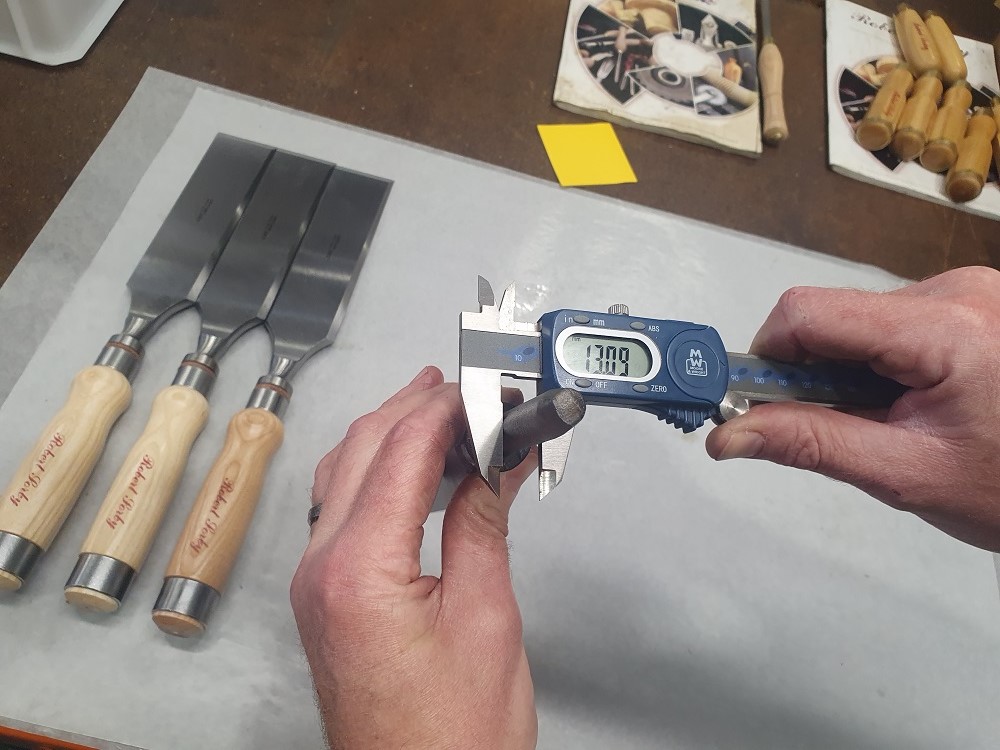
The team uses a Moore & Wright caliper, for example, to measure components, check brake discs, assess wheel alignment, verify engine machining and ensure safety cage integrity. It is also gauges wheel hub dimensions and ensures the accurate fit and finish of multiple components.
For further information www.bowersgroup.co.uk

Subcontractor reaches new standard with Mitutoyo

Cwm Engineering has been on an acquisition trail over the past few years to target growth in high-technology sectors. As part of its journey, the Welsh company has moved to a new purpose-built 10,000sqft factory to make space for its investment in new machine tools. With more than five machines purchased in the past three years, the company recognised a requirement for a dedicated inspection department with high-end metrology equipment, which is why CWM Engineering installed a Mitutoyo Crysta-Apex V 7106 CNC CMM and a Mitutoyo surface roughness machine.

Cwm Engineering’s managing director Malcolm Walters says: “We’re fully aware that when potential customers visit a subcontract manufacturer, they want to see a dedicated metrology department to instil confidence in their supply chain choices. When it came to selecting equipment, Mitutoyo was the stand-out brand for our business. Mitutoyo is a name that everyone knows and respects as an industry leader and our previous experience with them was exceptional.”

Alluding to why the company invested in the Mitutoyo Crysta-Apex V 7106, Walters adds: “It has a measurement range of 700 x 1000 x 600mm packed into a small footprint. Furthermore, the level of information that can be obtained from the reporting system far exceeds anything we hadpreviously.”

Cwm Engineering also purchased a Mitutoyo surface roughness measuring machine, opting for a handheld solution to aid portability around the machine shop, if necessary.

Walters concludes: “Our investment in new Mitutoyo technology will put us in a strong position for the future. Furthermore, the Mitutoyo MCOSMOS software enables us to fully network our quality activities and reporting.”
For further information www.mitutoyo.co.uk

Hand tool longevity in practice at Robert Sorby

Bowers Group has been a trusted partner of Robert Sorby for decades, assisting in perfecting its woodworking tools with precision measurement. With the help of a range of Moore & Wright handinstruments, the company has been able to achieve exceptional precision in its manufacturing operations.

Working at the heart of the UK’s steel and toolmaking industry since 1828, Robert Sorby has developed a global reputation for producing fine woodworking tools. All its tools are made with high-quality steel, which is hardened and tempered to its own specification. Polished flutes and hand-finished handles are typical hallmarks of the Robert Sorby brand.

The use of hand tools, particularly Moore & Wright instruments, plays a crucial role in Robert Sorby’s manufacturing processes. These hand and workshop tools ensure the precision and alignment of mating components, facilitating smooth assembly and improved product quality.

Mark Furniss, quality andtechnical engineer at Robert Sorby, says: “Moore & Wright hand tools are the backbone of precision and have been invaluable in the manufacture of our woodworking tools. With exceptional accuracy and reliability, these tools enable our craftsmen to create the finest-quality products that stand the test of time. Our partnership with Bowers Group is longstanding and the continued support from the team is second-to-none.”

The 1961M micrometer and 150mm digital calipers are among the most frequently used Moore & Wright hand tools at Robert Sorby. The micrometer measures the critical diameters of turned components, while the digital calipers perform length and depth measurements. Machining centre operators at Robert Sorby rely heavily on the digital calipers for their measurement needs.
For further information www.bowersgroup.co.uk