

Cost-efficient finishing of balancing weights

Today, centrifuges are the most commonly used systems for cleaning and recycling the process water required in mass finishing operations. A case in point is Wegmann Automotive, a specialist supplier of balancing weights, which is today utilising a fully automatic Rösler Z1000 centrifuge.

As a pilot customer, Wegmann expanded the software for its centrifuge with the ‘advanced version’ of the digital process water management system from Rösler Smart Solutions.

Wegmann makes its balancing weights as stampings from steel and galvanised steel, as well as die-castings from zinc or zinc alloys. Eugen Weizel, department manager for mass finishing and coating, says: “After the stamping or die-casting process, the weights undergo a part-on-part mass finishing operation in a rotary vibrator. The goal is to remove the residual oil left over from the stamping process and the water-based mould release agent that remains from the die-casting operation. At the same time, the compound provides corrosion protection for the steel parts, while the zinc die-castings require a certain surface tension for the subsequent coating step. The surface tension is carefully monitored and controlled.”

Since the process water is recycled, the process water cleaning operation – with a fully automatic Z1000 centrifuge from Rösler – and control of the compound concentration are key factors that determine the quality of the balancing weights.

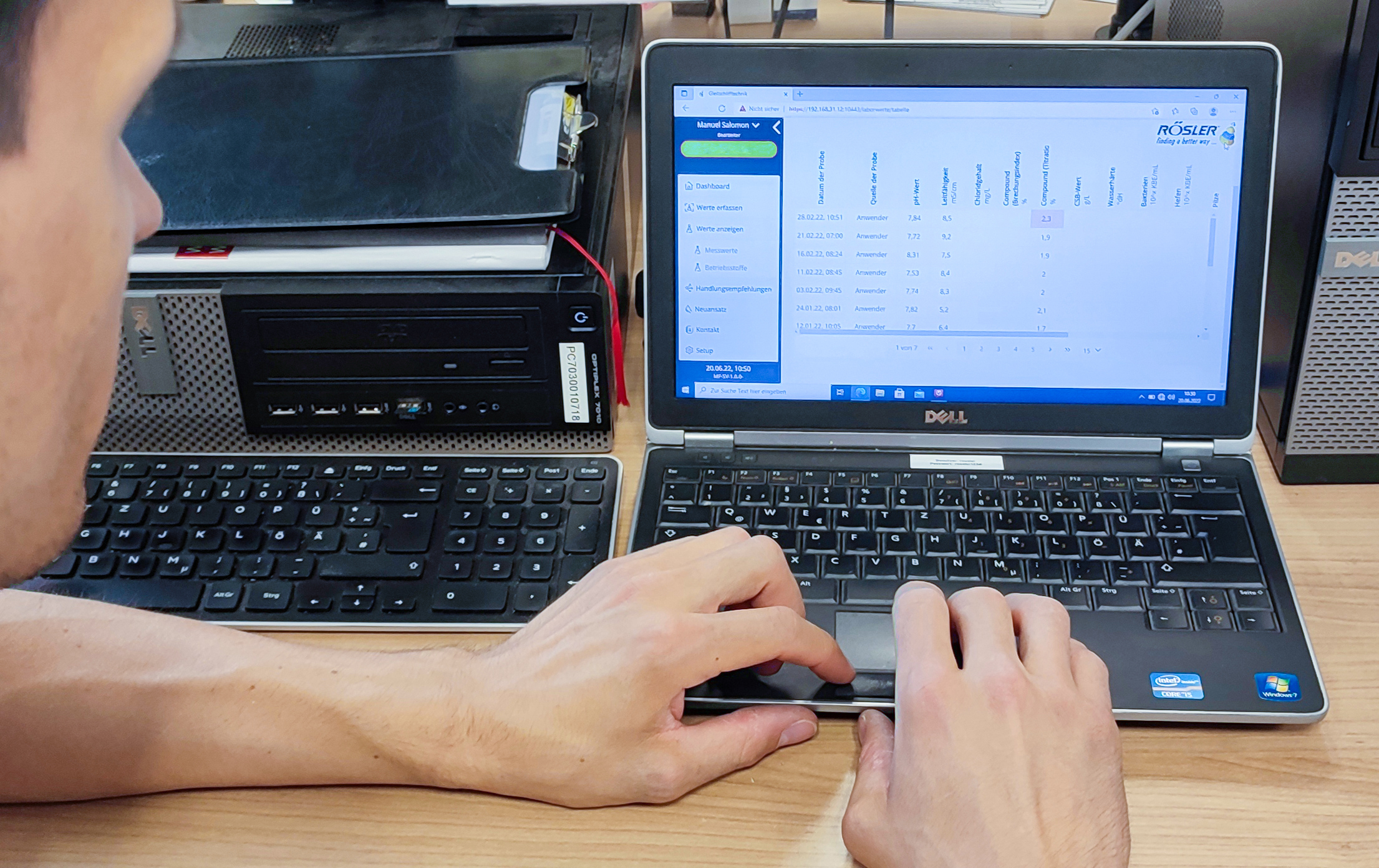
Says Wegmann’s Manuel Salomon: “When the mass finishing machine and the centrifuge were commissioned, we quickly recognised that there is a close correlation between the process water quality and the quality of our products. Therefore, we carefully measured the compound concentration once per week and recorded the measured results. This allowed us to define the compound concentration for our finishing process and correct it as needed.”
For further information www.rosler.com
T&G at the ‘core’ of precision grinding

Given industry’s growing use of the IoT and the emergence of smart factories, potential machine tool customers are increasingly looking to purchase cutting-edge manufacturing aids with ‘smart’ controls and enhanced connectivity capabilities.

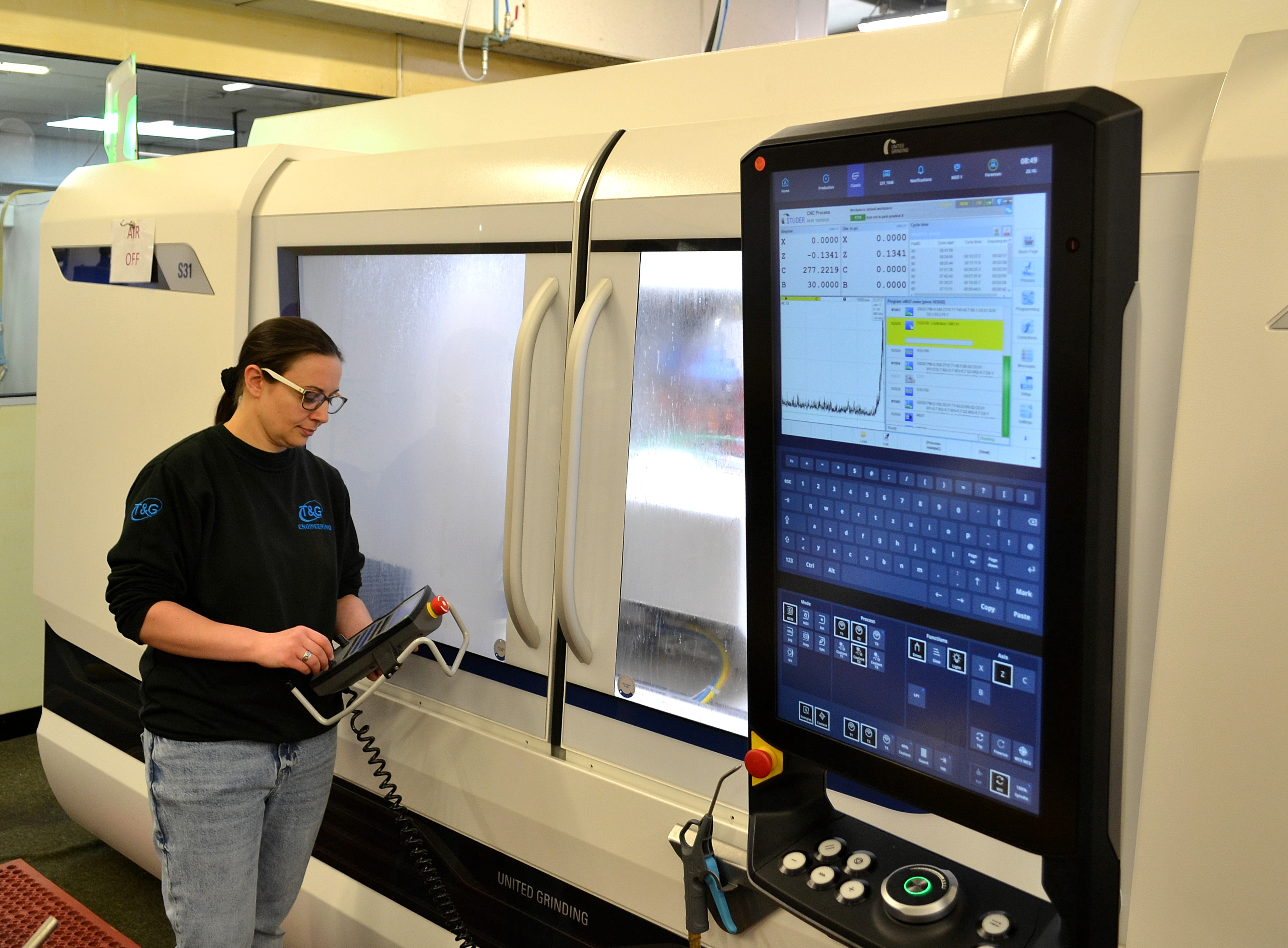
One such progressive company is Surrey-based T&G Engineering, which recently installed the UK’s first Studer S31 universal cylindrical grinding machine to feature the new United Grinding C.O.R.E. (Customer-Oriented REvolution) operating system.

T&G’s engineering director Tong Smyth says: “The Studer S31 universal cylindrical grinding machine was ordered because of the ever increasing amount of high-precision cylindrical grinding we need to perform. As we have done in the past, before our latest Studer purchase we liaised closely with Peter Harding, the managing director of Advanced Grinding Supplies, the exclusive Studer agent in the south of England and Wales. This co-operation ensured that we specified our new Studer machine to suit our exacting requirements.”

He adds: “In keeping with our policy of ordering machine tools featuring technology that will aid efficiency, our new Studer grinder uses United Grinding’s latest C.O.R.E. operating system. C.O.R.E. is now incorporated into our in-house digital communication and production systems, further improving our programming and grinding efficiency levels.”

Thanks to the uniform C.O.R.E. software architecture, exchanging data between United Grinding machines is now effortless. The integrated system’s universal machine technology interface (umati) can also communicate with third-party systems, while also providing access to United Grinding’s Digital Solutions products directly on the machine without requiring the installation of additional hardware.

The C.O.R.E. panel has a logical design and uses self-explanatory icons, allowing the operator to navigate through the machine’s menu and process steps intuitively.
For further information www.adgrind.co.uk

Insert grinding when five axes is not enough

Glendower Cutting Tools has purchased a Rollomatic 630 XW six-axis CNC tool grinding machine that is now busy boosting the company’s production of cutting tool inserts. The ethos at Leicester-based Glendower, which is very much a specialist insert manufacturer, is to have complete in-house control over all manufacturing processes, as evidenced by the arrival of the Rollomatic 630 XW.

Dave Chattaway, Glendower’s chief engineer, welcomes the ability to program all special insert geometry from his office, with the machine currently busy producing special inserts in small batches of 10s, 20s and 30s. However, with production rising to over 40,000 inserts per month, it will not be long before the Rollomatic’s automatic part loader is used on larger batches of 1000 inserts or more.

Chattaway states that the 6th axis on the Rollomatic allows him to create very special forms that are not possible on machines with fewer axes, thus facilitating ‘one-hit’ production in a single set up, which saves a lot of time and brings higher accuracy than is possible when grinding special forms on two or three separate machines. The ability to program quickly and then manufacture small batch work has shortened lead times across the shop floor.

The Rollomatic 630XW can grind many kinds of cutting tools with a more complex geometry whereby its additional 6th A-axis, which is said to be unique within the industry, provides improved accuracy on ball-nose end mills or corner radii with a possibility to incline the grinding wheels by up to 45°. This capability avoids collisions, allows for easier programming, and makes it possible to machine demanding and highly precise geometric forms in a single operation. The UK and Ireland agent for Rollomatic is Advanced Grinding Solutions.
For further information www.advancedgrindingsolutions.co.uk

Blast cabinet improves process speed and part finish

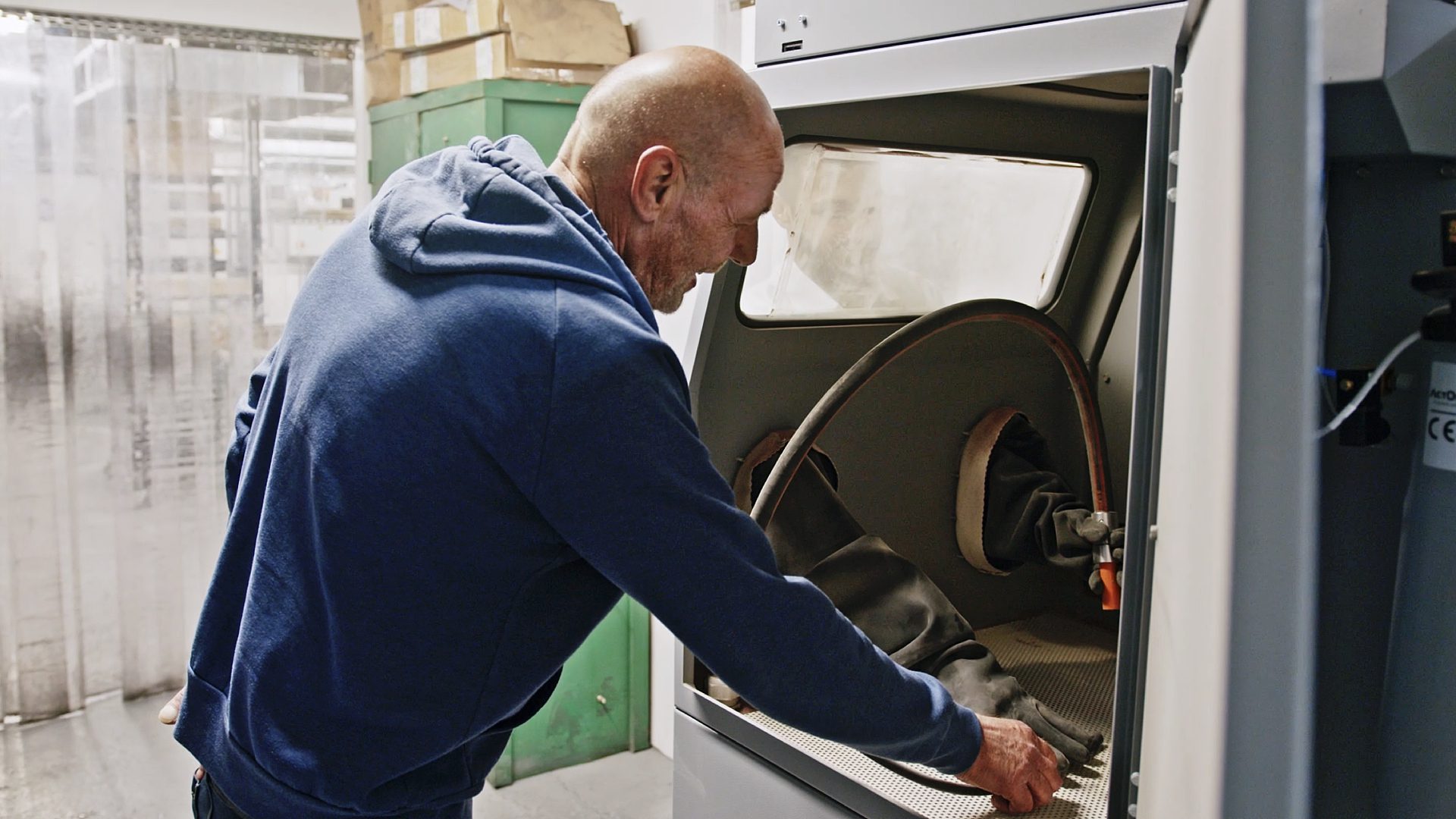
ActOn Finishing recently supplied a sand-blasting machine to Special EFX, a designer and manufacturer of bespoke awards and trophies for clients in UK and worldwide. To produce the matt, brushed, polished or a satin finishes, the company was using a sand blaster in-house. However Special EFX wanted to update its finishing equipment as it needed a blasting machine with a pressure fan that would provide more constant flow.

After contacting different suppliers on the market, the company decided to work with ActOn Finishing. Tony Darby, production manager at Stratford-upon-Avon based Special EFX, states: “ActOn’s customer service was very helpful, very friendly; they showed us around their facility in Coventry and that’s where we made the decision to invest with them. We had spoken to other suppliers as well, but ActOn seemed like people we wanted to work with.”

Further to carrying out trials, ActOn decided that the best option to achieve a matt sand-blasted finish prior to anodising was the ECO MP pressure-blast cabinet. This sand-blasting machine is a compact system built to achieve a rapid and efficient finish. Moreover, ActOn says that ECO blasting systems allow users to minimise their investment while enjoying the benefits of a good-quality blasting solution.

The speed at which Special EFX can now blast its parts has increased, while component finish has improved and the results are repeatable.

“The aftercare was also very good,” states Darby. “Any problems we had, they are at the other end of the phone. I would recommend ActOn due to the professionalism of their team, the quality of the cabinets they provide, and for the friendliness and helpfulness they provide during the purchase process.”
For further information www.acton-finishing.co.uk

Nagel and Gehring: moving forward together

Nagel and Gehring presented their technologies and new products in the fields of honing, superfinishing and electromobility at AMB 2022 in Stuttgart last month.

New standards in efficient honing, maximum flexibility in the superfinishing of flat, concave and spherical surfaces, and efficient internal and external honing of workpieces: this is how machine builders Nagel and Gehring presented themselves at the exhibition. On the joint stand of the two companies everything revolved around the EcoHone HRX horizontal honing machine, the NaSphere and the deephone 3000.

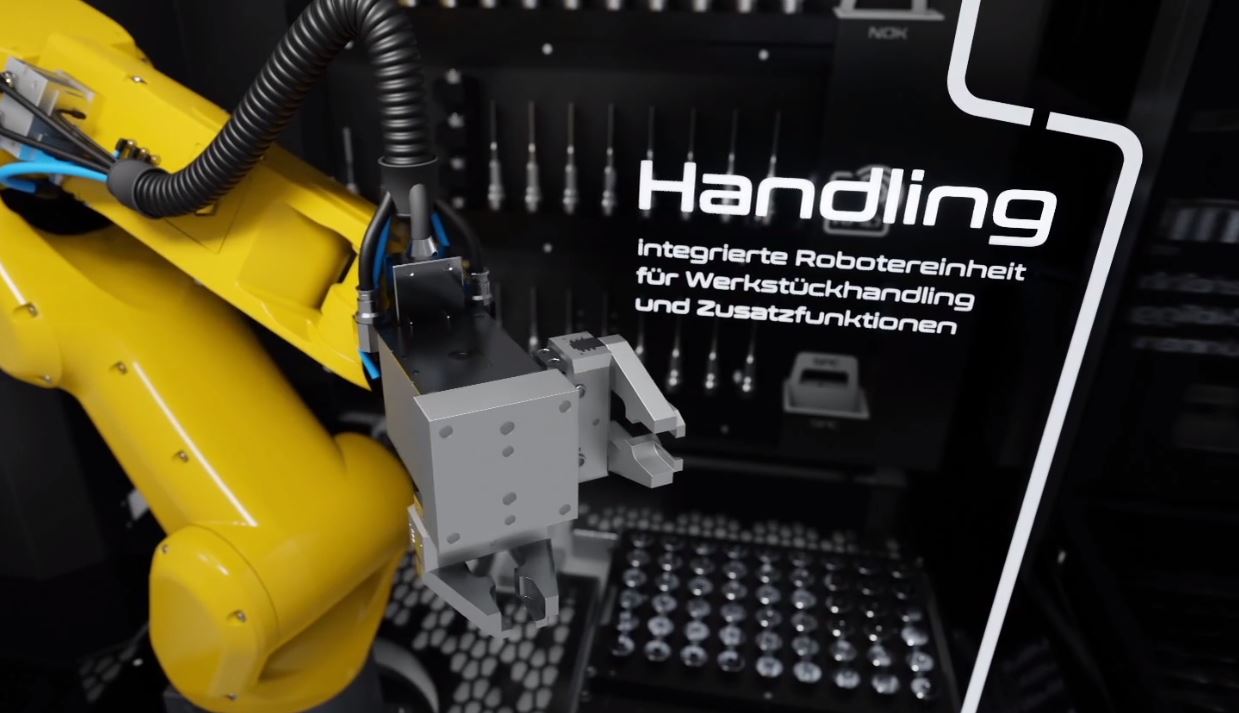
With the EcoHone HRX, Nagel says it is setting standards in terms of efficient honing in the diameter range from 2 to 40 mm. It is even possible to undertake multi-stage honing processes fully automatically on the machine’s high-end honing spindle. Measuring, brushing, cleaning, tool change in case of wear, or even a change from pre- to finishing honing tool: the integrated robot unit handles all of these functions. An innovative and flexible fixture and clamping jaw concept, adaptable to any workpiece geometry, enables working with a wide range of workpieces.

The NaSphere can machine flat, concave and spherical surfaces and bores, on multiple vertical or horizontal modular workstations. For standard tasks, it offers tool speeds of up to 12,000 rpm. The machine achieves maximum flexibility thanks to optimally co-ordinated process combinations of external and internal grinding, superfinishing, honing, brushing and polishing.

Gehring says that its deephone series of horizontal honing machines combines optimal performance with a well-balanced, compact design. The deephone 3000 stands for efficient internal and external honing of precision or telescopic cylinders and similar workpieces. Depending on the series, the honing diameter is up to 1150 mm, while the workpiece outside diameter is 65 to 1200 mm.
For further information www.nagel.com www.gehring-group.com