

New integrated CADCAM bending software

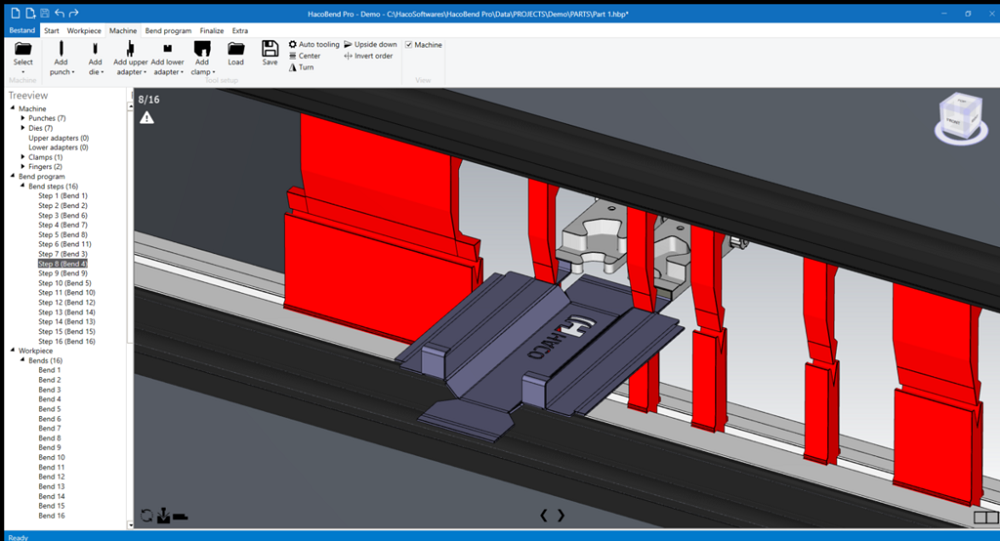
Hacois introducing new bending software, HacoBend Pro,which includes both an in-house developed CAD module and CAM software. With the CAD software, users can draw 3D parts for bending or import and modify external files (STEP/IGS) smoothly and accurately. The CAM module automatically generates a bending program and a correct unfolding of the workpiece.

HacoBend Pro is a software package for the offline programming of press brakes. Through a highly visual easy-to-use interface, Haco says that users can create efficient bending programs in a simple and fast way, allowing operation of the machine in a more optimal way. A smart and fast bend sequence calculation with automatically generated back-gauge positions and an optimised tool set-up contribute to faster machine set-up and cycle times.
In addition, a correct unfolding of the sheet takes into account the type of material and tool selection.

With the integrated CAD module, it is possible to create technically correct bent 3D parts, taking into account the correct bending radii and the required corner cut-outs. Thanks to HacoBend Pro, the company says that users can enjoy greatly reduced programming times, minimised set-up times and right-first-time components.

New features in the HacoBend Pro include: an easy-to-use interface; bend sequence determination with automatic back-gauge calculation; optimised tool set-up; suitability for special bends such as Z bends; dynamic simulation; a user-friendly CAD module for both 2D and 3D design; and correct unfolding in DXF.

Throughout the entire process, the operator/setter receives assistance in selecting tooling, calculating an optimal bending sequence and positioning the back-gauge.
For further information www.kingsland.com
Two new tube benders for Meyer Werft

Around 400 km of tube, 52,000 individual pieces, are installed in a single cruise ship: this is the sheer quantity that the Meyer Werft tube centre manufactures for every ship that Meyer Werft in Papenburg launches. Here, the German shipbuilder is once again relying on two new machines from Schwarze-Robitec. The machines ensure fast, safe and high-quality processing of tubes of various dimensions due to the use of multi-stack tooling, which eliminates a major part of the time-consuming tool-change process.

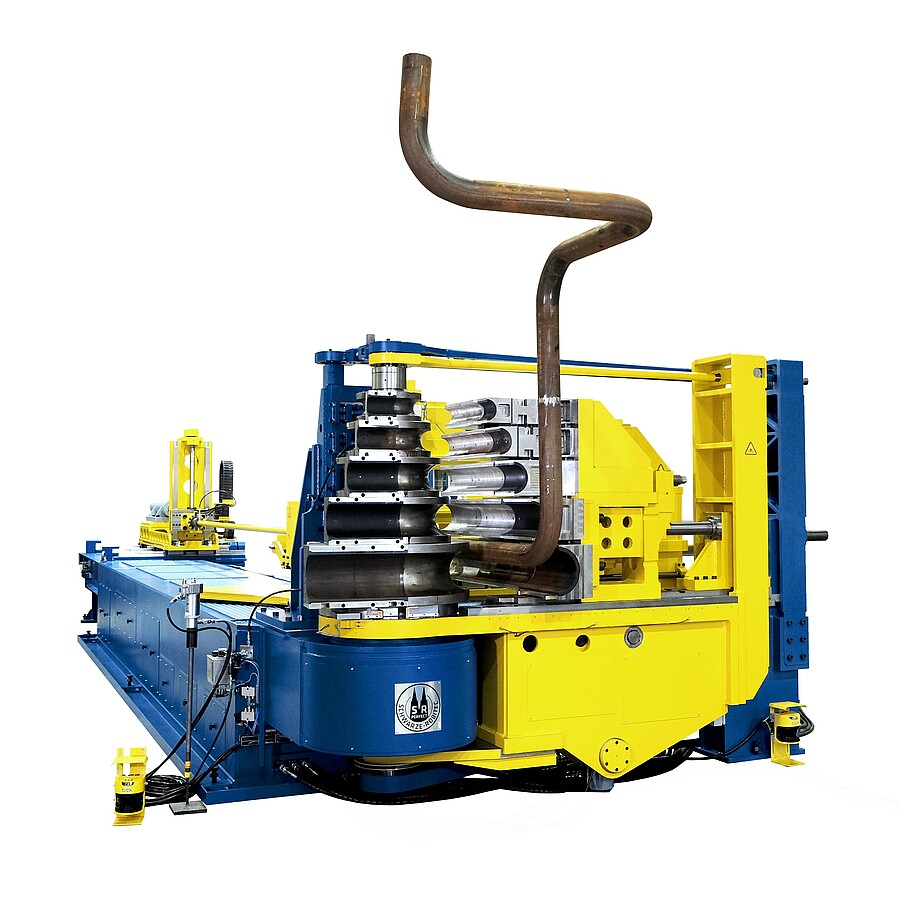
For more than 17 years, the Papenburg shipbuilder has relied on the tube bending machines from Schwarze-Robitec. Now, the tube bending expert has put two new machines into operation at Meyer Werft: a CNC 100 HD MW bends steel and stainless steel tubes with diameters ranging from 42.2 to 88.9 mm, while a CNC 220 HD MW handles the 114 to 219 mm range.

Both machines are equipped with a so-called five-stack tool tower in the respective diameter range, which allows the majority of the tools to remain set up simultaneously thanks to the multi-level tool design. It is thus possible to bend tubes of different diameters and wall thicknesses without changing tools.

Components such as the pressure die and clamping jaws, as well as the massive bending former, are very large and heavy for the tubes required by the shipbuilding industry. Changing by crane costs time and energy and involves quality risks for the bending outcome, as the tool needs re-adjustment each time. Only the bending mandrel and the collet inserts in the index head require changing by Meyer Werft for a different tube size. The company therefore benefits from enormous setup time savings and a steady, consistently high-quality bending result.
For further information www.schwarze-robitec.com

Mid-range press brake has auto tool-change

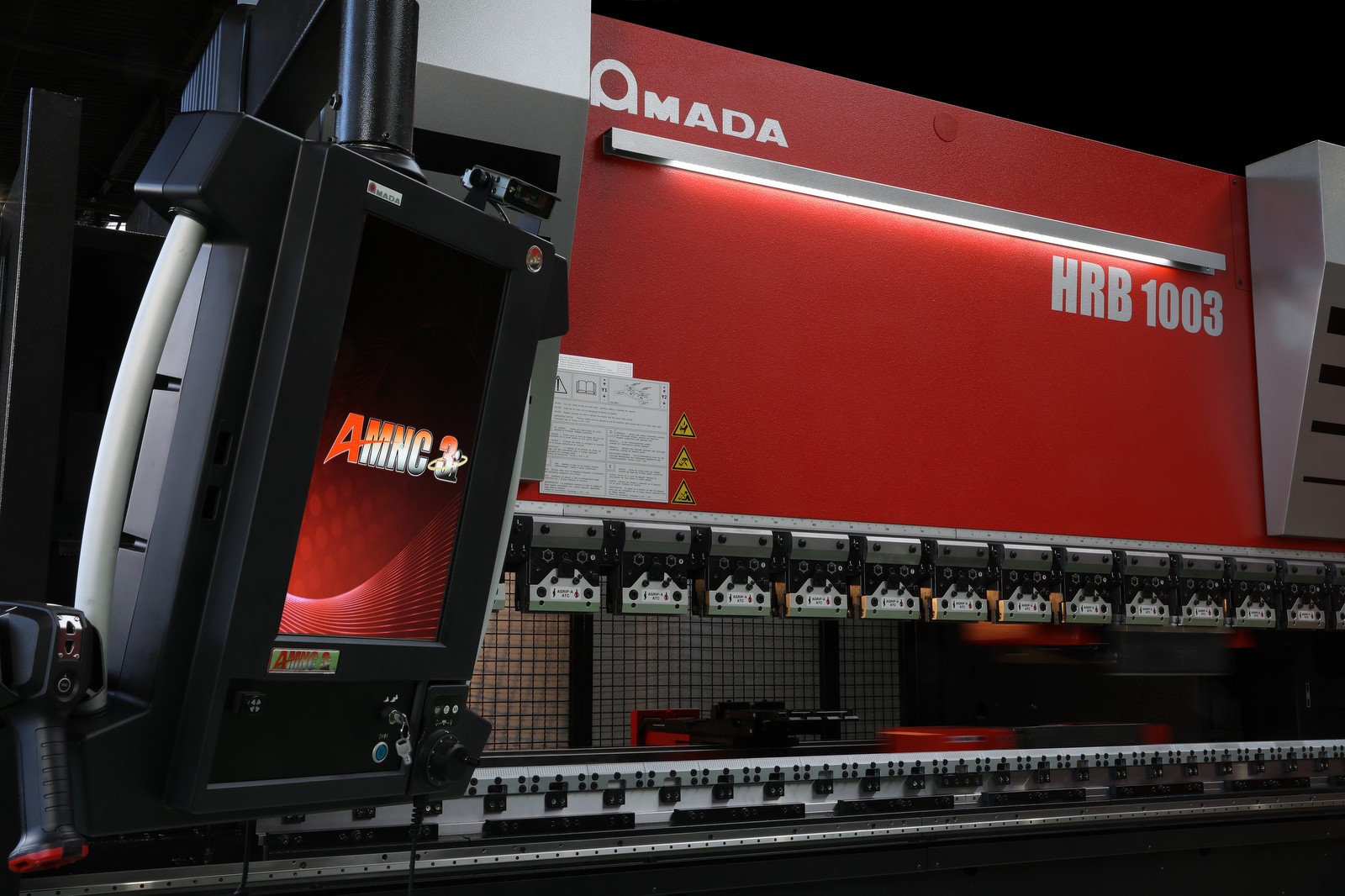
Following the success of Amada’s ATC press brakes, with more than 1000 units installed globally, Amada has expanded its proprietary ATC technology to its mid-range line-up for the first time. Previously only available on high-end press brakes such as the Amada HG-ATC and its predecessor the HD-ATC, the new Amada HRB-ATC mid-range model features a full size ATC, offering exactly the same number of tool storage racks as the company’s HG-ATC.

The new machine comes with a package of Amada tools based on an assessment of the customer’s manufacturing requirements. Importantly, the HRB-ATC is completely compatible with Amada AFH/Promecam standard tool sets. As a result, any existing customer using these tools can load them manually to the new machine if desired.

A CNC press brake with ATC capability brings many advantages to companies that want to increase the amount of time their machine is engaged in actual bending activities. The ATC can reduce set-up times by up to 80% in comparison with an operator loading a tool manually, which is a clear benefit for subcontractors or companies that undertake several tool layout changes a day. Additionally, while the ATC is functioning, the operator can simultaneously complete other tasks, increasing overall efficiency.

The presence of the ATC and its rapid set-up potential makes the new press brake particularly ideal for those processing small batch sizes. Subcontract fabricators serving markets such as refrigeration, kitchen equipment, retail display, furniture and construction, for instance, will certainly benefit, reports Amada.

Customer advantages also arrive from the reverse punch system. Amada says that its ATC is the only solution on the market that can reverse tools automatically.
For further information www.amada.eu

New solutions on show from SafanDarley

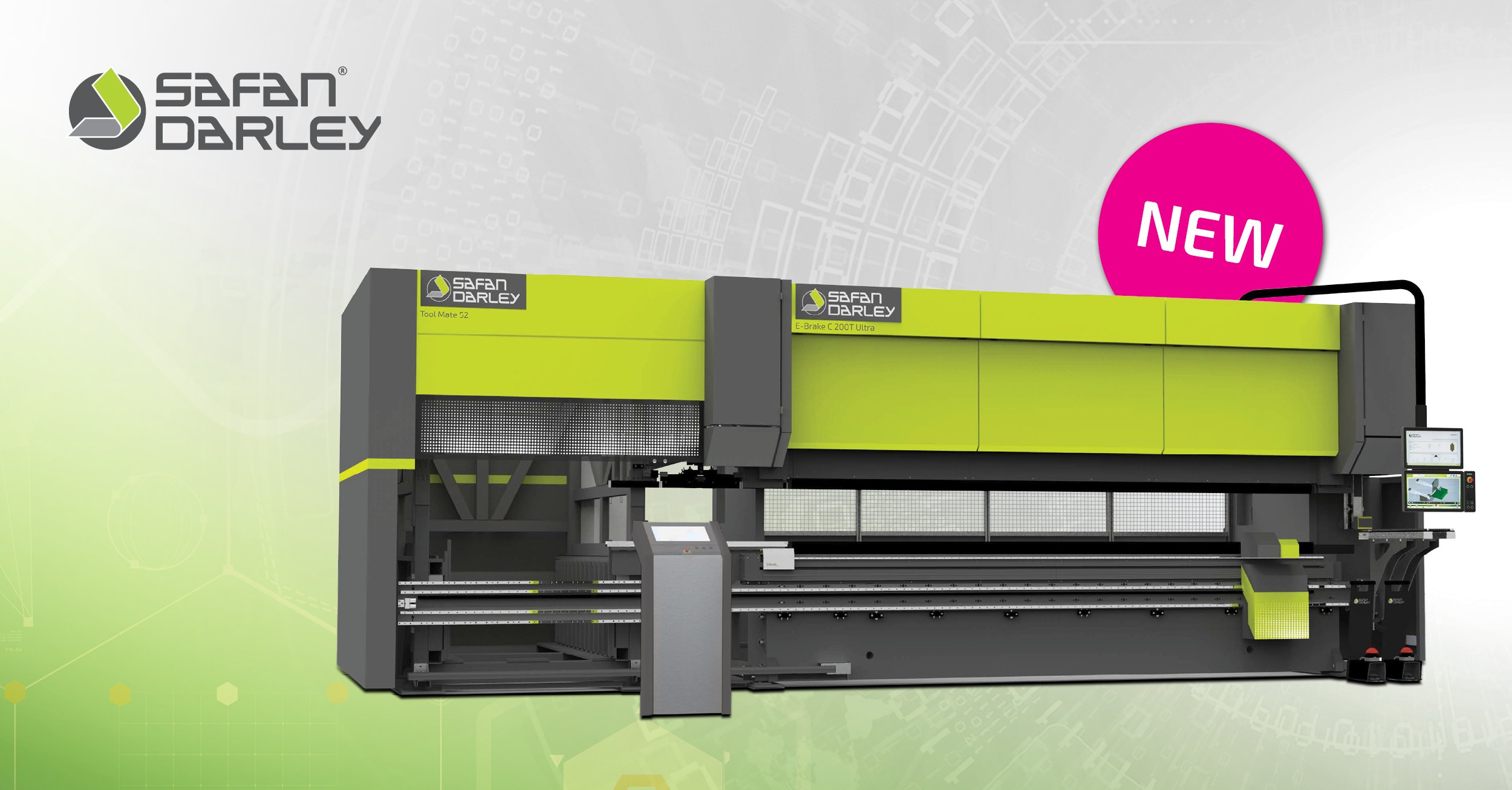
SafanDarley presented a wide range of innovative solutions at the Lamiera 2022 exhibition in Italy earlier this year. Besides press brake innovations, such as the E-Brake C 200T with Tool Mate, SafanDarley also focused on the latest developments in offline bending software.

SafanDarley has added the E-Brake C 200T Ultra with Tool Mate to its press brake range. The Tool Mate is an external automatic tool changer and offers time savings when producing small batches. Notably, the servo-electric E-Brake C with 200 tonne pressing force and a bending length of 4300 mm features a C-frame, to enable automatic tool changing. The Tool Mate is very intuitive; the execution of the tool changes is via the SafanDarley E-Control. Correct tool settings can be loaded and used directly on the machine from AutoPOL offline software (or other independent offline bending simulation software).

The high-precision changer ensures the placing of tools in the correct position. Due to the intelligent software, only necessary changes are made and tools from the previous tool set-up are reused, achieving considerably shorter changeover times. The tool storage magazine has a capacity of 32, 52 or 60 m of tools.

SafanDarley also showcased a new Hybrid-series press brake, the H-Brake Hybrid+ 230T Ultra. The Hybrid+ range is an expansion of the company’s existing Hybrid series and offers higher tonnages with additional benefits. At its core, there is an advanced dual hybrid drive with high return speed, high productivity and low energy consumption. One of the most significant benefits of this system is the dramatic reduction in power consumption, says SafanDarley.

The H-Brake 230T+ was equipped with E-Bend L blue angle measurement system, which uses two blue laser sensors one each side of the table.
For further information www.safandarley.com

Press brake productivity features and options

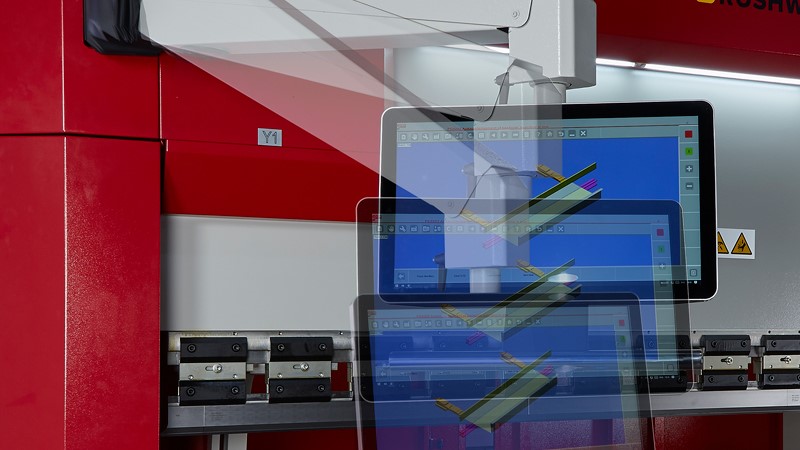
When specifying a press brake there are a number of features and options to consider that make the machine easier to use and more productive. According to Morgan Rushworth, these include: height-adjustable control panel arm; AKAS laser tooling guards; CNC sheet follower support arms; and hydraulic tool clamping.

All press brake operators are not born equal. For those tired of stooping down or standing on a pallet to use the press brake control, the ergonomic height-adjustable control arm from Morgan Rushworth could be the answer. This is available as an option on all press brakes although is also fitted as standard on several models.

The AKAS laser tooling guards offer a vastly improved user experience when compared with traditional light guards. As the AKAS system guards the top tool only, rather than the whole working area, the operator can hold the workpiece during the beam’s rapid descent stage rather than having to wait until reaching the mute position. This capability allows the easy positioning of smaller components against the back gauge, without compromising safety.

When working with light gauge material, larger parts will tend to fold down under their own weight, making handling more difficult. While it is possible to slow the bending and ram return speeds to make this operation easier, another option is to specify a CNC-powered sheet follower support arm. As the name implies the support arm will lift up and down during bending ensuring continual support for the part.

For workshops where a lot of tool changes are required, hydraulic tool clamping can greatly increase efficiency. Available for either top and bottom tools – or both – and with different clamp designs, hydraulic tool clamping will make frequent tool changes a quick and simple task.
For further information www.morganrushworth.com