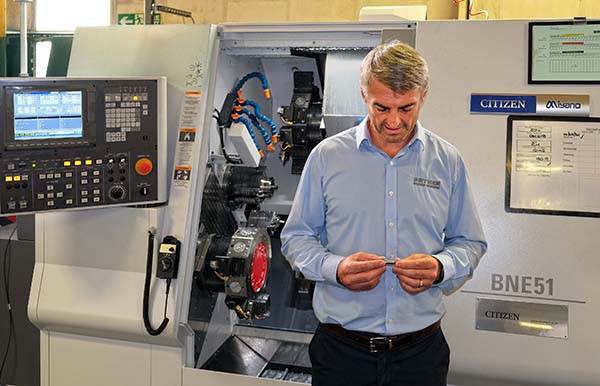
Towards the tail end of last year, Merseyside subcontractor Bryken took delivery of its sixth Miyano BNE-51MSY turn-mill centre, having bought its first as recently as June 2018. Operations director Phillip Taylor says that regular investment in new plant is key to thriving in a competitive global marketplace, and he makes sure that no machine tool stays on the shop floor for more than 10 years. The company, which has 95 employees and generates annual turnover of £10m, derives 40% of its business from the oil and gas industry, and is a major supplier to the high-voltage power sector, among others.
Citizen Machinery UK, which supplied the fixed-head Miyanos, is also the source of four Cincom CNC sliding-head lathes currently on site, which have been in use at the Prescot factory since the mid-90s. A dozen older models, which took over from six times as many cam autos, have all now been replaced. It leaves three 32 mm capacity Cincom sliders installed since 2014 and a more recent 20 mm capacity model that uses Citizen’s proprietary LFV chip-breaking technology.
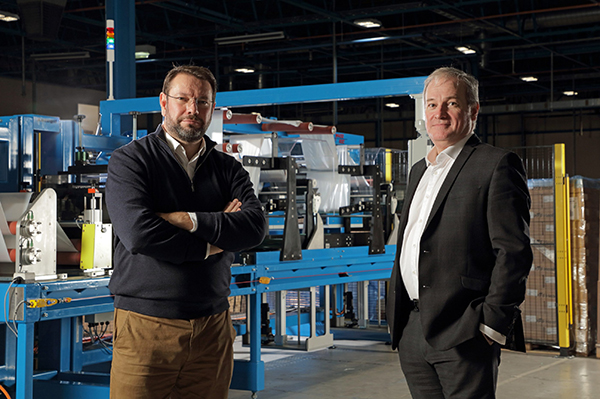
Taylor, son of one of the company founders, runs the subcontracting business together with his brother Stewart and sister Natalie Lund. He explains: “Around 90% of our turnover comes from producing precision turned parts, many of which also require a lot of prismatic machining, so our choice of turn-mill centre is crucial to success.
“We started to upgrade our fixed-head lathes by replacing them with Miyanos in 2018 in response to an upturn in demand that gathered pace at the beginning of this year when we bought three more BNE-51MSYs in the space of two months,” continues Taylor. “The 51 mm bar capacity, twin-spindle turning centre with its two 12-station live turrets, the upper one featuring a Y-axis, is ideal for our needs. It is highly efficient at the balanced machining of complex routines at both spindles, so we can take chunks out of cycle times, which are now between 20 and 40% faster than on previous lathes. The machine meets the increasing demand for the supply of high added value parts at competitive prices.”

He adds that other makes of lathe were scrutinised during the plant renewal process. In comparative trials, the BNE-51MSY offered the quickest TAKT times and was also better value for money than others he considered. The lathes could also hold 20 µm total tolerance on machined dimensions.
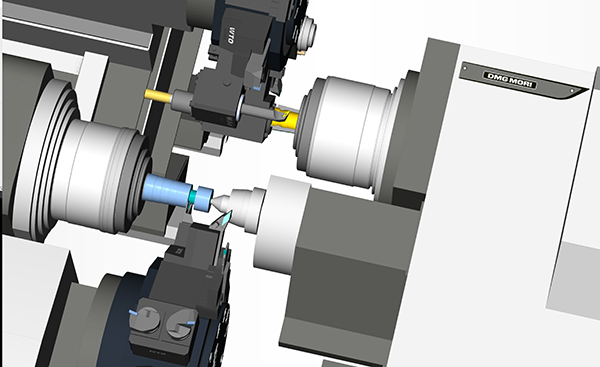
One reason for the lathe’s impressive speed is Citizen’s superimposition control technology, which allows the sub-spindle to track the upper turret for cutting reverse-end features while the same turret is performing front-end operations on bar at the main spindle. If the lower turret is operational at the same time, three tools are in cut simultaneously, delivering the performance of a triple-turret lathe for significantly lower capital outlay.
Another benefit that Bryken operators appreciate is the ability with the Mitsubishi control to use the hand-wheel to run through an entire machining cycle. This capability provides verification of the program, detecting any potential clashes.
Over the years, market forces have dictated a move at Bryken towards more fixed-head turning for the production of larger diameter, complex components; the simpler work having largely disappeared overseas. Nevertheless, nearly a third of the lathes on-site are still of the sliding-head variety. The four Citizen Cincom models are the most recently installed – three M32-VIII lathes and an L20-XIILFV – the cardinal numbers representing maximum bar diameter.

The latter machine, installed in May 2018, was bought to produce subsea oil and gas components from tough materials such as Monel, Inconel, titanium alloy and 440C stainless steel. These metals produce stringy swarf that benefit greatly from the low-frequency vibration (LFV) functionality built into the operating system of the Mitsubishi control.
Taylor says: “We saw a demonstration of LFV at Citizen’s showroom and were impressed with the way chips break up and do not clog the machine, or wrap around the component or tool. It means we can leave the machine running unattended for long periods. LFV can be simply switched on and off using a G-code in the program. We use it for turning at the main spindle and axial drilling at the sub-spindle of the L20, and switch it off to maximise metal-removal rates when milling with the live tools.

“We tried making parts from these exotic materials on other sliders but the swarf was not chipping, even with high-pressure coolant,” he adds. “Tool life was so poor it was taking away a lot of the profit. Now cutters last at least twice as long, plus there is less machine downtime and scrap is more or less eliminated.”
Low-frequency vibration technology has started rolling out across the Miyano fixed-head lathe range with the introduction of the BNA-42GTYLFV, and Taylor is keeping a close eye on developments. He points out that subcontractors rarely know the orders that will be coming in next and which materials they will have to machine. As LFV is not a pecking macro that tends to prematurely wear out tools, but is integral within the control system, having this built-in chip-breaking capability is of great benefit when machining stainless steels, copper, plastics, and nickel and titanium alloys.
Taylor concludes: “We source a lot of lathes from Citizen because they have a wide range of machines that use advanced technology. We also receive good support, especially with the applications engineering and training they provide. Citizen and their equipment have made a big improvement to our operational efficiency.”
For further information
www.citizenmachinery.co.uk