

Protolabs introduces flexible lead times

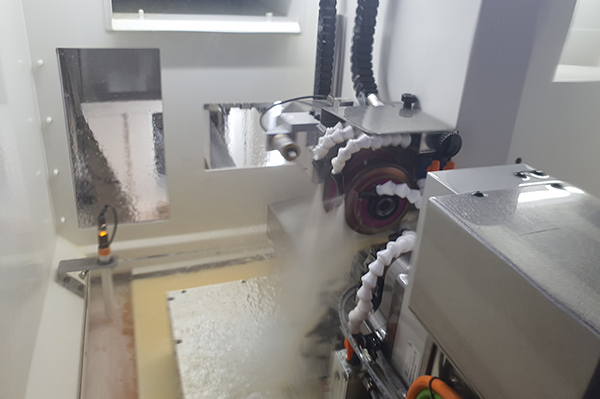
Protolabs is looking to boost supply chain capacity in the UK and help customers manage costs with the launch of a new flexible lead-time option for CNC machining services. The service will give clients in the aerospace, automotive, electronics, medical and prototyping markets the opportunity to choose a manufacturing solution for the shipping of parts from 6 to 12 days when placing an order on its e-commerce platform. Protolabs’ latest introduction is in addition to its standard delivery of just 3 days, and as little as 1 day for expedited projects.

David Ewing, product manager for Protolabs’ CNC machining service, says: “We are known in the market for the rapid delivery of prototypes and finished parts. However, not every order requires an ultra-fast response, so our new CNC flexible lead-time option allows customers using our e-commerce platform to upload their CAD files and see how changing the delivery date alters the price.”

For further information
www.protolabs.co.uk

UK wind tower production

GRI Renewable Industries, a Spanish manufacturer of wind towers and industrial wind components for OEMs and developers in the wind energy market, will supply 100 offshore towers a year (equivalent to 100,000 tons of steel) from a new factory at the Able Marine Energy Park (AMEP) in Lincolnshire. The Spanish wind tower manufacturer signed a memorandum of understanding with Able UK to build up the factory for manufacturing and supplying wind towers at AMEP. In total, the investment will reach around €100m and create over 300 direct jobs.

For further information
www.gri.com.es

Single-source surface finishing solutions

The services offered by Murr-based B+S Metallbearbeitung GmbH include operations like deburring, polishing, shot blasting, part cleaning and packaging. B+S handles a broad range of workpieces with different shapes, made from different materials, requiring different finishes and coming from all kinds of industries. To ensure ongoing quality and on-time deliveries in a cost-effective manner, this progressive service company utilises modern equipment and consumables from Rösler.

Mustafa Sahin general manager explains why he selected Rösler machines: “I was impressed by the broad equipment range and the engineering of the high-performance machines, which can be utilised for all kinds of finishing tasks. Another important consideration was that Rösler produces all of its mass finishing consumables in-house. This means that equipment, media and compound can be perfectly adapted to our requirements and that I can resort anytime to the experience and know-how of the Rösler test lab.”

In 2008, Sahin decided to purchase a Rösler R425/6600 DA linear, continuous-flow mass-finishing vibratory tub. In subsequent years, the company purchased two additional continuous flow machines, 14 rotary vibrators and three centrifugal disk finishing machines, all from Rösler.

Again in 2008, the entrepreneur invested in a Rösler shot-blast machine to expand his service package. Through continuous expansion of its shot-blasting job shop services, B+S Metallbearbeitung has since purchased six additional shot-blast machines from Rösler.

“Generally, shot-blast equipment is subject to significant wear, so we sell our machines after 3 to 5 years, which allows us to remain up-to-date and offer our customers the best possible results at competitive prices,” says Sahin, who also takes advantage of Rösler workpiece cleaning solutions.

For further information
www.rosler.com

New digital tools for shot blasting

Wheelabrator has launched new digital tools to help customers reduce cost around three key areas of the blast process: abrasive consumption, energy use, and maintenance and downtime. The tools were built using Norican’s Monitizer software and NoriGate hardware, both already proven on equipment at sister companies DISA and StrikoWestofen, and are available for many existing and all new Wheelabrator machines.

Heinrich Dropmann, senior VP – global wheel at Wheelabrator, says: “Digital technologies allow us to make the blast process more transparent than ever before and optimise it accordingly. We’ve been working with a select group of pilot customers to identify the applications that would make the biggest difference to their productivity and profitability, and quickly zeroed in on these three. The digital tools we’ve developed enable customers to pinpoint the parameters that drive abrasive consumption, energy use and wear in their specific operational setting – and then do something about it. They can very quickly get a much better handle on their blasting cost, without impacting the volume or quality of their outputs.”

The three tools can be deployed as stand-alone solutions or plugged into a wider Industry 4.0 system – be it from Norican, customer-built or from another supplier. The NoriGate data gateway extracts data from each machine – from the control system and from sensors – while the Monitizer software collects, visualises and analyses it in customisable dashboards.

“This is not about collecting data for the sake of it,” states Dropmann. “As experts on the blast process, we can select the right data points to track, so we can combine them meaningfully and in a way that gives us insights into what’s running at optimum and what isn’t. It gives customers the data they need to continuously improve the process and save some money along the way.”

For further information
www.wheelabratorgroup.com

MSC pumps out huge savings for Sulzer

Sulzer, a fluid engineering technology specialist that manufactures pumping, agitation, mixing, separation and application technologies, has committed to a three-year contract with MSC Industrial Supply Co (MSC). The company originally switched to MSC during the pandemic and, within weeks of signing the contract, MSC had identified hundreds of thousands of pounds of potential savings.

For instance, with six-figure savings already identified on both rough-turned Inconel and Super Duplex shafts at Sulzer’s Leeds facility, MSC turned its attention to the remaining +0.3 to +0.5 mm of stock left on the shafts for finish grinding; a process conducted on an 8 tonne Churchill BX cylindrical grinding centre.

The first step was to introduce Tyrolit, so MSC could apply grinding wheels better suited to Inconel and Duplex. The Tyrolit grinding wheel technology runs at identical parameters to the previous wheel, but is 30% less expensive and allowed Sulzer to double the depth of grind from the existing 0.05 mm, to 0.1 mm on plunge-only diameters – saving a huge 119 minutes per shaft by reducing the grinding cycle time by 7%.

In addition, when grinding various shafts from 2 to 4 m long, each of the 23 journal diameters on the shaft previously underwent three rough-grind dressing cycles, followed by a final finish-grind dressing cycle. In total, Sulzer was incurring 114 minutes of non-grinding time during the full process for all 23 journal diameters.

The solution was to design a dressing station that could position no more than 700 mm from the grinding wheel to reduce this non-productive time. As a result, non-grinding time from the wheel dressing cycle is now just 58 minutes per shaft.

For further information
www.mscdirect.co.uk