

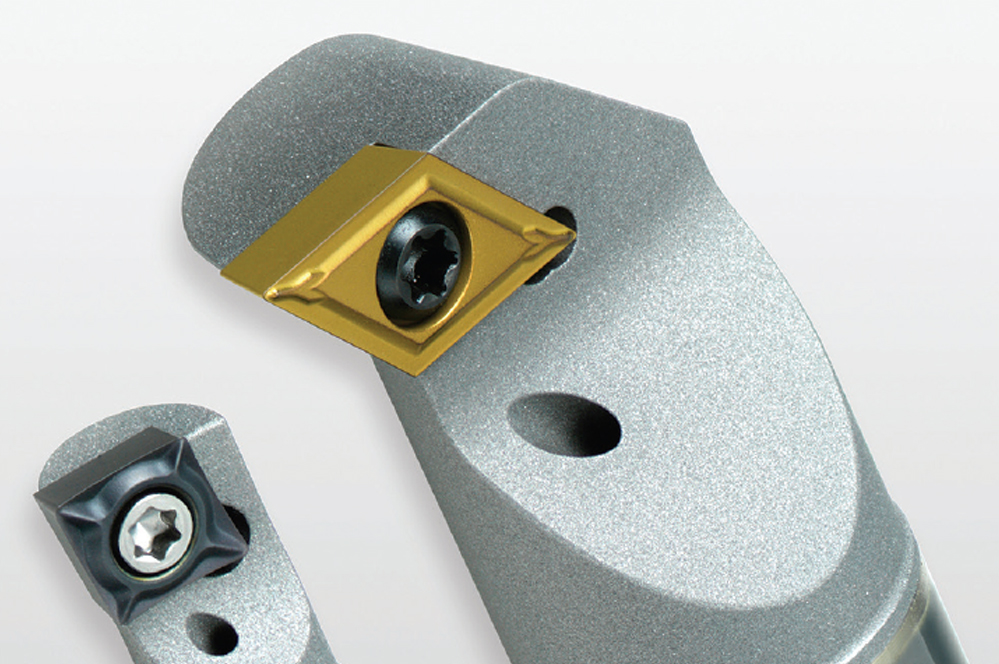
25 years of Starrag Sprint Z3

Machine tool builder Starrag is looking back on a special engineering anniversary: 25 years of Sprint Z3. The inconspicuous machining head of the EcoSpeed series was officially presented for the first time in 2000. What began as a solution for a military aircraft soon became a key module in modern aircraft production.

The Sprint Z3 parallel kinematic machining head has proven to be a real drawcard and, despite its compact design, is always a talking point.Even after 25 years, Starrag says the technology behind it still amazes. The drive head contains a highly dynamic, three-axis kinematic system which, unlike conventional fork heads, swivels via articulated kinematics to enable rapid yet precise tool movements. More information www.starrag.com

Success for Hurco Demo Deals Day

Strong customer engagement and sales were reported at Hurco Europe’s annual Demo Deals Day, which took place last month at the company’s High Wycombe showroom and technical centre. In total, 39 visitors representing 22 companies attended the event,all looking to take advantage of ex-demonstration and used machines at discounts of up to 20% (on selected models).

Demand was strong in the lead-up to the event, with several machines sold or reserved with deposits before the doors even opened. Among the most sought-after models that sold quickly were the five-axis VMX42UDi and VMX30Ui, the latter fitted with a ProCobot Profeeder-X five-drawer system. The popular VM10i and VM30i machining centres also attracted significant attention and were swiftly reserved, reports Hurco.

More information www.hurco.com

Big Turnout at Mills CNC Tech Show

Machine tool supplier Mills CNC reports that ‘The One Show,’ the company’s recent one-hit machining technology event at its campus facility in Leamington, was a roaring success. Over 180 visitors attended the event, where two new machine tools from DN Solutions made their UK debuts:the DVF 5000 Mk II simultaneous five-axis machining centre and the entry-level DNX 2100SB multi-axis mill-turn machine.

CEO Tony Dale says: “We wanted to do something different and host an event relevant to the future productivity and process efficiency needs of component manufacturers.As a result, we focused the whole event around one-hit machining, and it definitely paid off.A number of enquiries for the new DNX 2100SB and DVF 5000 Mk II are being actively followed up as we speak.”

More information www.millscnc.co.uk

Free-of-chargework-holding seminars available

According to 1st Machine Tool Accessories, workholding may not always be the most glamorous part of machining, but it is one of the most important. For engineers, a strong understanding of work-holding principles is essential asit directly influences product quality, efficiency, safety and overall manufacturing costs.

At its core, workholding ensures that a workpiece is positioned securely and accurately during machining. This stability not only guarantees precision but also enables engineers to optimise operations, reduce waste and design parts that are manufacturable at scale.

Several key reasons exist whyevery engineer should understand workholding.Optimised workholding set-ups not only prevent workpiece movement, ensuring finished parts meet exact tolerances, they can also minimise defects, rework and wasted material, directly reducing manufacturing expenses.

Of course, production efficiency also sees an increase, where quick changeovers and standardised set-ups keep machines producing for longer. Here, the ability to select the optimal device – jig, fixture, vice or chuck – for specific part geometries and production volumes, is paramount. By understanding workholding, engineers can design parts that are easier to hold and machine, even when complex.

Safety is another critical factor. Properly held workpieces prevent dangerous accidents resulting from components that shift from the held position.

1st MTA believes knowledge of workholding is essential to developing skilled, confident engineers. That is why the company is offering free-of-charge work-holding seminars to educational establishments and training centres.These sessions cover best practice, principles and hands-on demonstrations of the latest equipment, helping to bridge the gap between theory and real-world application.

More information www.1mta.com

UK METALS INDUSTRY BECOMES THE EU CIRCULATORY MOVEMENT’S FIRSTOFFICIAL FOCUS

With the EU’s Ecodesign for Sustainable Products Regulation (ESPR) having entered into
force last year – a movement setting the standards for product circularity and sustainability
in the EU marketplace – many in the metal sector have not yet felt a sense of urgency to
begin their compliance journeys. However, with the EU recently revealing its Energy
Labelling Working Plan 2025-30, the industry needs to now prioritise regulation-readiness
more than ever before. In this article, Matthew Ekholm, DPP and Circularity Specialist at
Protokol, provides the inside track.
In simple terms, this new plan, published by the EU, highlights how iron and steel are among
the first industrial materials for ESPR action. It goes on to highlight how the delegated act
(information concerning the detailed breakdown of regulatory requirements for the
industry) is also just around the corner – expected in 2026.
The EU’s focus on the metals industry and looming ESPR deadlines is perhaps unsurprising
when considering that the industry is responsible for 5% of CO₂ emissions in the EU and 7%
globally.
With the EU’s 2050 climate neutrality target remaining a key driver behind the
Commission’s Circular Economy Action Plan (CEAP) – the framework upholding the ESPR –
the EU aims to reduce pressure on natural resources, prevent the production of waste and
toxic materials and ensure sustainable materials remain the key source circulating in the
marketplace.
The ESPR adds another layer of complexity to this, as it defines the standards and criteria for
the environmental performance of products sold within the EU, and is soon to mandate
Digital Product Passports (DPPs) to ensure products circulating in the specified sectors meet
the required sustainable criteria. The ESPR sets out a range of requirements concerning the
handling and composition of products. These include product durability, reusability,
upgradeability and reparability, as well as data on carbon footprints and recycled content.
All requirements which will be verifiable via DPPs and are set to impact any business placing
ESPR-regulated products in the marketplace.
As a key part of the ESPR, DPPs are fast-becoming a central force in ensuring a circular
economy prevails, as they will remain applicable across product groups, including (but not
limited to) the steel sector.

For the metals industry, the delegated acts, which are soon to be announced, will provide
companies with the detailed requirements they need to ensure the DPP mandate is met and
their products satisfy the sustainability criteria coherently. As the EU Commission plays a
central role in influencing the circular future of the European steel industry, DPPs will
support firms in their compliance with the ESPR.
DPPs, through inherent design, act as a lynchpin for circularity efforts by facilitating
information sharing that is vital to all in the value chain in terms of the sustainability
credentials of a product. They act as a digital record of a physical product, securely keeping
track of information about it from across its lifecycle, including data about its sustainability
credentials, such as the carbon footprint of its production and more.
With their built-in transparency, DPPs allow iron and steel manufacturers to reduce red tape
and streamline their path to EU compliance.
The UK steel industry has held a longstanding relationship with the EU, particularly as a key
target for UK steel exports. Simply, if they do not meet the ESPR requirements,
manufacturers risk being cut off from the market. This issue is particularly important when
noting the already highly competitive nature of the industry, and the need for modern steel
manufacturers to remain ‘up to date’ and timely if they want to remain relevant in this
competitive global marketplace.
Similarly, Brexit has largely affected the metals industry, with the sector facing various
challenges with the country’s departure from the EU. As the loss of EU-funded research and
development programmes has affected innovation, competitiveness and increased
administrative burdens, compliance with the EU’s ESPR can help ‘soften the blow’ for steel
manufacturers by ensuring firms remain ‘competitive’ from a sustainability perspective.
By strategically embracing DPPs, metals manufacturers can streamline compliance across
multiple regulatory fronts. Not only does this help satisfy ESPR requirements, but it also
supports alignment with the EU’s broader push for product circularity and decarbonisation –
a clear win-win.
With both the EU and UK governments deciding in May 2025 to link the two regions’
Emissions Trading Schemes (ETS), steel businesses across the EU marketplace are now
exempt from the Carbon Border Adjustment Mechanism (CBAM) costs and administrative
burdens. Without this linkage or the improved market access in place, UK producers faced
the prospect of increased trade friction with the EU.
Aligning with the EU’s ESPR is not just a matter of regulatory compliance – it’s a chance to
strategically fuel this relationship. As the EU doubles down on sustainability and circularity,
steel producers that fail to meet these standards risk damaging access to a key market.

Compliance with ESPR offers the opportunity to future-proof operations, strengthen ties
with the EU, and commit to a greener future.
There are additional benefits to consider beyond aiming to remain competitive For example,
through the ESPR’s use of DPPs, administrative burdens can also be simplified for the sector
by streamlining compliance with other sustainability regulations, enhancing transparency
and facilitating data sharing across the value chain.
Ultimately, the EU is setting the standard when it comes to the 21st-century steel sector,
aiming to foster an eco-market via numerous regulatory shifts before it is too late. To
ensure relevance amid this vastly competitive market, companies that export to the EU
market must start considering compliance now with the EU movement or risk being shut out
totally.
DPPs can play a central role in helping the steel industry boost its sustainability credentials.
By offering detailed product insights, DPPs enable companies to navigate multiple layers of
regulation more efficiently and effectively.
As the European Commission pushes for a competitive, low-carbon steel and metals sector
through its new Steel and Metals Action Plan, aligning with the ESPR offers UK companies a
strategic path forward, one that supports compliance across several complex regulatory
frameworks simultaneously.
More information www.protokol.com