

Affolter Group debuts AF140 precision gear hobber

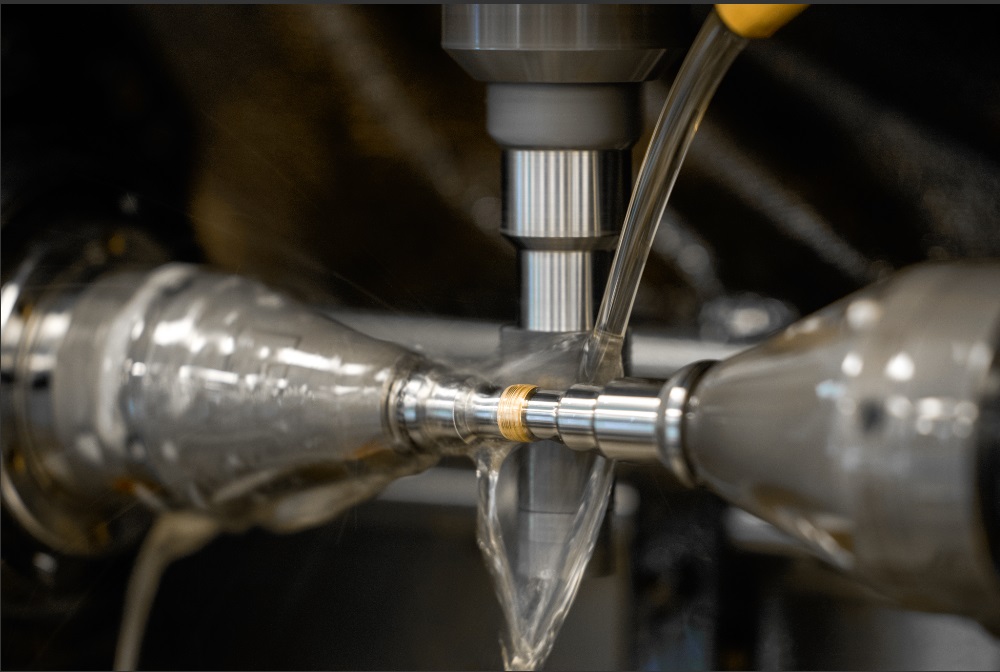
The Affolter Group, a world specialist in high-precision gear hobbing solutions, has launched its state-of-the-art AF140. The company’s newest gear hobbing centre is designed for small gears up to 40 mm in diameter and a maximum module of 1.0 mm. Positioned between and replacing the AF90 and AF100, the AF140 delivers the strengths of its predecessors while introducing next-generation automation and connectivity features.

Affolter’s AF140 was developed in close collaboration with users and industry partners to meet the growing demand for simplicity, compactness, versatility and ingenuity in gear hobbing. Designed primarily for the watchmaking sector, the machine is equally suited for precision applications in micromechanics, aerospace, automotive, micromotors, robotics and medical technologies.

“With the AF140, we’re offering our customers a perfect balance between performance, flexibility and innovation,” reports Mikael Affolter, head of sales at Affolter Group. “Its compact footprint makes it ideal for workshops where every square centimetre matters, while its compatibility with existing loaders and the option of a robotic arm provide new levels of automation and productivity. Combined with remote service features, the AF140 represents a true step forward in precision gear hobbing.”

The AF140 reaches cutter rotation speeds of up to 16,000 rpm and workpiece rotation speeds of up to 5000 rpm. A new and customisable robotic arm option for automatic loading and unloading significantly boosts the productivity of the AF140, enabling easy automation and reliable 24/7 production. At the same time, the machine remains fully compatible with established loaders such as W20, W25, W31, AF45, deburring units and more. Built on the powerful Pegasus CNC platform, the AF140 provides digital integration with IO-Link sensors, simplified commissioning, and advanced remote service for real-time support and updates.

More information www.affoltergroup.ch
UMILL 1000 multifunctional machining centre released

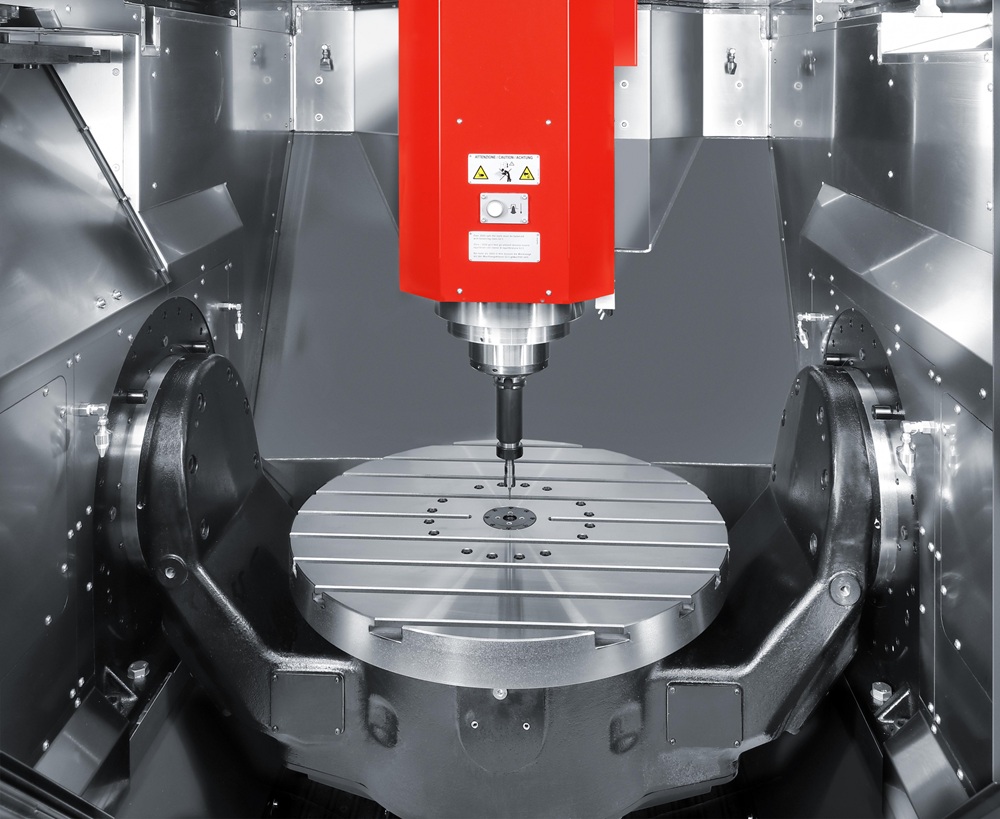
With the introduction of the new UMILL 1000, EMCO is strategically expanding its range of universal machining centres in the five-axis simultaneous machining sector, thereby creating a bridge between the UMILL 750 and UMILL 1500 models. The new model was developed meet the growing demand for versatile, compact and powerful solutions that combine milling and turning operations in a single machine.

As a result of the synergy between the expertise of the Italian subsidiaries EMCO, EMCO MECOF and EMCO FAMUP, the UMILL 1000 represents a logical technical development of the proven UMILL 750. The project was developed as a concrete response to market demands for high productivity, application flexibility and easy integration into automated production lines.

The highly rigid portal structure made of cast iron and welded steel ensures optimum thermal stability and enables combined turning and milling operations on a single machine. Thanks to the 55 mm roller guides on the X and Y axes and the standard direct drives in the linear axes and torque drives in the A and C axes, this universal machining centre guarantees precise machining even with demanding workpieces. The machine offers generous travel distances (900 mm in X, 1000 mm in Y and 700 mm in Z), a large swivel range of the A axis (±125°) and a load capacity of up to 1000 kg.

The motor spindle with 15,000 rpm and a maximum torque of 138 Nm at a power output of 38 kW, standard with HSK-A63, enables effective material removal and perfect surfaces.
The tool magazine of the UMILL 1000 comes standard with 30 positions and can be expanded to 60 or 90 stations if needed, with quick change and random management to optimise time and ensure greater operating autonomy.

More information www.emco-world.com

Precision machining cutting-edge research institute

The Max Planck Institute of Quantum Optics (MPQ) in Garching near Munich has its origins in a laser research project group founded in 1976. With four departments in different areas of laser development and quantum physics, the institute researches the interaction of light with quantum matter at extremely low temperatures. 

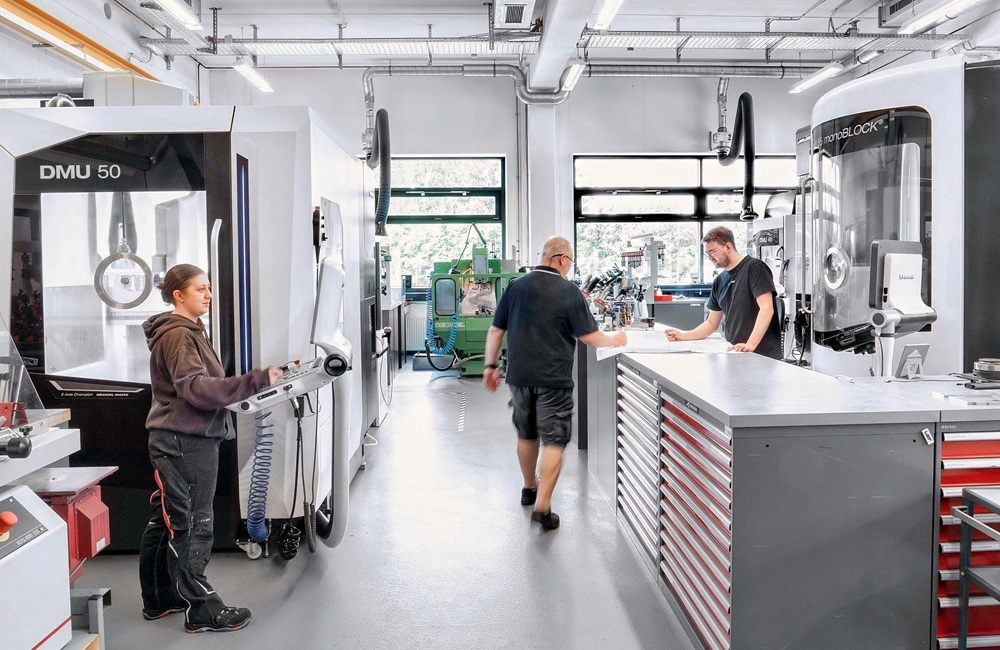
The laboratories use complex, high-precision equipment built with the support of an in-house workshop. Some 15 engineers manufacture precision components on DMG Mori machine tools. The machine shop includes three of the manufacturer’s five-axis machining centres, a DMU 50 and a DMU 65 monoBLOCK plus, most recently, a DMU 40.

Research at MPQ provides physicists with ever deeper insights into physics at atomic scale. The results are so groundbreaking that two Nobel Prizes in Physics have been awarded to Garching employees.

Michael Rogg, who has been at the institute since 1986 and been head of the workshop for the last 13 years, says: “Our laboratories need special optical instruments to carry out their experiments. The stability of the DMG Mori five-axis machines and their extensive cooling systems allow the required high-precision machining of the often complex geometries, sometimes down to tolerances of a few microns.”

An extensive variety of materials is used in the workshop. As many experiments are carried out in a vacuum, stainless steel components are common, but aluminium, copper alloys and special plastics are also widely used.


Says Rogg: “Unlike in industry, profitability is only a secondary concern in research. What counts first and foremost is a perfect result. One person is always responsible for the entire production of a component, from programming through to final quality control.”

More information www.dmgmori.com

First 30-taper machining centre with 100 tools

At last month’s EMO 2025 exhibition in Hanover, machining centre builder Brother introduced a variant of its Speedio U500Xd2-5AX 30-taper, five-axis machining centre able to deploy 100 different cutting tools, without the need for manual intervention. The new development addresses the accelerating industry trend toward high-mix, low-volume production and the need for prolonged periods of lights-out, unattended operation. The sole sales and service agent the UK and Ireland is Whitehouse Machine Tools.


Designed in accordance with Industry 4.0 principles, the U500Xd2-5AX 100T is aimed at subcontractors and OEMs that are already converts to using the efficient face-and-taper BBT30 tool interface, or are receptive to its merits, as opposed to the continued use of 40-taper machines. 

According to Whitehouse Machine Tools, compelling reasons for adopting 30-taper platforms are the very high-speed axis motions, which minimise idle times and raise productivity, the typically 80% reduction in electricity and air consumption, and the compact footprint.

Previous limitations on tool capacity and process integration within a minimal space on a factory floor have been eliminated, and a side shutter for robotic loading and the availability of automated workpiece or pallet storage and handling equipment allows the formation of a fully automated production cell. 

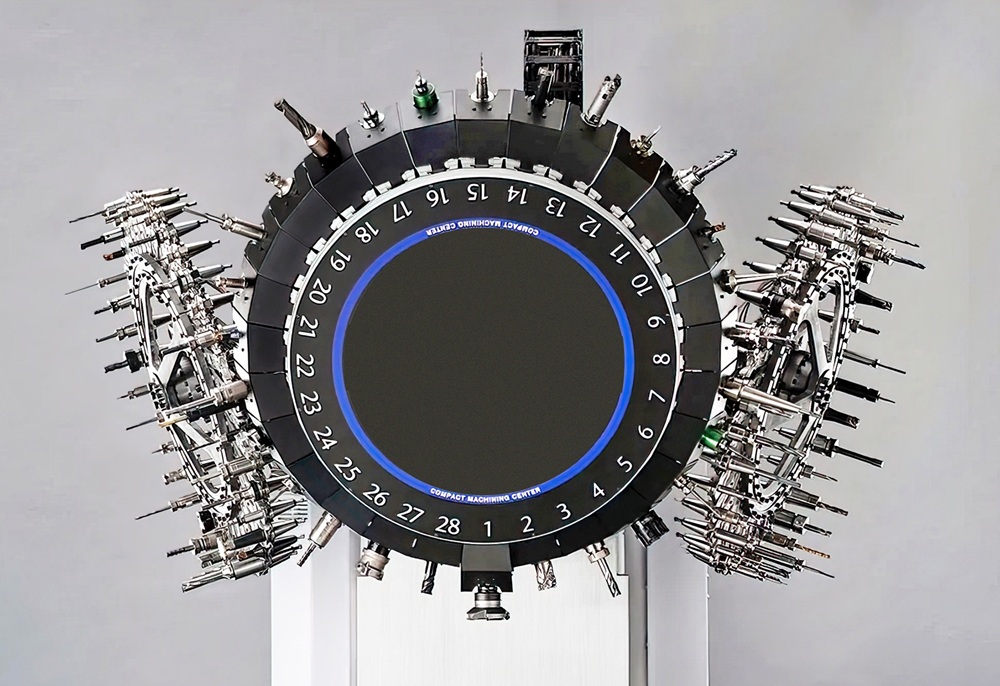
The tool count has been boosted by mounting a 36-tool stocker on either side of the 28-tool turret magazine, enabling manufacturers to keep an unprecedented number of different tools, sister tools and special cutters ready for use, without operator involvement. 

Despite the large tool storage capacity, the machine maintains its rapid 0.7-second tool-to-tool change time, while other top-end features also remain the same. The new model is equipped with Brother’s latest CNC-D00 control system featuring 15-inch LCD touch panel.

More information www.wmtcnc.com

20 years of Starrag/Liebherr-Aerospace partnership

Smooth, precise and with perfect timing: modern landing gear works just like an eagle about to land. For the first time, Starrag presented a fully assembled nose landing gear of the Airbus A350 at last month’s EMO 2025 exhibition in Hanover, Germany, representing a symbol of a close partnership with Liebherr-Aerospace that has lasted over 20 years.

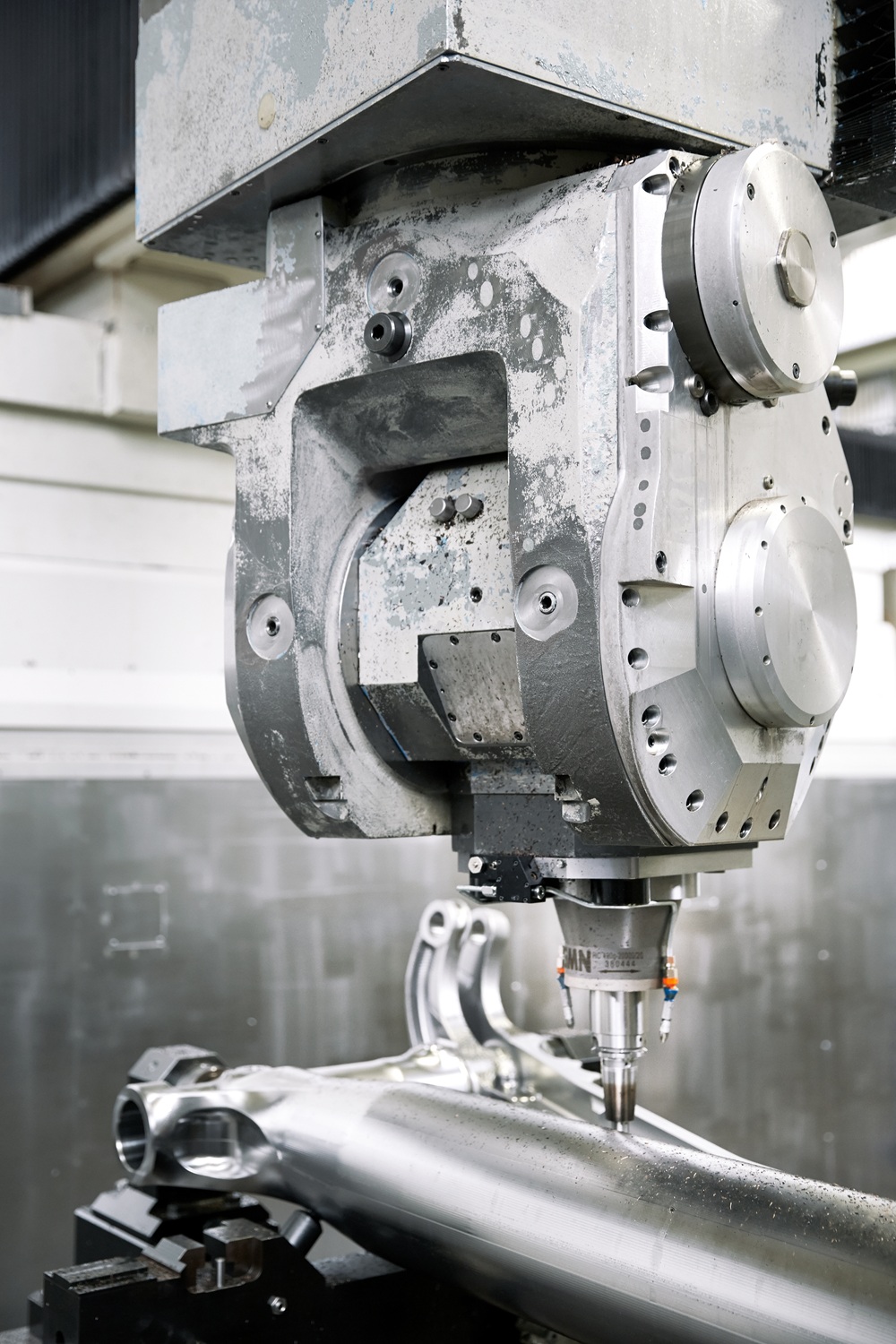
It all began in 2004 in Lindenberg, Bavaria, with a single Droop+Rein FOGS machine. Today, the partnership has developed into one of the most productive in the field of landing gear production. To celebrate, Starrag exhibited a fully assembled nose landing gear for the Airbus A350 – manufactured by Liebherr-Aerospace Lindenberg and machined on a Droop+Rein machining centre.

The partnership represents the shared journey of two global specialists – one at the system level, the other in mechanical engineering. It is a collaboration of equals based on technical understanding, long-term thinking and a global perspective.

“The trust that Liebherr-Aerospace has placed in us for two decades is both an obligation and an incentive for us,” emphasises Heiko Quack, director of sales for large projects. “Together, we’ve developed processes that are considered a global benchmark – especially when it comes to safety-critical components.”

For over 20 years, the two companies have been working closely together to produce one of the most demanding components in the aviation industry efficiently, reliably and with maximum vertical integration – landing gear. Starrag supplies the machining technology; Liebherr the system solution.

Liebherr-Aerospace operates one of the most modern landing gear production sites in Europe at its Lindenberg site, where four Droop+Rein FOGS machining centres work in combination. This capability is supplemented by robot-supported tool systems, laser measurement and integrated automation.

More information www.starrag.com