

Technical collaboration delivers productivity gains

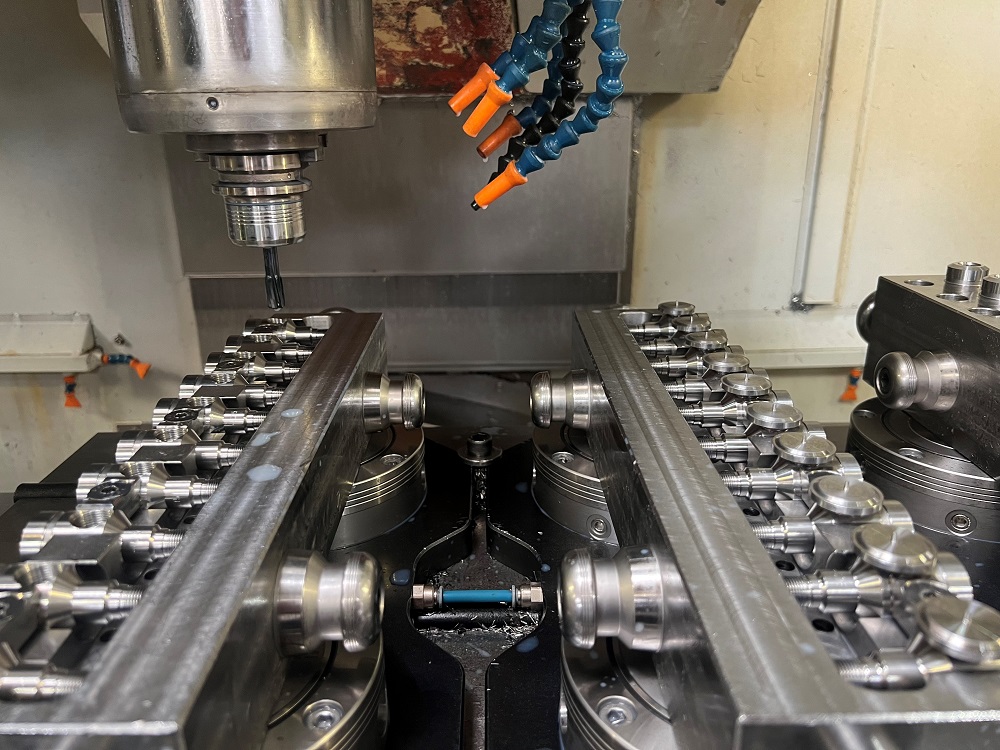
With over 50 years of experience machining components for the aerospace, defence, medical, electronic and automotive industries; utilising everything from two-axis lathes through to multi-pallet five-axis machining centres axis, Aylesbury-based CNF Precision Engineering could be expected to have all the expertise it needed. However, when it won a significant order to machine exhaust collector manifolds for a motorsport customer, it found itself in need of additional support.

The issue faced by CNF was the complexity of the components, which came in six variants, along with the material, 304 stainless steel.

“When we were faced with stainless steel that required extra-long tool overhangs, we knew we would need additional technical input,” says Mark Baron, CNF’sproduction manager.

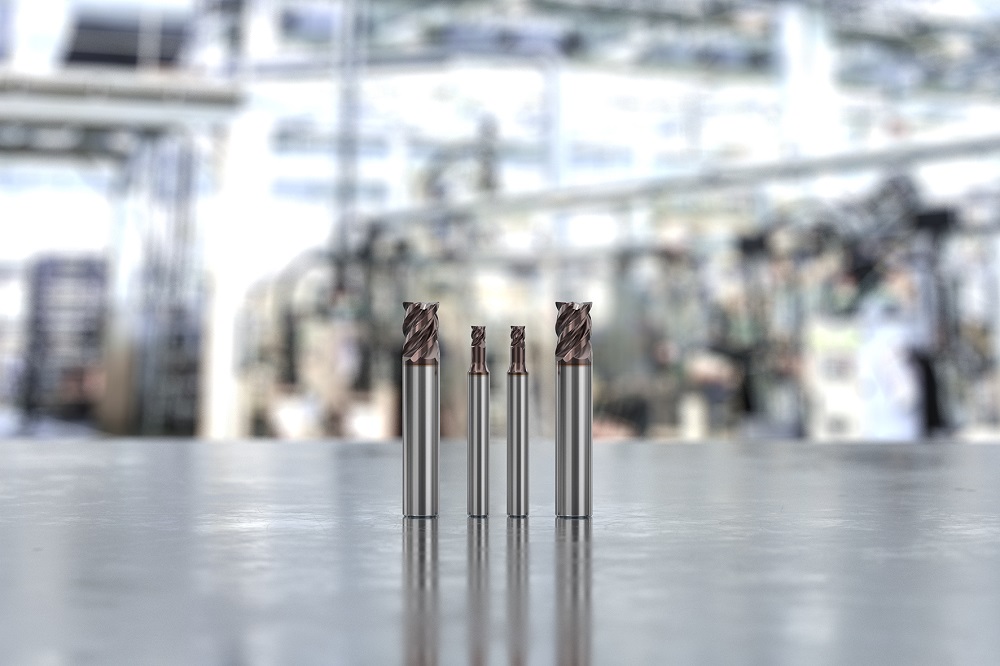
Ceratizit provided a range of tooling on trial, with no commitment until successful completion of the process. Key to that success wasthe use of35 mm diameter (with 4xD flute length) KUB Pentron indexable insert drillsfor the main internal port machining, along with a selection of high-feed indexable insert milling cutters using button and square inserts, with finish milling completed using Ceratizit’s Silverline solid-carbide mills and Torus cutters.

The collaboration resulted in significant cycle time savings along with greatly improved tool life. For example, the indexable milling inserts are showing a 300% increase in tool life after testing a variety of carbide grades, eventually settling on Ceratizit’s grade for heat-resistant materials, CTCS245. A 20/30% gain in tool life was seen when switching to Silverline cutters for finish milling, when compared with an incumbent competitor cutter.

In terms of cycle time, the work undertaken with the Ceratizit Torus cutters proved to be productive, with 40-50% decrease in cycle time generated from the switch from a conventional ball-nose cutter to a Ceratizit Torus Monstermill cutter.Tool life also doubled.
For further information www.ceratizit.com

Allied Machine expands thread-mill portfolio

Allied Machine and Engineering, a manufacturer of hole-making and finishing cutters, has added new sizes to its AccuThread T3 thread-mill line. AccuThread T3 is now available in larger UN and ISO sizes up to 1”-8 and M24x3. Machine coding for the new sizes is included in Insta-Code, Allied Machine’s online thread-mill program generator.

Targeting high-production facilities, tool and die industries and high-temperature applications, the additional AccuThread T3 thread-mill sizes create a high-quality thread without the concern of breaking the tool in an expensive workpiece. Allied designed the tool to only machine three threads at a time, which reduces pressure and dramatically increases the chances of tool survival.

The AccuThread T3 is for machining hardened or hard-to-machine materials such as stainless steel, tool steel, and high-temperaturealloys in classifications P, S, M, H, K and N.

According to Allied the advantages of the thread-mill line include: improved tool life and a more precise thread form; the ability to cut harder materials and produce deeper threads than a standard thread mill; and improved cycle time and tool life.

Among notable features is left-hand cutting, which allows the tool to climb mill while it moves from top to bottom, creating a right-handed thread. Further features include the use of three teeth that cut minimal threads all at once and reduce side deflection, along with AM210 multi-layer PVD coating.

Among industries set to benefit are aerospace, agriculture, automotive, firearms, construction, marine, mining and renewables.
For further information www.alliedmachine.com

High-feed mills for challenging applications

Milling challenging materials like tough steels, stainless steels, superalloys and titanium causes built-up or notched edges and broken inserts that increase tooling costs and cause unexpected downtime. To overcome these challenging ISO P, M and S materials, the next-generation Seco High Feed SP milling system features a combination of dedicated cutting geometries and insert grades, as well as optimised lead angles that combine to boost material removal rates, maximise chip evacuation and extend tool life.

According to Seco, one High Feed SP tool can handle a complete range of high-feed milling operations and materials. The tool optimises such operations as copy milling, ramping, pocketing, face milling and plunging to further reduce tooling inventories.

“Premature tool wear increases job costs and leads to unexpected machine downtime that lengthens production time,” says Benoît Patriarca, global product manager -high feed milling at Seco Tools. “The combination of dedicated cutting geometries and grades with optimised lead angles of the High Feed SP system allows for faster machining to shorten job turnaround times, while also providing a superior price-to-performance ratio.”

Designed for ease of use, High Feed SP milling tools provide simple fool-proof insert indexing that prevents operator mistakes, unexpected machine downtime and scrapped parts. Plus, users can quickly access product information through the Seco data matrix code scanning.

Seco offers a comprehensive range of High Feed SP tool sizes. The series includes:SP10 – two geometries, 10 grades, 32 to 63mm diameter; SP14 – two geometries, 10 grades, 50 to 100mm diameter; and SP18 – two geometries, 10 grades, 63 to 160mm diameter.
For further information www.secotools.com/milling

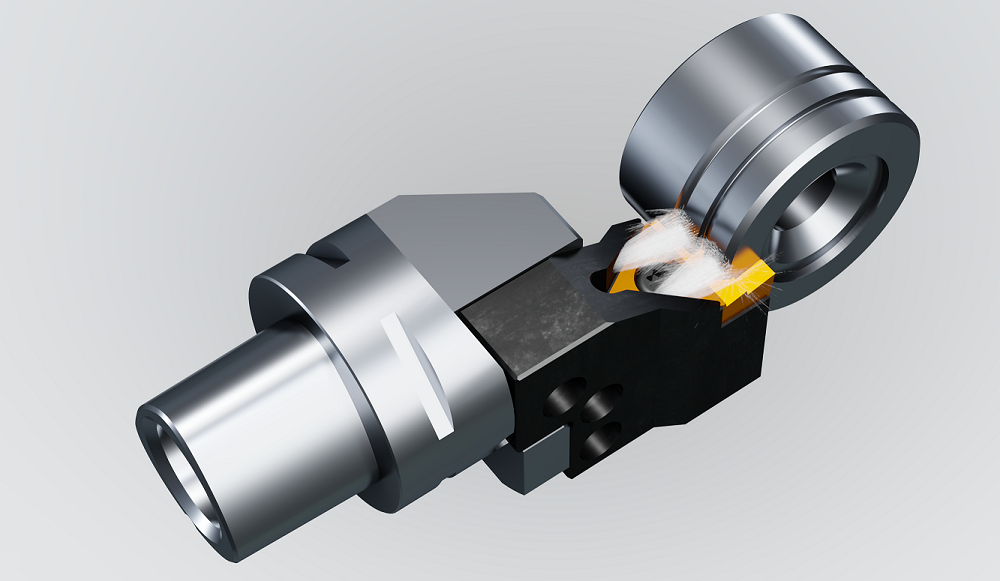
Major progress in external reaming of turned parts

The mass production of precise turned workpieces on multi-spindle automated lathes is subject to its own rules. In a hotly contested market, it is necessary to take every tiny opportunity for cost reduction, as Oberrindal-based WE Schultz, a customer of cutting tool specialist Mapal, can testify.

“As a true mass producer of comparably simple parts, we have to be able to compete in terms of price and quality with competitors from Asia here in Switzerland,” says Alexander Jaksch, deputy head of the turning shop.

A key lever in this ideology is the support of external partners such as cutting tool suppliers.
“Ultimately, the tools for a machine tool are as important as the tyres on a car,” states Jaksch.

The potential available here has been demonstrated to decision-makers at WE Schultz by a custom tool developed and subsequently optimised by Mapal.

“This project was about a part that seemed rather simple on the surface, a sleeve turned from solid with a diameter of almost 15 mm and a length of 10 mm,” says Emil Hugentobler, machine fitter at the Oberrindal plant. However, there are two crucial sticking points: a narrow diameter tolerance of 14.7 mm +12/-2 µm, and exceptionally low surface roughness of only Rz = 6 µm.

“In this situation we became aware of Mapal’s external reamers, particularly a custom tool for external reaming,” recalls Alexander Hildt,head of manufacturing. This external reamer is equipped with three guide pads and an adjustable indexable insert. The key advantage of the solution is that the outer dimensions of the workpiece are represented by the inner dimensions of the tool. Therefore, machine-related influencing factors such as increased play in the machine kinematics or the bearing of the spindle or chuckbecome practically irrelevant.
For further information www.mapal.com

New grades facilitate high feeds on tough metals

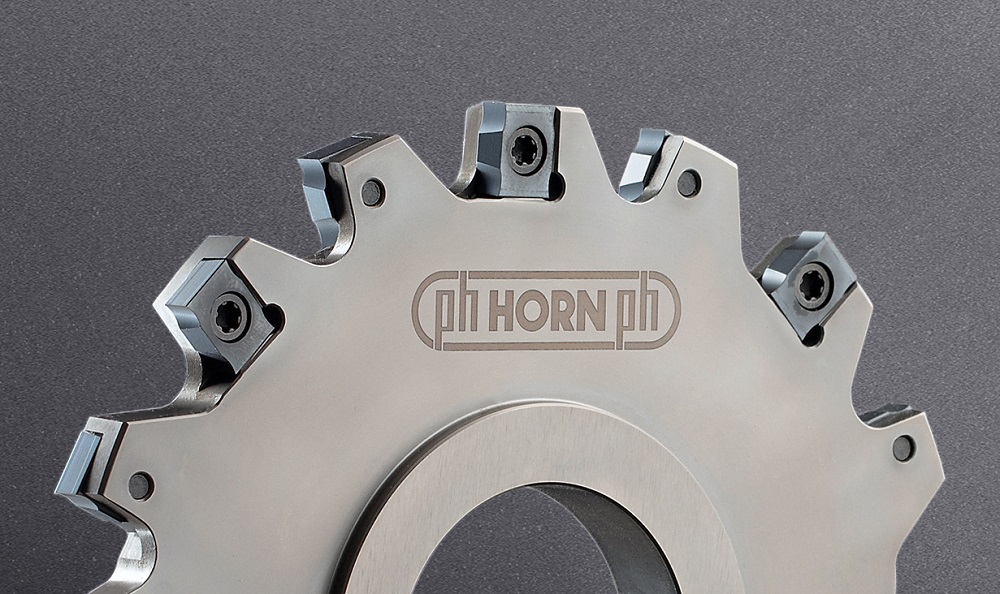
Horn has introduced two carbide grades for inserts used in its DAH82 and DAH84 high-feed milling systems, enabling their use for a wider range of materials. The expansion gives customers the ability to choose grades best adapted to their applications.

The new SC6A grade is suitable for machining materials in the ISO M group (stainless steels), as well as ISO S materials (superalloys) as a secondary application. The new IG6B grade is for machining ISO P materials (steels), while it is also suitable as a multi-purpose grade for other material categories, as is the pre-existing SA4B substrate.

With eight usable cutting edges, the sintered inserts offer a competitive price per cutting edge and hence economical machining. The positive geometry ensures a soft, quiet cut as well as good chip flow. Notably, the large radius of the insert’s main cutting edge also promotes a soft cut and,alongside an even distribution of cutting forces, ensuring long tool life.

In terms of machining parameters, the maximum cutting depth is 1 mm (DAH82) and 1.5 mm (DAH84). The DAH82 variant is available as an end mill and as a screw-in milling cutter in the following diameters: 20 (z = 2), 25 (z = 3), 32 (z = 4), 35 (z = 4) and 40 mm (z = 5), where z denotes the number of inserts. As a shell mill, it is available in diameters of 40 (z = 5), 42 (z = 5) and 50 mm (z = 6).

For diameters of 50 mm and more, the larger DAH84 system is first choice. The variants are available only as shell mills in the following diameters: 50 (z = 4), 52 (z = 4), 63 (z = 5), 66 (z = 5), 80 (z = 6), 85 (z = 6), 100 (z = 7) and 125 mm (z = 8).
For further information www.phorn.co.uk