
UK manufacturing is ready to meet the call for more sovereign ‘production’ capability
according to a new survey, but industry will need government help to make it a reality.
The findings, which were discussed at the launch of last month’s MACH 2026 exhibition in
Birmingham, reveal that thousands of firms are keen to support the national mission to
reduce the UK’s manufacturing dependence on international partners, especially in the
wake of recent global conflicts and economic uncertainty. Some 74% of the 358
manufacturers questioned said they would be willing to do more to build up capacity in key
sectors like defence, energy and transport, but only a quarter of these can meet demand
straight away. The others said it would take up to six months to be able to help, which
reveals a potential bottleneck in the supply chain if action is not taken now.
Manufacturing bosses said the biggest barrier was access to funding (34%), followed by lack
of space (28%), cost of financing (27%) and economic uncertainty (24%). They called on
government to help the ‘sovereign push’ by providing grants (59%), greater tax incentives
(50%) and more support for training.
“To coincide with the UK’s national manufacturing and engineering show, we felt it was the
right time to take the temperature of firms when it comes to building ‘sovereign’ capability
and reducing our critical overseas reliance,” explains James Selka (pictured), CEO of the
Manufacturing Technologies Association (MTA), which hosts MACH every two years. “As you
can see from the findings, there’s a real appetite from industry to meet the challenge, but
the message from our community is that it needs to be supercharged by the powers that be
at Number 10 and the Treasury.”
He continues: “Immediate access to finance appears to be the pivotal issue. With this in
mind, it might be an idea for government to look at how they could support investment in
critical sectors to help accelerate their expansion and access to capacity.
“We believe that this survey shows that there is a case for a ‘sovereign capability fund’ to
support companies involved in defence, aerospace, med tech and energy for instance. This
is where the British Business Bank could step-up and support more of UK manufacturers to
make vital components here. Germany’s Deutschlandfonds, which will lever in €130bn, is a
great example of what can be done if a national government is prepared to work closer with
industry to encourage investment. As a nation, we need to ambitiously step up and act now,
or suffer the consequences.”
The MTA’s snap survey also delved into early views of the much-anticipated Industrial
Strategy. Feedback from the shop floor suggests progress has been limited, with over half
(55%) saying it has had no impact on their business and that they could not “see any way in
which it would in the future”.
When asked about what the Government says it is delivering, the most meaningful benefit
to manufacturers would be “lower energy prices” (57%), with UK firms battling some of the
highest costs in the world. A targeted skills package was the second most popular answer,
with greater “investment in zero emissions vehicles manufacturing through grants and R&D
support” third.
“We’re approaching the first anniversary of the Industrial Strategy, and it’s clear from our
survey that industry, at best, remains unconvinced that it will deliver what is required,”
state Selka. “It came as no surprise that help with energy came out as the area where most
support is required. This is what our members are telling us every day, and the impact of
rising costs is making the UK uncompetitive against international rivals who enjoy far
cheaper prices. Importantly, this is a message that must be heard and acted on. Our firms
are feeling the pinch now and can’t wait five years for a raft of sustainable energy
improvements to kick in.”
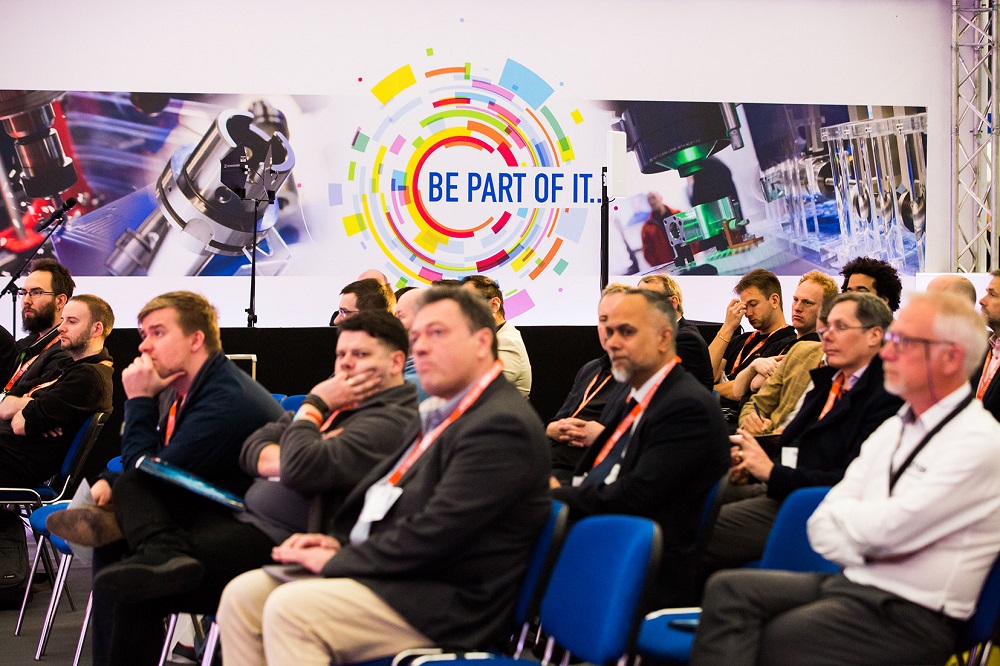
Set over five days at the NEC last month, MACH 2026 is the biggest week in the UK’s
industrial calendar, attracting around 30,000 people from the manufacturing community
and more than 500 companies. Figures are still being counted, but over £250m of business
is expected to result from the show, where some of the country’s most innovative firms
unveiled new technologies and machines designed to boost productivity and global
competitiveness.
MACH, which has a huge focus on sustainable manufacturing and carbon reduction through
its six Knowledge Hubs and 14 Technology Zones, is also a big attraction for young people
looking for a career in industry. Around 4000 students (aged between 12 and 18) attended
the recent edition.
MACH 2026 also saw a packed CPD certified seminar programme, with topics including ‘how
AI is reshaping manufacturing’, ‘strategy for technology adoption’ and ‘unleashing the
power of automation’.
James Fudge, head of operations at the MTA, concludes: “We designed MACH 2026 to guide
and support manufacturers in addressing threats to business prosperity, such as rising
operational costs, skills shortages and supply chain disruptions, enabling them to remain
competitive in an evolving marketplace. This is reinforced by a visitor survey, revealing that
68% of attendees actively sought new technologies and services during their planned visits.
There’s no other event like it in the UK industrial calendar.”
MACH is owned and organised by the Manufacturing Technologies Association (MTA), which
also encompasses a cluster of organisations, including Engineering Supply Chain UK (ESCUK), Additive Manufacturing UK (AMUK) and MTA Training.
More information www.machexhibition.com