

The manufacture of medical technology products such as implants, instruments and devices
is subject to very strict requirements – including for parts cleaning. Ultrasound is an
indispensable process here. It ensures that the required cleanliness is achieved in a stable,
efficient and sustainable manner during both intermediate and final cleaning.
Ultrasound and medical technology – this combination is initially associated with diagnostic
imaging. However, ultrasound can do much more in this area. Sound with frequencies above
the human hearing range has established itself as an economical and sustainable standard
process for wet-chemical cleaning applications in the manufacture and reprocessing of
medical technology products such as instruments, implants and other devices. And it can be
used for components made of a wide variety of materials such as stainless steel, titanium,
cobalt-chrome alloys, ceramics and plastic.
In co-operation with cleaning system manufacturers and users, Weber Ultrasonics develops
custom-designed generators and transducer systems as rod, plate and immersible
transducers with different frequencies for the very different cleaning tasks in medical
technology. This includes single-frequency solutions as well as dual- and multi-frequency
ultrasonic systems in a frequency range from 25 to 132 kHz.
Weber constructs space-saving cleaning systems that are individually tailored to customer
workpieces and cleaning requirements. The development of vacuum-proof single, dual and
multi-frequency immersible transducers also opens up the use of ultrasonic cleaning in full-
vacuum cleaning systems. For high-purity applications, where particularly high demands are
placed on component cleanliness and cleaning equipment, immersible transducers and
plate transducers are available in a suitable design. With a surface roughness of <0.35 µm,
they meet the requirements of hygiene class 4 in accordance with DIN 11866.
Heinz Schade, managing director of the company of the same name, also relies on the wide
range of highly effective ultrasonic components. Founded in 1999 and based in Reutlingen,
the company develops and produces machines for balloon and catheter production as well
as stent processing, which are sold worldwide. In addition, there is software that is
optimally adapted to the various machines and, among other things, enables the seamless
documentation and traceability of processes required in medical technology. This helps to
ensure that the strict requirements of the MDR with regard to process and product safety
and quality management are met.
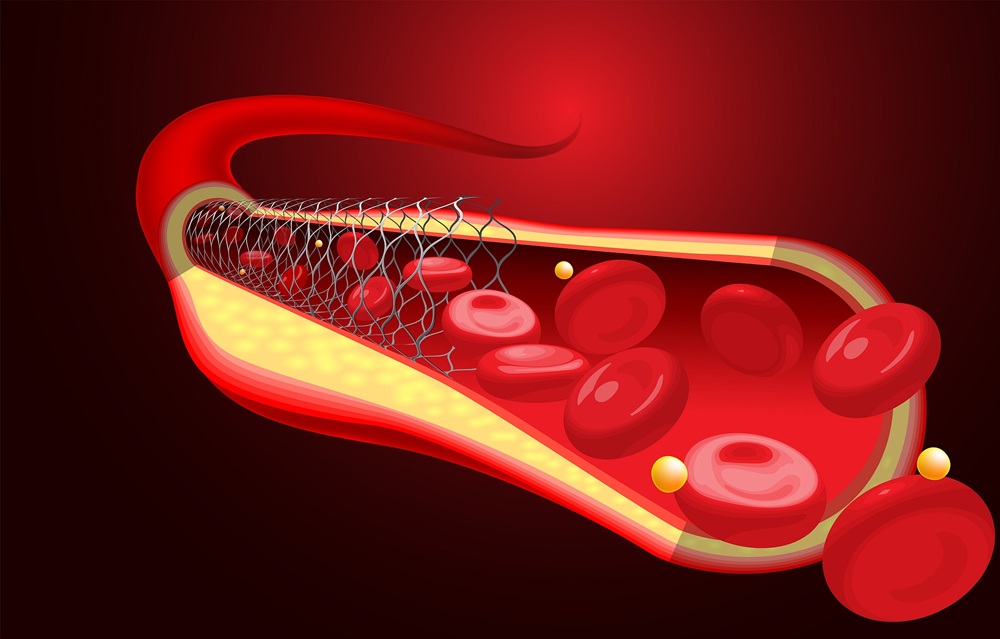
One focus of the system portfolio is on manufacturing steps for stent production that follow
laser cutting, such as electropolishing, heat treatment, pickling and ultrasonic cleaning. The
company has been manufacturing the tanks for the cleaning systems in-house for around 20
years. This allows them to be adapted to the various products and the specific requirements
of the respective customer.
“With our own production facilities, we were looking for a supplier for the ultrasonic
components. In Weber Ultrasonics, we found a partner that has impressed us to this day
with its expert advice and straightforward co-operation,” says Schade.
To ensure the quality and safety of the products, the stents are usually cleaned between the
various processes. Final cleaning is then carried out before packaging, usually in a clean
room.
“Increasingly stringent surface cleanliness requirements have to be met,” says Schade. “At
the same time, it must be ensured that the sensitive stents are not damaged during
cleaning.
The key parameters for this are the frequency of the ultrasound and the power in watts per
litre of bath volume. In addition, a homogeneous sound field must be generated in the bath
to ensure a consistently stable result.
“The ultrasonic solutions from Weber Ultrasonics are ideal for these tasks. The power can
be set very precisely by controlling the generator and the sound output is constant and
reliable. So far, we’ve had no problems with the ultrasonic systems.”
Ultrasound develops its cleaning effect in a liquid bath through the physical effect of
cavitation: the electrical signals generated by an ultrasound generator are transmitted into
the liquid through oscillating elements. The sound pressure is characterised by an
alternation of negative and positive pressure. In the negative pressure phases,
microscopically small cavities form, which collapse (implode) in the subsequent positive
pressure phase. This creates shock waves with considerable energy, which “blast off”
particulate and film-chemical contaminants. At the same time, micro-currents are created in
the liquid, which flush away detached or dissolved contaminants. These effects make it
possible to remove contaminants not only from the surface, but also from complex
geometries, cavities, holes and structures.
For components such as additively manufactured implants with an open-pored sponge
structure or combined porous and polished surfaces – as well as components with very fine
capillaries – ultrasound can be combined with pressure cycling processes. In these vacuum
flood cleaning processes, alternating negative and positive pressure and cavitation effects
are generated by regularly repeating pressure changes. This allows cleaning and
rinsing media to reach areas that would otherwise only be reached to a limited extent or not
at all.
More information www.weber-ultrasonics.com








