DMG Mori acquires stake in up2parts

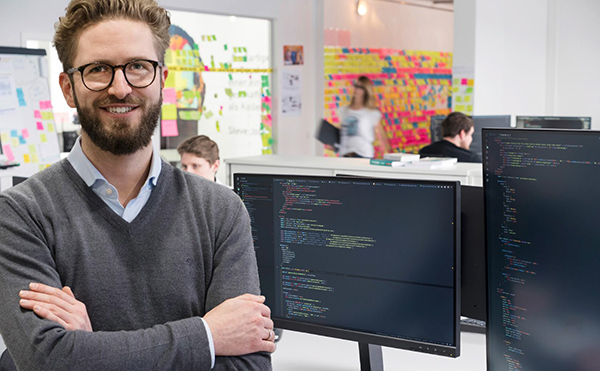
By taking a strategic stake in the Bavarian software company up2parts, which specialises in artificial intelligence (AI), DMG Mori plans to acquire important know-how in the field of digitised manufacturing processes.

up2parts’ AI-based geometric workpiece analysis makes it easy and quick to generate work plans and price calculations for individual components. AI is at
the core of the solution, analysing the geometry of each component within seconds on the basis of machine-learning algorithms and human know-how. The result is a concrete work plan and the accurate cost of manufacturing the component.
For further information www.dmgmori.com

EMO attracts 117,000 visitors

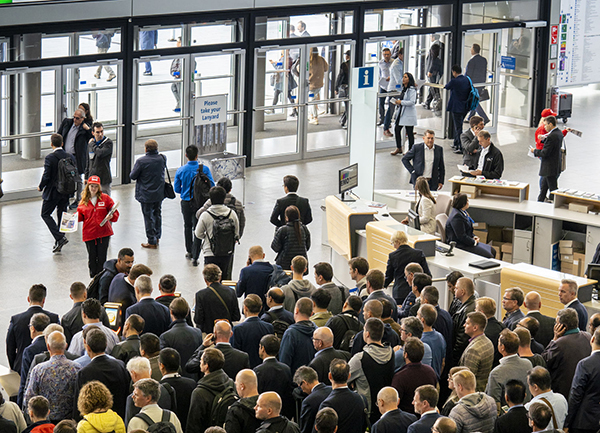
EMO 2019, which closed last week in Hanover, Germany, attracted around 117,000 visitors across its six days.

EMO Hannover 2019 – Weltleitmesse der Metallbearbeitung.

“This EMO built on the success of our boom year in 2017,” reports EMO general commissioner Carl Martin Welcker. “In the context of subdued economic expectations over recent months, the moderate decline in attendance has to be viewed as a success. We’re particularly delighted at the further increase in foreign attendees. EMO once again proved solid as a rock, providing clarity for the further development of production technologies, even in uncertain times.”
For further information www.emo-hannover.de

Structured light scanners for designers

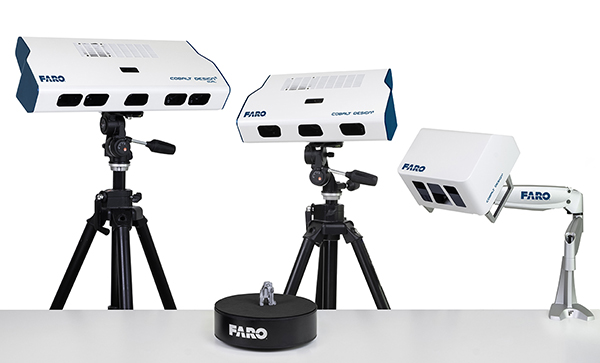
Faro has released its Cobalt Design structured light scanner product family. Structured light scanning technology uses projected light patterns with a camera system to capture large areas.

As a result, data capture time is reduced and results are delivered quicker.
In combination with the recently introduced RevEng software platform, Cobalt Design delivers a one-stop digital design solution where small-to-medium objects can be scanned with precision, in colour, with multiple levels of resolution. As such, it is the first colour structured light scanner from Faro specifically developed for design applications. In particular, the device is said to be suited to the scanning of complex surfaces, especially highly detailed organic shapes. Cobalt Design addresses a variety of design requirements, including reverse engineering, prototype design, packaging design, digital cataloguing, and even jewellery and fashion design.
Faro’s Cobalt Design enables design professionals to set up scan parameters once and then proceed to scan similar objects at the push of a button. Furthermore, several pre-configured scanning and meshing settings are available by default. This functionality, in turn, translates to less time per scan position, more scans per day and faster completion of scan projects.
An integrated, rotational axis improves the 3D scanning process and maximises scanning coverage. Objects/parts are placed in fixed positions on the axis, after which the axis can be set to automatically rotate up to 360° as it is being scanned.
Cobalt Design captures millions of 3D measurement points in as little as one second, with up to 3.1 Mpx accuracy for small-to-medium complex objects. Precise and high-quality textured scans can be captured in colour and delivered as realistic images that enable even more detailed representations of geometric surfaces and finishing.
For further information www.faro.com

Creaform launches Academia 50 3D scanner

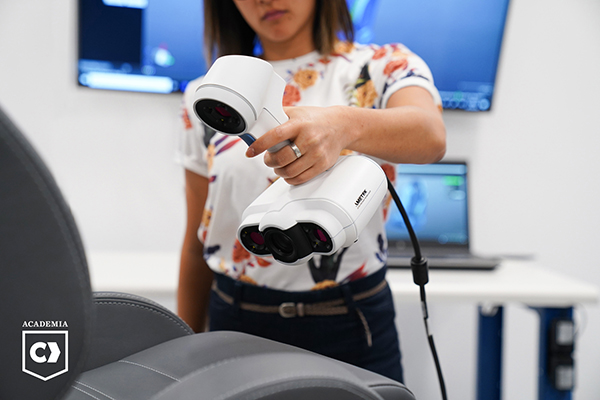
Creaform has added the Academia 50 3D scanner to its Academia educational solution suite. This professional-grade, portable 3D scanner is suitable for teachers looking to show students the benefit of handheld 3D scanners and their use in real-life applications, such as reverse engineering, industrial design and quality control.

Easy to set up and use by teachers and students of all levels, Academia 50 employs structured white light technology to scan objects made of any material, or with any surface type or colour. Its technical specifications highlight the device’s performance levels, with an accuracy of up to 0.250 mm and a measurement resolution of up to 0.250 mm.
Academia 3D scanners are part of a turnkey educational solution that includes: 50 free seats of scan-to-CAD and inspection software to show students how to address any conventional or innovative engineering workflow; a five-year Academia customer care plan; and self-training documentation. Creaform offers teachers a free Creaform Academia sample kit that gives academics didactic material to enhance their curricula.
“This latest addition to our Academia educational solution suite attests to Creaform’s commitment to the educational sector by offering the designers and engineers of tomorrow the tools they need to help them excel in their careers,” says François Leclerc, marketing programme manager at Creaform. “We offer a complete education solution that does not sacrifice on quality or performance – all at a cost
which educational institutions can afford.”
For further information www.creaform3d.com

Open Mind unveils hyperMILL 2019.2

Open Mind’s 2019.2 version of hyperMILL CAM software offers a range of newly developed features that include high-precision 3D finishing, five-axis tangent machining, high-performance turning and new CAD-for-CAM technologies. Furthermore, Open Mind is integrating more and more functions directly into hyperMILL CAM strategies that previously required extra CAD steps.

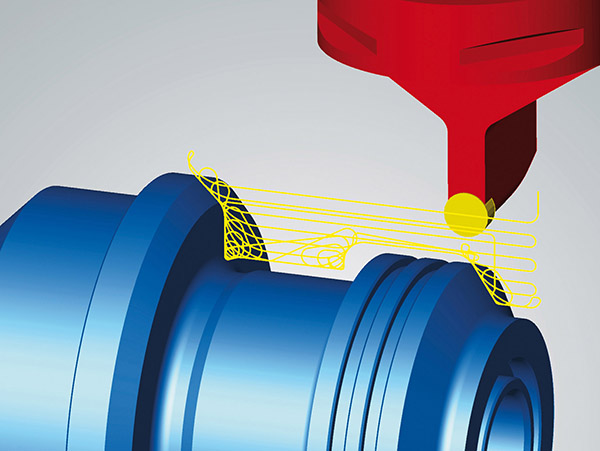
Despite the previous version of hyperMILL featuring high-precision profile finishing, version 2019.2 offers a comparable function for 3D shape Z-level finishing. The ‘high-precision surface mode’ option ensures smooth surfaces with tolerances in the micron range. This functionality saves time on post-machining finishing processes, particularly when applied to mould making. The ‘smooth overlap’ function has the same effect for 3D profile finishing.
Within hyperMILL 2019.2, the hyperCAD-S ‘global fitting’ function is directly integrated into the CAM strategy (in five-axis tangent machining). With this feature, multiple faces can be joined into one face with defined ISO orientation. The principle of using CAD elements for CAM programming is also applied, for example, for automatic face extension. With the automatic face extension, bounding surfaces are automatically extended during programming to improve the edges of machined surfaces. This function simplifies programming since these adjustments are made within the CAM strategy, without switching to the CAD environment.
The previous version of hyperMILL MAXX Machining saw turn-roughing implemented with trochoidal tool paths. Here, optimised connecting paths and fluent machine movements ensure high-performance machining, which means significantly higher machining values can be driven compared with conventional roughing methods. Version 2019.2 guarantees even greater process reliability for high-performance turning, while tool-life monitoring makes it possible to restrict the use of a cutter by the distance covered, the number of toolpaths, or a time limit. If the defined limit is reached, a retract macro is generated automatically and the job ends.
For further information www.openmind-tech.com