

Premium solution for grinding large gears

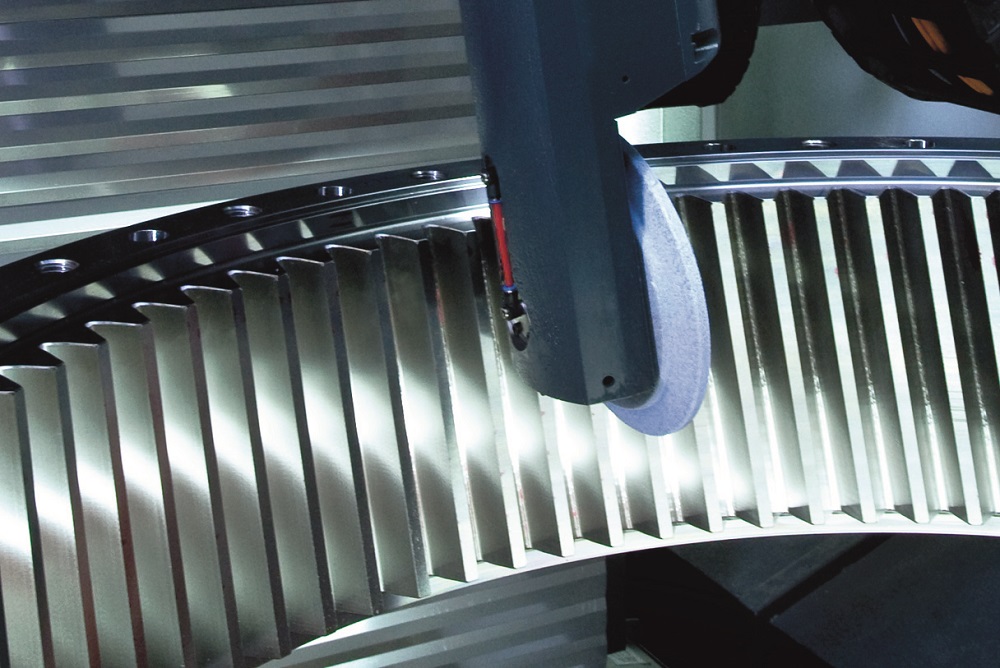
The serial production of large gears requires a high level of quality, excellence and continuity in production. Particular emphasis is on maximising the synergy between the grinding machine, grinding process and grinding wheel. After several successful trials on various Klingelnberg Höfler Rapid series grinding machines carried out at various customer production facilities, Krebs & Riedel has received several significant orders for grinding large gears and introduced its new premium grinding wheels with high process reliability.

Krebs & Riedel is a major manufacturer of grinding wheels for gear grinding in the automotive and EV sector. Now, with its new Blue Moon TZ premium product range, the company is expanding into other sectors that require large gears, such as wind turbines.

“In some tests, the material removal rate (Q’w) was more than 30 mm³/mm,” says Sigurd De Ridder, senior application engineer at Krebs & Riedel, who conducts trials and process optimisation for customers worldwide. “Precision-shaped abrasive grains are state of the art today. Blue Moon TZ is self-sharpening, very sharp-edged, microcrystalline and has an elongated trapezoidal shape.”

According to Krebs & Riedel, the homogeneous pore structure of Blue Moon TZ contributes to an extreme improvement in the entire cooling system during grinding. Due to the open structure, coolant immediately floods the whole grinding wheel. Even with extreme material removal rate, the coolant transports chip away from the contact surface, avoiding heat input that could lead to thermal damage of the gear.

On average, tests on Klingelnberg Höfler Rapid 2500 machines showed the following grinding results: a cooler grind and a longer tool life, combined with up to 20% faster grinding time compared with standard grinding wheels. In dressing tests, the average result showed 20% longer dressing intervals and 30% less infeed.
For further information www.krebs-riedel.com
Studer introduces insertLoad universal loader

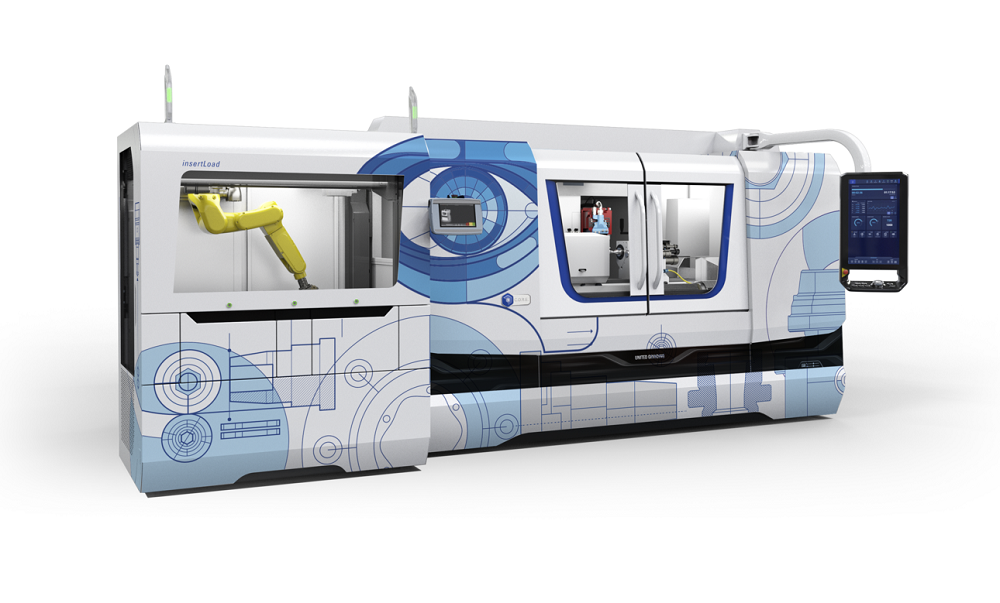
The new insertLoad automation solution from grinding machine manufacturer Studer supports the loading and unloading of Studer S33 and S31 universal cylindrical grinding machines, and can load workpieces between centres and into the chuck.

Where customised solutions were previously necessary, the new universal loading system from Studerenables standardised automation for loading and unloading its S33 and S31. Notably, insertLoad is suitable for centre distances of up to 1000 mm, thus closing a gap in standardised automation systems.

Workpieces can be up to 100 mm long and weigh 1.5 kgin alternating mode, or 5 kg in a single mode. The sophisticated design and ease-of-use (with the digital set-up wizard) allow users to configure individual jobs themselves (for centres and chucks).No programming knowledge is required. Furthermore, insertLoad can handle workpieces that are stored either vertically or horizontally.

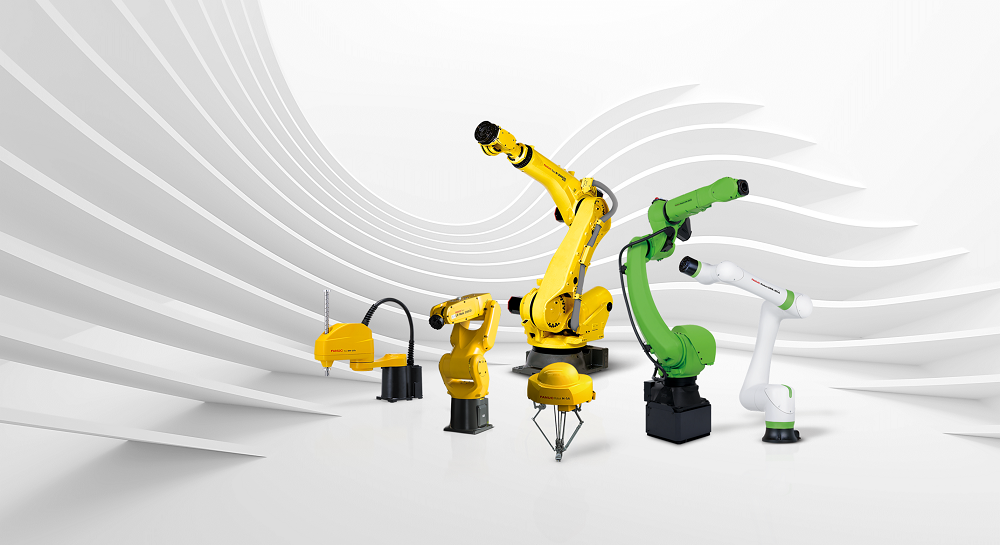
The new Studer loader combines the advantages of a standardised system with high levels of flexibility. It handles a wide variety of parts in terms of geometry, weight and size; even the capacity of the drawers and degree of autonomy is adaptable based on requirements. A FANUC robot handles loading and unloading, moving independently on a linear axis between the loader and the machine’s work area. Typically, the time without human operator intervention is between 30 and 60 minutes.

Studer placed particular emphasis on safety during development. For example, a loading hatch separates the loading area of the insertLoad from the working area of the machine to prevent flame flashback during machining processes using grinding oil. In addition, the software and a safety switch ensure there is no danger to grinding techniciansin the event of a deflagration.
For further information www.studer.com/en

FANUC produces 1 millionth robot

Factory automation expert FANUC is celebrating a milestone achievement with the production of its one millionth industrial robot. The company, which supplies customers worldwide with a range of CNC systems, robots and machine tools, deployed its first robot back in 1974. Today, thousands of robots build new robots at FANUC’s headquarters in Japan, one of the most automated factories on the planet.

“Demand for our robots is currently at an all-time high,” says Marco Ghirardello, president and CEO of FANUC Europe. “Applications are expanding and we expect demand to continue growing significantly in the future. In order to support the automation needs of our customers, we will strive to improve further our quality, performance and supply capabilities.”
For further information www.fanuc.eu

Reducing consumables spend:is it worth it?

Although it is understandable that consumable cost is often a target for savings, does the result justify the effort?With modern grinding machines costing anything up to £1m, the productivity or OEEof machinery and manpower can deliver multiple times the total consumable cost. Assuming the cost for a machine, labour and overhead is £150 an hour, how does this compare with consumable cost per hour? In recent tests using the latest generation of Viper wheels, Tyrolit was able to decrease cycle time by as much as 30%.
Considering consumable unit costs at approximately £25 each (Viper wheel) and machine platform at £150 per hour, a 30% time saving reduction is equal to £45, outweighing the cost of the consumable in just one hour.

Tyrolit says that its Toolscope modular assistance system is a revolutionary retrofit for any machine tool digitalisation project. The system creates measurable added value for customers through increased process transparency featuring numerous process options, such as OEE, collision detection, condition monitoring and more. This capability provides a window into machining practice and process, subsequently allowing customers to achieve consistent process quality by reducing scrap, downtime and cost.

As Tyrolit celebrates 25 years of partnership in the development of Viper grinding wheels, the introduction of a third generation is a complete game changer, reports he company. Tyrolit UK’s latest offering, the Viper Ultra Ceramic Hybrid wheel, uses its own ceramic blend but retains Tyrolit’s bond technology from its predecessors. Having only been on the market for 18 months, the results, its performance and the feedback from customers have been outstanding, reports Tyrolit.
For further information www.tyrolit.co.uk

Consistent gloss finishes in high quality

The field of surface finishing is characterized by demands for higher quality with increasing need for process consistency, traceability and resource efficiency. Frequently, this requires new finishing methods. With the DryLyte system, Rösler offers a system for electro-polishing metal components that require a perfect finish.

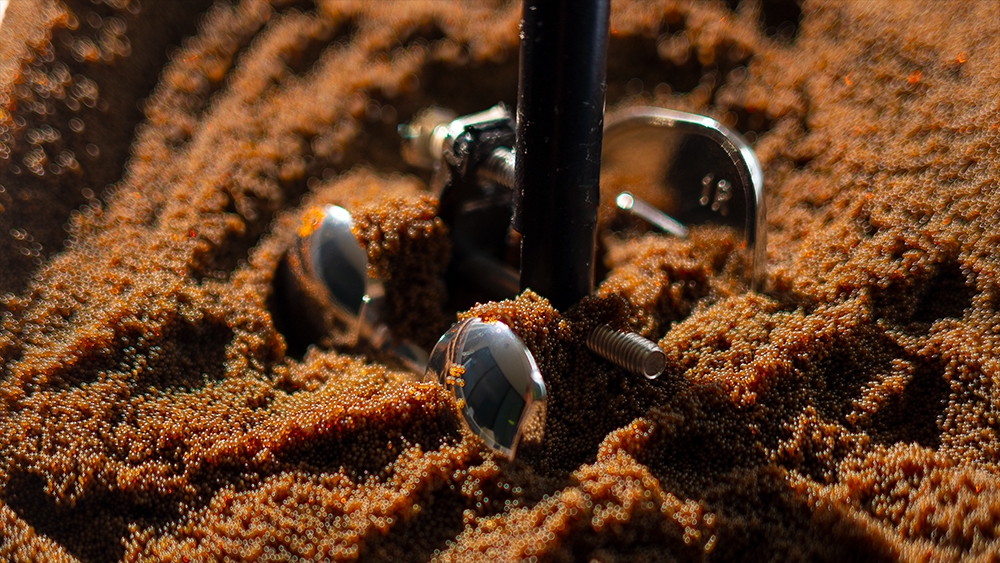
Contrary to traditional electro-chemical polishing, DryLyte is a dry process that utilises solid particles containing electrolytes. As a result, there is no need for acid baths or other process liquids. According to Rösler, the benefits of this technology include excellent surface finish, high geometrical consistency of workpieces, lower CO2 footprint and reduced costs for waste disposal. Furthermore, there is no more costly and complex treatment of used process liquids, while the finished workpieces emerge from the system perfectly clean.

The fully automatic DryLyte system simplifies and helps to standardise different surface finishing tasks such as deburring, surface smoothing, surface grinding, high-gloss polishing and even the post processing of 3D-printed components. Depending on the initial surface conditions und the specified finishing quality, it is possible to use dry electro-polishing as a stand-alone process or in combination with known mass finishing, shot blasting or other pre-grinding methods.

DryLyte technology applies the principle of electro-chemical material removal from the surface of components. However, the technology does not use liquid electrolytes but a multitude of polymer pellets in different sizes containing electrolyte media adaptedprecisely to the respective finishing task. In contrast with traditional electro-polishing systems, no hazardous vapours form that require energy-intensive exhaust systems and special protective gear for the operator. In addition, since electrolyte medium absorbs the material removed from the workpiece surface, no dust or metal particles escape into the environment, as happens with manual grinding and polishing operations.
For further information www.rosler.com