

The perfect press brake formula

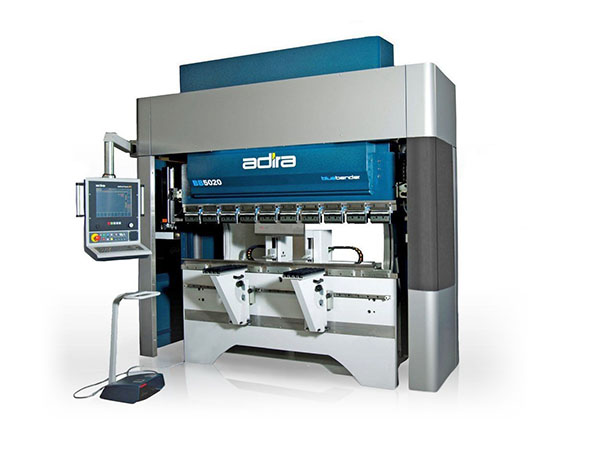
Whether a company is looking to invest in its first press brake or hoping to increase bending capabilities through an upgrade, one formula is needed to ensure success, suggests Press & Shear, which offers the Adira press brake range across the UK: performance + size = investment in the solution.

It sounds simple but many look to increase or change their bending capabilities without first considering these elements. Adira values it so much that the diversification of its entire range of press brakes is driven by these three factors. But what do they mean?

Press brake machines are measured on a number of key performance indicators. Consider this: is it up to the levels of productivity and output required; is the machine versatile enough to meet the different bending jobs coming in; is the machine user friendly; and will the business be able to get the most from it?

Press brakes come in all different shapes and sizes. This can dramatically impact performance, but also floor space. Considering size alongside performance will ensure precious space is not wasted and efficiencies remain high.

After determining the required performance and size, it is possible to look at how the return on investment will play out over time. Investing in a solution that will always be too large or which is over-powered for business needs can make it impossible to justify. Investment in a brake press must balance out to meet short and long-term business goals.

For further information
www.pressandshear.com
SafanDarley extends product range

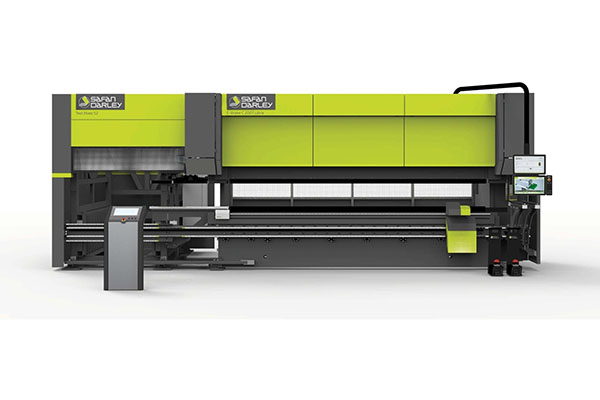
SafanDarley has added the E-Brake C 200T Ultra with Tool Mate to its press-brake product range. With the addition of Tool Mate, SafanDarley has a diverse and complete range of press brakes from conventional and semi-automatic to fully automatic bending cells. Tool Mate is an external automatic tool changer and is said to offer great time savings when producing small batches.

The servo-electric E-Brake C with 200T pressing force and bending length of 4300 mm features a C-frame to enable automatic tool changing. SafanDarley’s Tool Mate is very intuitive and does not require extensive training, says the company. Execution of the tool changes is via the SafanDarley E-Control. The correct tool settings can be loaded and used directly on the machine from AutoPOL offline software (or other independent offline bending simulation software).

With the high-precision changer, tools are placed exactly in the correct position. Thanks to the intelligent software, only necessary changes are made and tools from the previous tool set-up are reused, resulting in considerably shorter changeover times.

The tool storage magazine has a capacity of 32, 52 or 60 m of tools, while the rotation station allows the upper tools to be rotated 180°, eliminating the need for a double tool set. According to SafanDarley, Tool Mate is unique in that it is suitable for the E-Brake C 200T and for the H-Brake series up to 320T, thus making it also suitable for the heavier machine segment.

For further information
www.safandarley.com

£400,000 investment is platform for growth

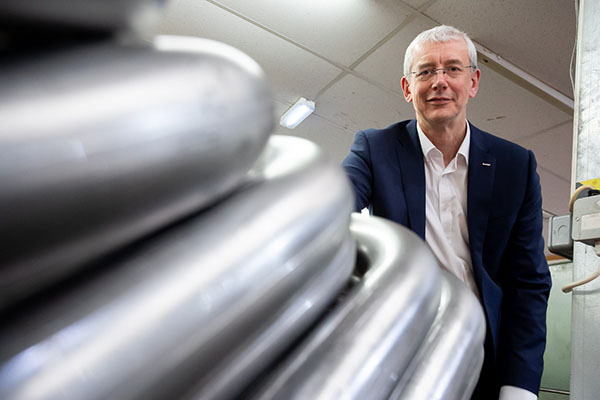
A major £400,000 investment in a new ERP system is set to help an engineering services and supplies specialist capitalise on growth across its business. James Lister & Sons, which is nearing its 150th birthday in 2024, has completed an 18-month project that has seen it embed the K8 Kerridge Commercial System in its fluid power, consumable supplies and tube manipulation divisions.

The new technology will allow it to bring together the wide variety of processes it undertakes across its headquarters in Smethwick and six branches in the West Midlands and South Wales, giving the company real-time information, transparency and improved order tracking, as well as enhanced merchant, trade counter and production planning operations.

Peter Davies, chief executive at Lister, says: “This has been a massive transformation project for our business, completed throughout the pandemic and in time for us to make the most of the bounce back we’re now seeing. The K8 Kerridge Commercial System will offer a host of operational and efficiency improvements due to improved planning capabilities and we now have a fully supported, disaster recovery safe system in place, giving our 5000-strong customer base complete peace of mind.”

The biggest growth area following the easing of lockdown has been Lister’s tube manipulation business, which is able to bend tube in sizes ranging from 4 up to 75 mm, in metals such as steel, copper and aluminium. The company has witnessed a 30% increase in orders over the past 12 months, delivering a 7.5% rise on pre-pandemic levels.

Investment in a Unison Breeze tube-bending machine has also paid dividends, providing the company with ‘left and right hand’ capacity to make components that cannot be produced via traditional bending.

For further information
www.lister.co.uk

Benefits of electric tube benders

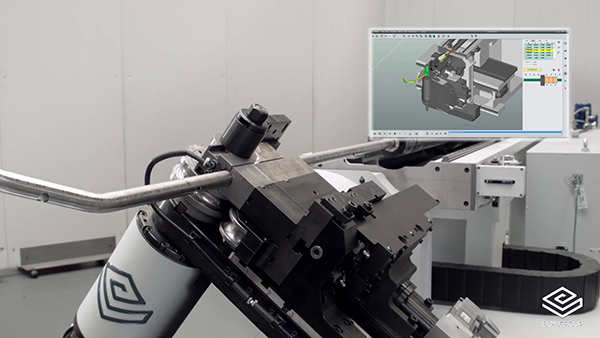
According to BLM Adige, the main advantages of an all-electric tube bending machine include production flexibility, repeatability, production rate, quality, the absence of transition periods and lower energy consumption.

In terms of production flexibility, an all-electric tube bending machine eliminates the manual adjustments usually necessary on other types of tube bending machines, such as adjustment of the clamp die, pressure die and mandrel position, or of the clamp die pressure on the tube.

For the manufacturer, the most important factor in tube bending is repeatability; that is the degree of consistency among the measurements of the part across the entire batch. An electric tube bending machine can record the axis co-ordinates and tube bending parameters, recalling them at any moment.

Another benefit is speed. An all-electric tube bending machine’s movement is controlled by a CNC axis, tapping into the full potential of the machine’s programming software. As a result, the release movements from the tube can be smoother and faster.
With regard to quality, an all-electric tube bender can modulate the force exerted by the various electrical axes in-process depending on the tube being bent. Both for thin or thick tubes, ductile or hard material, this type of tube bending machine can properly manage the force exerted, modifying it as needed in-process to improve quality.

Furthermore, electric tube bending machines do not have hydraulic oil to heat up and their electric drivers have the same behaviour regardless of temperature or thermal shocks. So, there are no ‘transition periods’, defined as time intervals in which the machine working conditions change.

Last but not least, to save operational costs, electric bending machines only consume energy when needed, resulting in considerable savings for the manufacturer.

For further information
www.blmgroup.com

Further uses for horizontal bending presses

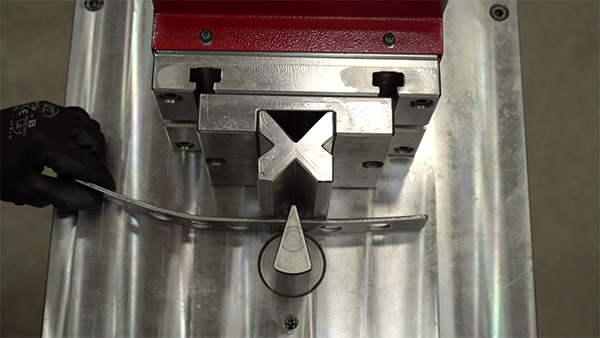
Selmach’s range of Morgan Rushworth horizontal bending press machinery (HBM) comes in a wide range of tonnage, from 10 to 100 tonnes. With their compact size and simple controls, these machines are capable of performing a variety of bending applications. In fact, with specialist tooling they can be adapted to a wide range of tasks.

As the name implies, the first and foremost usage of HBM is for bending and forming brackets and cleats. The standard tooling on the machine allows for a wide variety of angles. Selmach can supply an assortment of different radius punches, Vs and multi-Vs to suit requirements.

Beyond bending and forming, HBM can perform a number of other useful roles. For instance, many times a fabrication shop will need to straighten material, such as when a workpiece bows after punching holes on a steelworker. With the stroke and return set correctly, users can rectify any bowing and get the workpiece back to a usable condition. It is possible to use standard tooling options or a separate bar straightening tool if bowing is a regular occurrence.

Another tooling option available is a pipe bending attachment. While not a substitute for a dedicated tube bending machine, if shops have the occasional need for bending pipe, this attachment could be perfect. It does not use extra floor space that another machine would consume, and is much cheaper.

Given the versatility of these machines, specialist and one-off tooling can be manufactured if a shop has a particular need. Whether it is for forming a complex part, prototyping, or replacing an existing manual process, Selmach may be able to help.

For further information
www.selmach.com